
2026 Update: New Data Center Announcements in Kentucky
The Mason County story has only accelerated into 2026. What started as a single quiet land assembly has become a statewide rush, with hyperscalers — the largest cloud and AI infrastructure operators — competing for grid capacity, water, and large contiguous parcels across northern and central Kentucky.
- Mason County hyperscaler (developer still unnamed): The Mason County Planning Commission gave initial approval to zoning changes for a roughly 2,000-acre hyperscale data center in early April 2026. A final planning vote was scheduled for April 22, with the Mason County Fiscal Court expected to take it up in May. As of mid-March 2026, one family had publicly turned down a reported $26 million offer for their farm inside the assembly area. The end-user company has not been disclosed and is operating through NDAs and shell LLCs.
- Louisville (Jefferson County) — Poe Companies + PowerHouse Data Centers: The Louisville Metro Planning Commission approved a revised development plan on March 5, 2026 for Jefferson County's first hyperscale data center — a roughly 150-acre campus in southwest Louisville. This is a developer-led project marketed to hyperscale tenants rather than a single named operator.
- Microsoft: Despite Microsoft's announced ~$80 billion in FY25 data center spending, no named Kentucky site has been confirmed as of April 2026. The company's most recent publicly disclosed expansions have been in Cheyenne, Wyoming (~3,200 acres) and Kent County, Michigan — not Kentucky.
- Google & Meta: Neither company has announced a confirmed Kentucky site as of this update. Google's recent disclosed land buys have been in Putnam County, West Virginia and Botetourt County, Virginia. We have not been able to verify any LFUCG (Lexington-Fayette) or Bourbon County permits filed by Meta — Bourbon County has had general data-center feasibility activity, but no named hyperscaler.
- AWS: No public filing for a tax abatement or PILOT agreement tied to Amazon Web Services has been confirmed in Mason or Hardin County as of April 2026. Kentucky's existing sales-and-use tax exemption for data center equipment (15–50 year terms, tiered by investment) is the primary state-level incentive any hyperscaler would use.
- Statewide policy update: Proposed data center regulations were stripped from a broader bill before the 2026 Kentucky legislative session closed in mid-April, leaving siting decisions largely with county planning commissions and fiscal courts.
We update this story as developers file with state economic-development offices and county fiscal courts. Tip: most early signals come from rezoning notices and water/sewer extension requests, not press releases.
Along the banks of the Ohio River, where generations of Kentucky families have tilled the same fertile soil their ancestors broke ground on centuries ago, a new kind of gold rush is transforming the landscape—and not everyone is selling.
In Mason County, Kentucky, a story is unfolding that encapsulates one of rural America's most pressing tensions: the collision between Big Tech's insatiable appetite for land and the deep-rooted determination of farming families to preserve their heritage. As of December 7, 2025, at least one family is holding firm against offers approaching $8 million for their 200+ acre parcel—a staggering sum that represents both the value of their land to data center developers and the price they're unwilling to accept for their legacy.
Kentucky Land-Price Impact by County
Averages below blend USDA Kentucky cropland data with reported developer offers and recorded transfers in the impacted counties. Single-parcel offers from hyperscalers can run several times higher than the county average.
| County | Avg $/Acre 2023 | Avg $/Acre 2025 | % Change | Notable Development |
|---|---|---|---|---|
| Mason | $5,800 | $11,200 | +93% | Fortune 100 hyperscaler land assembly along Ohio River |
| Bourbon | $8,400 | $13,500 | +61% | Land-agent activity near Paris; transmission corridor |
| Fayette | $12,500 | $17,800 | +42% | Lexington-area edge data center interest |
| Hardin | $6,100 | $8,900 | +46% | BlueOval SK spillover; data-center site studies |
| Oldham | $9,200 | $11,400 | +24% | LG&E grid-adjacent parcel inquiries |
What the Data Center Boom Means for Kentucky Landowners
If you own land in Mason, Bourbon, Fayette, Hardin, or Oldham county, you've probably already noticed unfamiliar trucks, mailers from "site selection" LLCs, or quiet inquiries from neighbors who've been approached. This is the moment to understand your options — not after you've signed an NDA.
Hyperscaler offers can look enormous, but they often come with 9–18 month due-diligence windows, strict confidentiality, environmental contingencies, and the right to walk. Many landowners get tied up for a year, then end up with nothing. Others miss out on a real cash buyer who could close in two weeks at a fair price while developers were still negotiating.
At PlaceAcre, we work with Kentucky landowners every week — some who want to wait out the developer wave, and others who'd rather take a clean cash offer now and move on. Either way, knowing what your land is actually worth on the open market is the first step.
The Fortune 100 Mystery
The company behind the Mason County push has remained shrouded in secrecy, operating through shell LLCs and land agents who approach farmers with offers that seem too good to be true. Local reporting and social media discussions on X (formerly Twitter) have pointed fingers at several major tech players—Microsoft has announced plans for $80 billion in data center spending, Google continues its aggressive expansion, and Meta has signaled renewed infrastructure investments.
What is clear: Kentucky has become ground zero for a data center gold rush. The state's relatively cheap electricity, abundant water from the Ohio River, low natural disaster risk, and central location make it irresistible to hyperscalers whose AI ambitions demand unprecedented computing power.
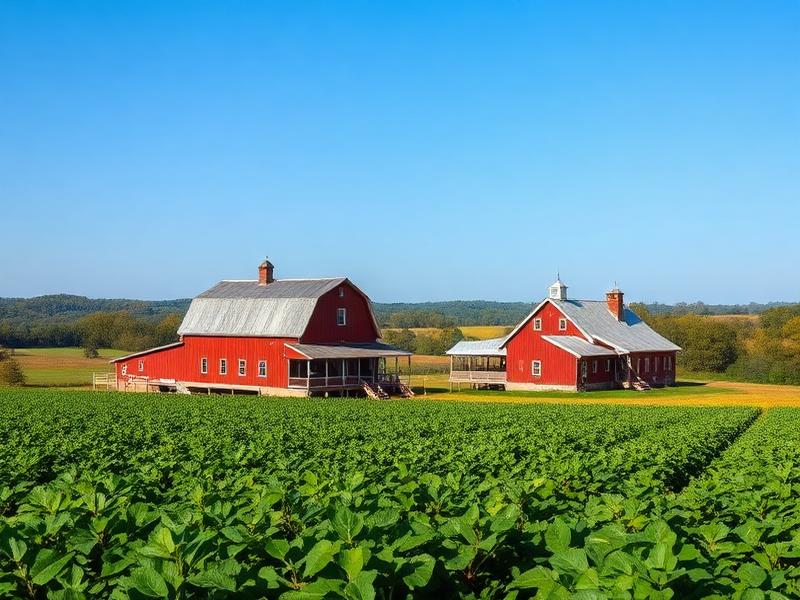
The Holdouts: "This Land Is Not for Sale"
Fresh updates from local sources on December 7 revealed that the family holding out for nearly $8 million isn't doing so for more money—they simply don't want to sell at any price. Their property, passed down through five generations, represents something that can't be quantified on a balance sheet.
"My great-great-grandfather cleared this land with his own hands. My grandfather survived the Depression on it. My father raised us on it. You can't put a price on that kind of history."
This sentiment echoes across rural America, where the current wave of data center expansion is forcing families to make impossible choices. For those who do choose to sell vacant land, the process can be complicated by emotional attachments, family disputes over inherited property, and uncertainty about fair market value in a rapidly changing landscape.
The Economic Promise: Jobs, Tax Revenue, and Growth
Proponents of data center development point to undeniable economic benefits. A single hyperscale facility can bring:
- 500-1,500 construction jobs during the multi-year build phase
- 50-150 permanent positions with average salaries exceeding $80,000
- Millions in annual property tax revenue for local schools and infrastructure
- Ancillary business growth in hospitality, retail, and services
Kentucky Governor Andy Beshear has championed the state's tech transformation, pointing to successful data center projects in other counties as proof that agricultural communities can embrace the digital economy without losing their identity. State incentive packages, including tax abatements and infrastructure support, have made Kentucky increasingly competitive against traditional data center hubs like Virginia, Texas, and Arizona.
Kentucky's Data Center Investment Surge

The Water Question: Environmental Concerns Mount
Perhaps the most contentious aspect of the Mason County debate centers on water. Hyperscale data centers are notorious water consumers, using millions of gallons daily to cool their servers. The Ohio River provides abundant supply, but local residents worry about the long-term implications.
According to reporting from the Louisville Courier-Journal, environmental groups have raised concerns about:
- Groundwater depletion affecting neighboring farms and private wells
- Thermal discharge of heated water back into waterways
- Energy grid strain from massive power demands
- Noise pollution from industrial cooling equipment
These concerns mirror debates playing out in communities across America as the AI boom drives unprecedented demand for data center capacity. From Arizona to Virginia, residents are discovering that the digital economy has very real physical footprints.
Water Usage Comparison
A single hyperscale data center can consume 1-5 million gallons of water per day for cooling—equivalent to the daily water use of a small city of 10,000-50,000 residents.
The Soul of Rural America at Stake
Beyond the economics and environment, the Mason County story touches something deeper: the fundamental question of what rural America is and what it should become.
For generations, Kentucky's identity has been intertwined with its agricultural heritage—tobacco fields, horse farms, bourbon distilleries. The image of rolling Bluegrass pastures isn't just marketing; it's the lived reality of thousands of families whose connection to the land defines their sense of place and purpose.
"You're not just buying our land," one holdout told local reporters. "You're buying our community, our church, our history. And some things shouldn't be for sale."
Yet others in Mason County see the data center boom differently. Younger residents, facing limited economic opportunities, view tech investment as a lifeline. Farmers struggling with commodity prices and rising input costs see multimillion-dollar offers as a chance to secure their family's financial future, even if it means saying goodbye to the land itself.
What Happens Next?
The situation in Mason County remains fluid. Land agents continue making rounds, offers continue escalating, and families continue facing impossible decisions. Local officials are caught between welcoming economic development and protecting their constituents' interests.
Several key developments are expected in the coming weeks:
- Zoning hearings that could determine whether data center construction proceeds
- Environmental impact studies requested by concerned residents
- State legislature involvement in reviewing incentive packages
- Community meetings where residents voice concerns directly to developers
For landowners across Kentucky—and rural America more broadly—the Mason County story offers both opportunity and warning. Those considering whether to sell vacant land in areas targeted by data center developers should understand that they may hold more leverage than they realize, but also that the window for negotiation may close as companies finalize site selections.
A National Phenomenon
Kentucky's experience is not unique. From rural Ohio to the Texas Hill Country, from Arizona's high desert to the farmlands of the Pacific Northwest, data center developers are transforming the American landscape at unprecedented speed. The AI revolution has created demand that existing infrastructure simply cannot meet.
For landowners watching these developments unfold, the lesson is clear: understanding your property's value in this new market is essential. Whether you choose to sell, hold, or negotiate, knowledge is power. Consulting with land professionals who understand both agricultural and industrial land values can help ensure you make informed decisions about your family's future.
The story of Mason County is still being written. But one thing is certain: the choices made by Kentucky families in the coming months will echo through generations—just as the decisions of their ancestors shaped the landscape they inherited.
Considering Selling Your Land?
Whether you're facing pressure from developers or simply exploring your options, understanding your land's true value is the first step. Get a free, no-obligation cash offer and make informed decisions about your property's future.