Every twenty-four hours, approximately one square mile of American farmland—640 acres of productive agricultural soil—disappears under concrete, asphalt, and suburban development. This is not a projection or a worst-case scenario. It is happening right now, documented in stark detail by a Conservation Fund report released on December 2, 2025, that has sent shockwaves through agricultural policy circles.
The Scale of the Crisis
The numbers are staggering and accelerating. According to the American Farmland Trust's latest analysis, the United States has lost more than 11 million acres of farmland to development since 2001—an area larger than the states of Massachusetts and Connecticut combined. But what makes the current moment particularly alarming is the pace: farmland conversion has increased by 50% over the past two decades.
The American Farmland Trust's Farms Under Threat initiative identifies this as a national emergency. Their data shows that between 2001 and 2016 alone, America lost 11 million acres of agricultural land—with 4 million of those acres classified as the most productive farmland in the nation. The conversion rate has only intensified since then, driven by population growth, housing demand, and the economics of land ownership.
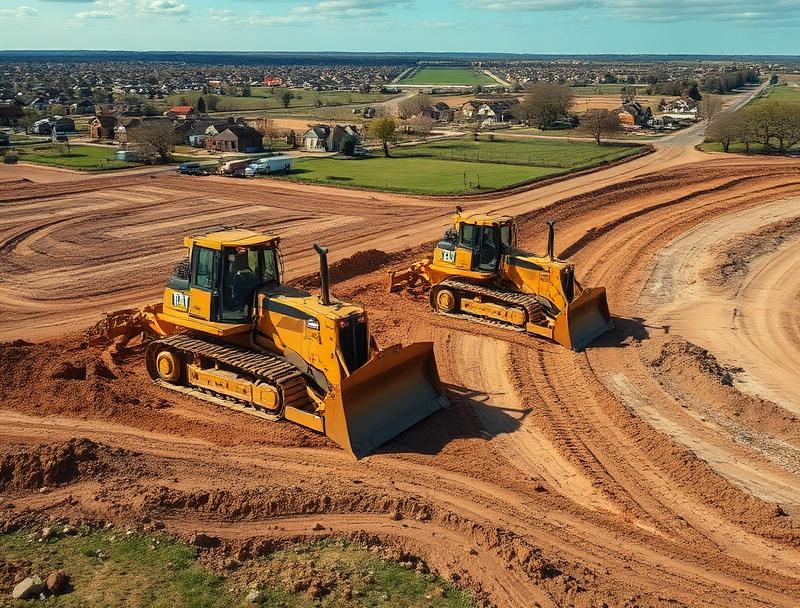
Construction equipment prepares former farmland for residential development—a scene repeated across America daily.
The Economics Driving the Loss
Understanding why farmland disappears requires examining the brutal economics facing American farmers. The average age of a U.S. farmer is now 57.5 years, according to the USDA Census of Agriculture. For many of these aging farmers approaching retirement, the math is simple and heartbreaking: their land is worth far more to developers than it could ever return through farming.
The Land Value Gap
- •Prime farmland near growing metros often sells for $50,000+ per acre to developers
- •The same land produces perhaps $200-500 per acre annually in farm income
- •Young farmers cannot compete with developer offers to buy farmland
- •Property taxes based on development potential make farming economically impossible
Consider a farmer in the path of suburban Austin, Texas, or the exurbs of Nashville, Tennessee. Their 200-acre family farm, worked for three generations, might be valued at $10 million for development. After a lifetime of hard work with modest returns, the temptation—and often the necessity—to sell is overwhelming. There is frequently no next generation willing or able to continue farming, especially when they would need millions in capital just to buy out their siblings' shares.
For landowners facing these decisions, understanding all options is crucial. Whether choosing to sell vacant land or explore conservation easements, the choice should be informed by complete information about both immediate value and long-term implications.
Where the Losses Hit Hardest
The farmland crisis does not affect all regions equally. The Conservation Fund's research identifies "threat zones"—areas where development pressure on agricultural land is most intense. These zones cluster around the fastest-growing metropolitan areas in America.
Texas
Lost more farmland than any other state. The Austin-San Antonio corridor and Dallas-Fort Worth metroplex consume thousands of acres annually.
California
Central Valley—the most productive agricultural region in America—faces relentless development pressure from Bay Area and LA expansion.
North Carolina
The Research Triangle's explosive growth has converted vast tracts of tobacco and grain farms into subdivisions and data centers.
Tennessee
Nashville's boom has pushed development deep into surrounding agricultural counties, displacing multi-generational farming operations.
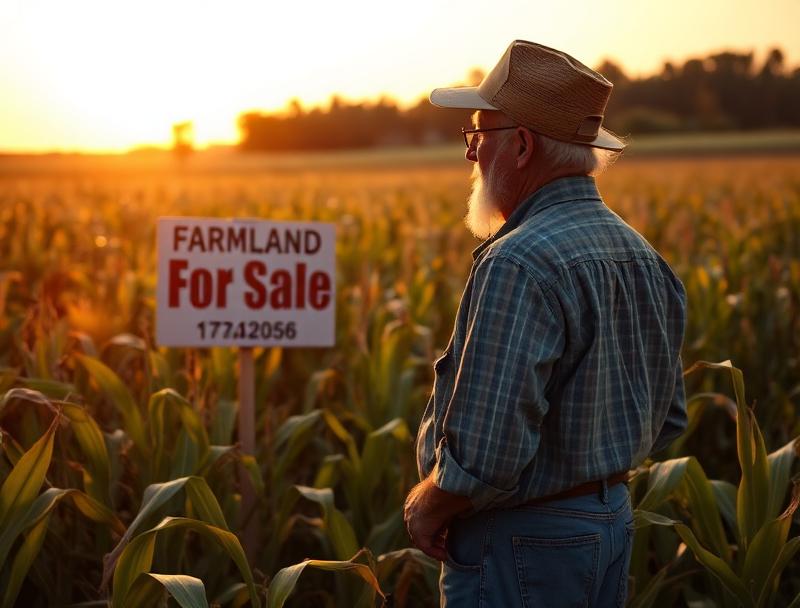
For many aging farmers, selling to developers is the only viable retirement plan.
The Food Security Implications
The loss of productive farmland is not merely an environmental or aesthetic concern—it strikes at the foundation of American food security. While the United States currently produces more than enough food to feed its population and remains a major agricultural exporter, the trajectory is troubling.
Unlike some natural resources, agricultural land cannot be recreated once developed. The soil that took thousands of years to form, once covered by pavement or buildings, is effectively lost forever. This irreversibility makes farmland loss fundamentally different from other land-use challenges.
Why Farmland Loss Threatens Food Security
Irreversibility: Developed land cannot return to productive agriculture within human timescales.
Best Land Goes First: Development targets flat, well-drained land near infrastructure—the same land best suited for farming.
Supply Chain Fragility: Reduced domestic production increases dependence on imports and vulnerability to global disruptions.
Climate Intersection: As climate change reduces agricultural productivity in many regions, losing the best farmland compounds the problem.
The Climate Collision Course
The farmland crisis unfolds against a backdrop of accelerating climate change, creating a dangerous convergence. Climate impacts—including shifting precipitation patterns, increased flooding, prolonged droughts, and extreme heat events—are already reducing agricultural productivity in many regions.
Simultaneously, development continues to eliminate the most productive farmland, reducing the agricultural base that must adapt to these changing conditions. This collision course means the nation is losing capacity precisely when it needs more resilience, not less.
The USDA's Climate Solutions initiatives acknowledge this challenge, but solutions require farmland to remain in agricultural use to implement climate-smart practices. Once land is developed, these opportunities vanish permanently.
What Can Be Done
Conservation advocates and agricultural policy experts offer several approaches to slow farmland loss, though none alone can solve the crisis:
Agricultural Conservation Easements
Paying farmers to permanently restrict development rights while retaining ownership. Programs like the USDA Agricultural Conservation Easement Program provide federal funding, but demand far exceeds available resources.
Transfer of Development Rights
Allowing farmers to sell development rights to areas designated for growth, compensating them while directing development away from prime agricultural land.
Agricultural Zoning Reform
Strengthening exclusive agricultural zoning to prevent speculative purchases and ensure property taxes reflect agricultural rather than development values.
For individual landowners navigating these complex decisions, the choice between selling, easements, or continued farming depends on personal circumstances. Those who do choose to sell vacant land can still make informed decisions that consider both their financial needs and the broader implications for their communities.
The Path Ahead
The Conservation Fund's December 2025 report is a warning, but also a call to action. With population projected to grow by 70 million by 2060, the pressure on agricultural land will only intensify. The decisions made in the coming decade will determine whether America can maintain the productive agricultural base that has underpinned its food security and export economy for generations.
The square mile of farmland lost today will never return. Tomorrow, another square mile will disappear. The question facing policymakers, farmers, and communities is whether this trajectory is acceptable—and if not, what they are willing to do to change it.
For those who own agricultural land, understanding the full range of options—from conservation easements to strategic sales to continued operation—has never been more important. The decisions made by individual landowners, multiplied across millions of farms, will ultimately shape whether America's farmland crisis becomes a catastrophe or a challenge successfully managed.