Breaking: The Missouri Revelation
In a move that sent shockwaves through national security circles, a seemingly innocuous trailer park purchase in rural Missouri turned out to be far more strategic than anyone imagined. Located just miles from Whiteman Air Force Base—home to the B-2 stealth bomber fleet—the property was quietly acquired by a company with documented ties to Chinese state interests. It wasn't farmland. It wasn't a tech campus. It was a 370-acre parcel that provided line-of-sight surveillance capabilities to one of America's most sensitive military installations.
Welcome to the new reality of American land ownership, where agricultural acquisitions are being weaponized for strategic positioning, and where the patchwork of state and federal oversight leaves gaping holes that foreign adversaries are exploiting with surgical precision.
For American landowners—particularly those sitting on acreage near military installations, critical infrastructure, or in economically depressed rural areas—this isn't just a headline. It's a wake-up call that demands immediate action to protect not just property values, but national security interests and generational legacy.
The Scope: Just How Much American Farmland Is Foreign-Owned?
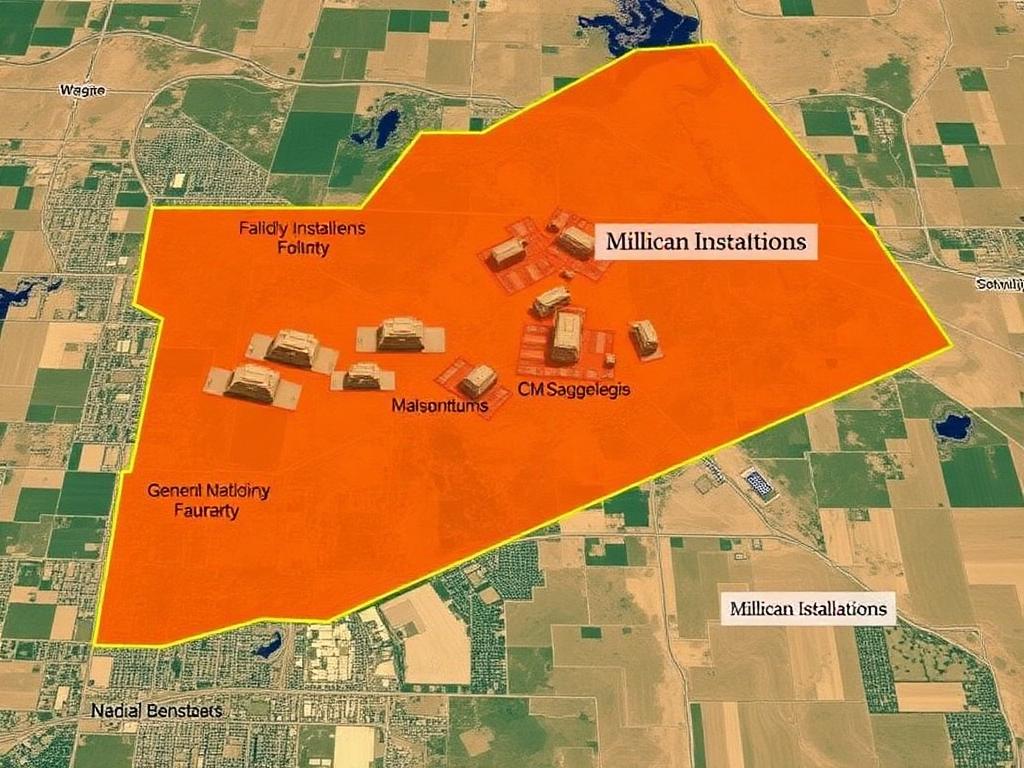
Foreign land ownership patterns near critical defense infrastructure
The numbers tell a story that most Americans find shocking. According to the latest USDA data, foreign entities now control approximately 40 million acres of U.S. agricultural land—an area larger than the entire state of Florida. And Chinese ownership has surged 30% in just the past three years alone.
Foreign Agricultural Land Holdings: The Numbers
| Country | Acres Owned | 3-Year Change | % of Foreign Total |
|---|---|---|---|
| Canada | 12.8M | +2% | 32% |
| Netherlands | 5.6M | +5% | 14% |
| China | 383,000 | +30% | ~1% |
| Italy | 2.1M | +1% | 5% |
| Germany | 1.9M | -3% | 5% |
| All Foreign | 40M+ | +8% | 3.1% of US total |
Source: USDA Foreign Holdings Report, 2024
While China's absolute acreage remains relatively small compared to Canadian holdings, the 30% growth rate and strategic targeting of properties near military installations has Pentagon officials deeply concerned. Unlike traditional agricultural investments spread across commodity-producing regions, Chinese purchases cluster suspiciously around Air Force bases, nuclear facilities, and intercontinental ballistic missile sites.
The Pattern: It's Not About Farming
Intelligence analysts have identified a clear pattern in recent Chinese land acquisitions that has nothing to do with crop yields or agricultural productivity:
Grand Forks, North Dakota
Chinese company Fufeng Group attempted purchase of 370 acres near Grand Forks Air Force Base. Project blocked after national security review.
12 miles from sensitive drone operations
Del Rio, Texas
Chinese energy company purchased 140,000 acres near Laughlin Air Force Base, used for pilot training operations.
Includes wind farm with surveillance capabilities
Whiteman AFB, Missouri
The trailer park acquisition that sparked congressional hearings. Direct line-of-sight to B-2 bomber operations.
3.2 miles from base perimeter
Multiple ICBM Sites
Pattern of purchases in Montana, Wyoming, and North Dakota near Minuteman III missile fields.
Farmland with underground fiber access
These aren't agricultural investments—they're intelligence-gathering platforms disguised as real estate transactions. The proximity isn't coincidence; it's targeting. And the pace is accelerating, with Chinese-linked entities now purchasing farmland at a rate of approximately one property every three days near sensitive installations.
Why This Matters to American Landowners
If you own land—particularly in rural areas where property values have been stagnant or declining—you might be thinking: "So what? If foreign buyers want to overpay for farmland, that's good for property values." But this oversimplifies a complex dynamic with serious implications:
1. Market Distortion and Price Manipulation
Strategic buyers with non-economic motivations distort local land markets. Properties get purchased at inflated prices not justified by agricultural productivity, creating artificial comps that make legitimate farming operations financially unviable. When the strategic buyer exits, local landowners are left with deflated values.
2. Community Impacts and Tax Base Erosion
Foreign-owned entities often structure holdings through complex corporate chains that minimize property tax liability. Rural counties dependent on agricultural property taxes see revenues decline while infrastructure demands increase.
3. Environmental and Water Rights Concerns
Strategic land purchases often target properties with significant water rights or aquifer access. Foreign entities with no long-term stake in local ecosystems may exploit resources without regard for sustainability or community impact.
4. Loss of Agricultural Heritage
Multi-generational family farms are being systematically targeted with cash offers that make financial sense in the short term but eliminate American ownership of productive agricultural land permanently. Once sold, these properties rarely return to domestic family ownership.
What Landowners Can Do: Three Concrete Action Steps
This isn't a situation where individual landowners are powerless. There are concrete steps you can take to protect your property, your community, and contribute to national security. Here's your action plan:
Audit Foreign Ownership Disclosures via USDA Tools
The USDA maintains the Agricultural Foreign Investment Disclosure Act (AFIDA) database, which tracks foreign agricultural land holdings. While compliance is imperfect, you can use this tool to:
Research Your Area: Check if foreign entities have filed disclosures for properties near yours. The USDA AFIDA database allows county-level searches.
Report Non-Compliance: If you know of foreign ownership that hasn't been disclosed, report it to your local USDA Farm Service Agency office. Penalties for non-disclosure can reach 25% of the fair market value.
Advocate for Transparency: Push your state legislators to require more robust disclosure at the state level. Many states have gaps in their reporting requirements.
Lobby for Local Zoning Buffers Around Critical Infrastructure
Some states and counties are implementing protective zoning regulations. You can be part of this movement:
Security Zone Ordinances: Work with your county commission to establish "national security zones" that restrict or prohibit foreign ownership within specific distances of military bases, nuclear facilities, or critical infrastructure.
Enhanced Disclosure Requirements: Advocate for county-level zoning regulations that require beneficial ownership disclosure for all land purchases over a certain acreage threshold.
Community Notification: Push for ordinances requiring public notice and community input when foreign entities attempt to purchase agricultural land over certain thresholds.
Consider Conservation Easements for Legacy Protection
If you're concerned about your land falling into foreign hands or want to ensure its agricultural character in perpetuity, conservation easements offer powerful protection:

Permanent Restrictions: Conservation easements permanently restrict development and can include provisions limiting or prohibiting foreign ownership transfers. These restrictions run with the land in perpetuity.
Tax Benefits: Donating a conservation easement provides significant federal income tax deductions (typically 30-50% of property value) plus estate tax benefits that help family farms stay in family hands across generations.
Reduced Property Taxes: Many counties reassess property at lower agricultural use values after conservation easements are established, dramatically reducing annual carrying costs.
Strategic Sale Alternative: If you need to liquidate but don't want your land acquired by foreign interests, placing it under easement before sale makes it far less attractive to strategic buyers while preserving value for domestic agricultural purchasers.
The Bigger Picture: This Is About More Than Land
The Missouri trailer park revelation crystallizes a broader strategic competition playing out across America's rural landscape. While policymakers debate restrictions and foreign adversaries exploit gaps, individual landowners hold significant power to shape outcomes.
Every acre that remains in American hands—particularly near sensitive installations or critical infrastructure—represents a small but meaningful contribution to national security. Every conservation easement that restricts foreign acquisition creates a permanent buffer. Every local zoning ordinance that requires transparency makes strategic targeting more difficult.
For landowners weighing their options, the question isn't just "What's my property worth?" but "What legacy am I leaving?" In an era where foreign adversaries are literally trying to buy the ground beneath America's defense infrastructure, choosing to sell land fast to verified domestic buyers or protecting it through conservation easements isn't just a financial decision—it's a patriotic one.
What You Can Do Today
Visit the USDA AFIDA database to check foreign ownership disclosures in your county
Contact your county commissioners about national security zoning ordinances
Explore conservation easement options with local land trusts
If considering a sale, work with verified domestic buyers who understand the stakes
The fortress isn't built by federal policy alone—it's constructed acre by acre, by landowners making informed decisions about their legacy.
Protecting Your Land Legacy?
If you're considering selling your land and want to ensure it stays in American hands, PlaceAcre provides fast, fair cash offers from verified domestic buyers. No foreign entities, no hidden agendas—just honest land transactions.
Get Your Free Cash Offer
Fill out the form below and receive a no-obligation offer within 24 hours
Related Coverage
2025: The Year of the Land Boom?
Market trends driving unprecedented land investment activity
Water Rights 101: Why They Matter in Land Ownership
Understanding the strategic value of water access
Zoning Hacks: Unlock Development Potential
Legal strategies for restricted acreage
Land Politics: The Property Tax Crisis
How land policy shapes community tax burdens