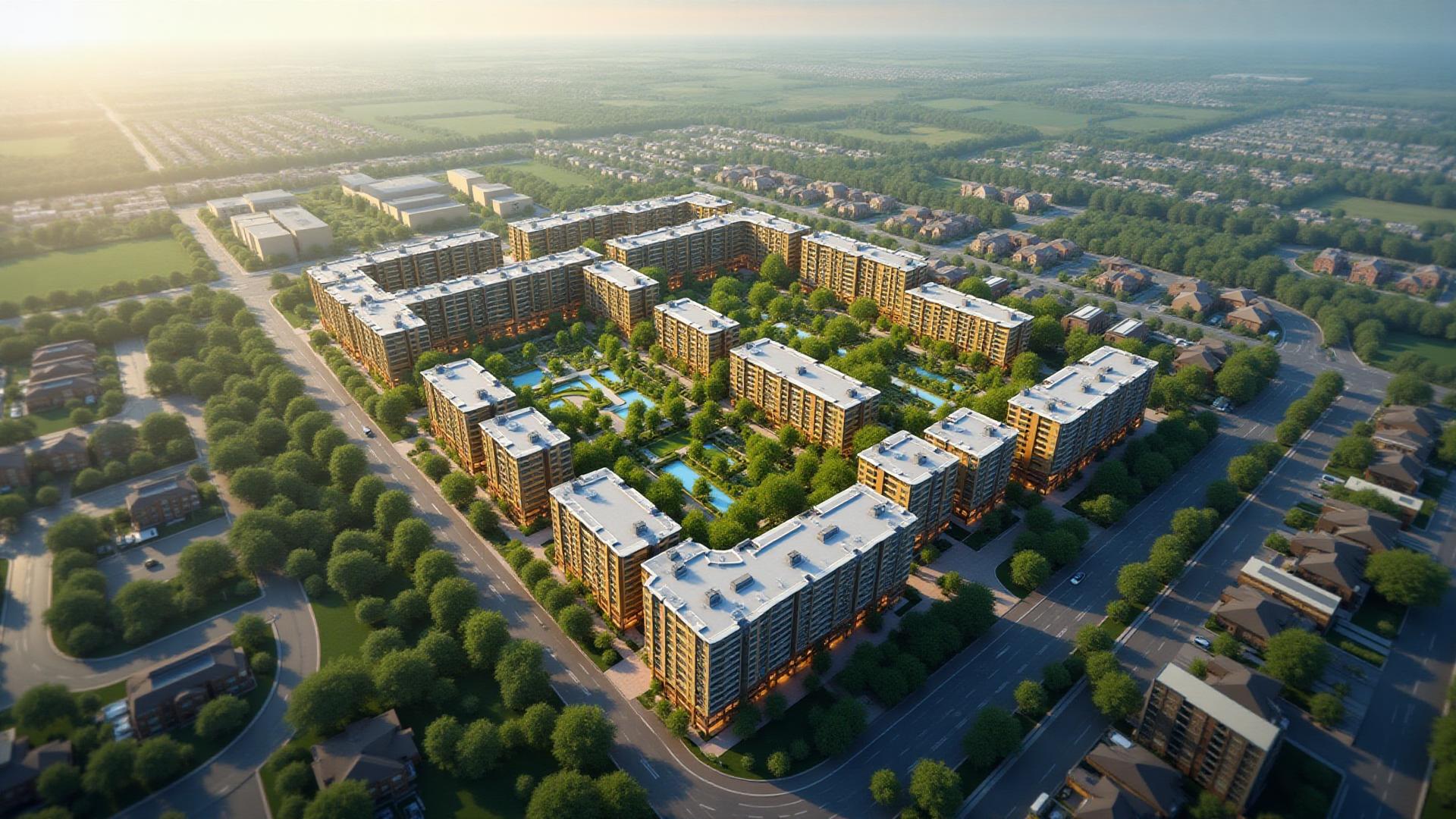
Owning raw land with restrictive zoning can feel like holding a locked treasure chest. Your property might be worth significantly more if only you could develop it differently. The good news? There are numerous legal strategies to unlock that hidden value without breaking any rules. Whether you're dealing with agricultural land in Georgia, restricted acreage in Texas, or residential lots anywhere in America, these seven proven zoning hacks can help you maximize your property's development potential.
Understanding Your Zoning Restrictions
Before implementing any strategy, you need to understand exactly what restrictions apply to your property. Most local jurisdictions maintain online zoning maps and ordinances, but the details matter enormously. A property zoned "Agricultural" might allow farming, a single residence, and specific agricultural businesses—but the devil is in the specifics.
Critical Research Steps
- Obtain your current zoning designation from your local planning department
- Review the complete zoning ordinance for permitted, conditional, and prohibited uses
- Check for overlay districts that might add restrictions or opportunities
- Identify recent zoning changes in your area that might create precedents
- Understand setback requirements, lot coverage limits, and height restrictions
Armed with this knowledge, you can now explore strategic approaches to unlock your land's full potential. Let's dive into the seven most effective legal strategies.
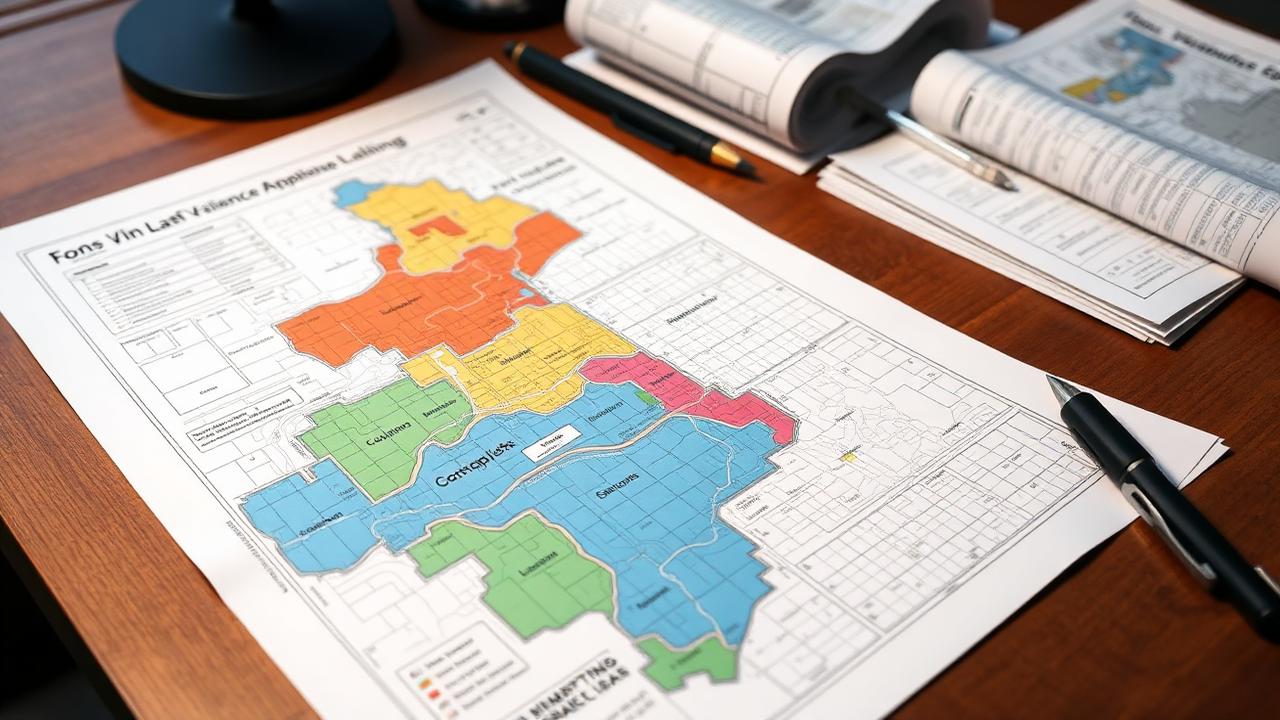
Understanding zoning maps and variance procedures is the first step to unlocking development potential
1. Strategic Variance Applications
A zoning variance allows property owners to deviate from specific zoning requirements when strict application would create "unnecessary hardship." This is your most direct path to overcoming physical limitations of your property.
When variances work best: You have a legitimate hardship—unusual lot shape, topographical challenges, or existing structures that don't conform to current setback requirements. For example, if your property in North Carolina has steep slopes that make standard setbacks impossible, you have a strong case for a variance.
Keys to Winning Variance Approval
Document the hardship: Physical characteristics unique to your property, not financial hardship
Show minimal impact: Demonstrate that your variance won't negatively affect neighbors
Maintain the spirit of zoning: Your request should align with the overall intent of the zone
Gather neighbor support: Letters from adjacent property owners dramatically increase approval odds
Pro tip: Hire a land use attorney or experienced consultant for variance applications. Success rates increase substantially with professional representation, and the cost is typically minimal compared to the property value increase.
2. Conditional Use Permits (Special Exceptions)
Many zoning ordinances include lists of "conditional uses" or "special exceptions"—uses that aren't automatically permitted but can be allowed with specific conditions. This is particularly valuable for generating income from vacant land.
Common conditional uses: Home-based businesses, daycare facilities, bed and breakfasts, agricultural tourism (agritourism), small-scale renewable energy installations, cell towers, and community facilities.
For example, if you own agricultural land in Virginia, you might obtain a conditional use permit for a wedding venue, farm-to-table restaurant, or agricultural education center—uses that complement the agricultural zoning while generating substantial income.
The key advantage: Conditional uses are already contemplated in the zoning code. You're not fighting the system—you're working within it. Your job is demonstrating that you'll meet the specified conditions and mitigate any potential impacts.
3. Strategic Rezoning Applications
When variances and conditional uses won't suffice, it's time to pursue rezoning (also called "zoning map amendment"). This changes the actual zoning designation of your property to one that permits your desired use.
When rezoning makes sense: Your property sits at the edge of a commercial or higher-density residential zone, recent development patterns show the area is transitioning, or your jurisdiction has adopted a comprehensive plan that supports your desired use.
The "comprehensive plan" advantage: Most jurisdictions have a comprehensive or master plan that guides future development. If your rezoning request aligns with this plan, your approval odds skyrocket. For instance, if the plan designates your area for "future commercial development," requesting commercial rezoning becomes much more straightforward.
Rezoning Success Strategy
- Study the comprehensive plan and demonstrate alignment with long-term community goals
- Analyze recent rezonings in your area to establish precedent
- Engage neighbors early and address concerns proactively
- Offer proffers or conditions (voluntary commitments) that address community concerns
- Hire professional consultants—traffic engineers, environmental specialists—to show due diligence
Reality check: Rezoning is the most complex and time-consuming strategy, often taking 6-12 months. However, for large parcels or properties with significant development potential, it can increase land value by 300-500% or more.
4. Leverage Overlay Districts
Overlay districts are zoning designations that sit "on top of" base zoning and either add restrictions or—more interestingly—provide additional flexibility and incentives. Common overlay districts include historic preservation zones, transit-oriented development (TOD) districts, and economic opportunity zones.
Hidden opportunities: Some overlay districts offer density bonuses, reduced parking requirements, or mixed-use development options not available in the base zoning. If your property falls within—or could be included in—such a district, you might unlock development potential without any rezoning.
For example, properties in Arizona near light rail stations might qualify for TOD overlays that permit higher density and mixed-use development, dramatically increasing land value.
Pro tip: Jurisdictions regularly create new overlay districts. Stay informed about planning commission meetings and comprehensive plan updates. You might even petition for creation of an overlay district that benefits your property and the broader community.
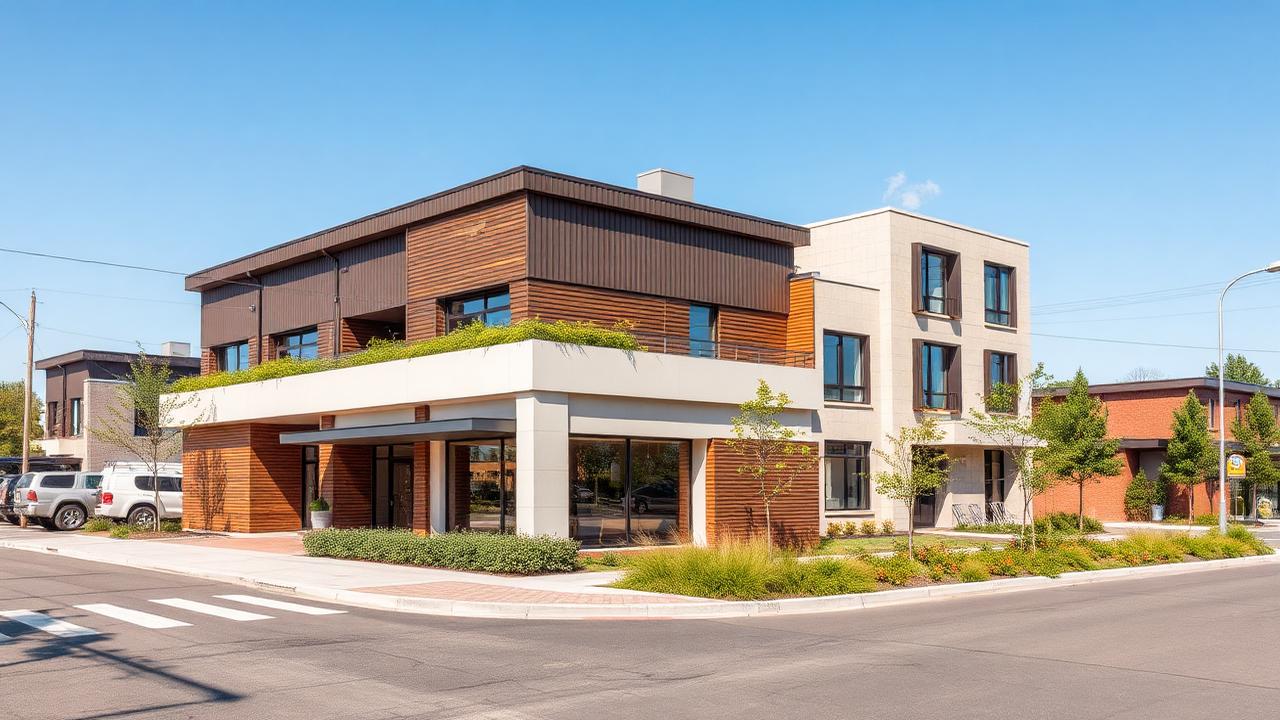
Creative land use strategies can transform restricted acreage into thriving mixed-use developments
5. Planned Unit Developments (PUDs)
A Planned Unit Development allows you to negotiate custom zoning for larger properties in exchange for providing community benefits like open space, affordable housing, or infrastructure improvements.
The PUD advantage: Instead of rigid lot-by-lot zoning, PUDs permit flexibility in lot sizes, building placement, and land uses—as long as the overall project meets density and use requirements. You might cluster homes on smaller lots while preserving significant open space, or mix residential and commercial uses in innovative ways.
Ideal for: Properties of 10+ acres where creative site design can provide both developer benefits and community value. This strategy works particularly well for inherited family land that's too large to develop under conventional zoning.
Example: Instead of developing 50 acres into conventional 2-acre lots (25 homes), a PUD might permit 40 homes on 1-acre lots while preserving 30 acres as community open space, trails, and natural areas—creating more valuable homesites while satisfying community environmental goals.
6. Strategic Subdivision and Lot Line Adjustments
Sometimes the best "zoning hack" isn't changing the zoning at all—it's reconfiguring property boundaries to maximize what's already allowed. Subdivision divides one parcel into multiple lots, while lot line adjustments modify boundaries between existing parcels.
Creative subdivision strategies:
- Flag lot subdivisions: Create buildable lots behind street-frontage lots using access easements
- Family subdivisions: Many jurisdictions allow simplified subdivision for family members, requiring minimal review
- Lot line adjustments: Move property lines to create more conforming, valuable lots from oddly-shaped parcels
- Minor subdivisions: Creating just a few lots often requires minimal review compared to major subdivisions
For instance, if you own 20 acres zoned for 2-acre minimums in South Carolina, you could create up to 10 buildable lots—dramatically increasing the property's market value compared to selling it as a single parcel.
Due diligence requirements: Ensure each proposed lot has adequate access to water, meets road frontage requirements, can accommodate septic systems if needed, and complies with setback requirements.
7. Agricultural Exemptions and Creative Farming
Agricultural zoning often includes surprisingly flexible provisions that most landowners never explore. Beyond traditional row crops and livestock, modern agricultural zoning increasingly recognizes diverse farming activities.
Permitted agricultural uses that generate income:
- Agritourism: Farm tours, pick-your-own operations, corn mazes, pumpkin patches
- Value-added agriculture: On-site processing, farm markets, CSA distribution
- Agricultural education: Workshops, farm-to-table events, summer camps
- Conservation uses: Hunting leases, timber management, conservation easements
- Alternative agriculture: Alpaca/llama farming, beekeeping, tree nurseries, hemp cultivation
- Event venues: Many jurisdictions permit wedding/event venues on agricultural land
In states like Kentucky, Tennessee, and Oklahoma, agricultural land can support diverse income-generating activities while maintaining agricultural zoning and tax benefits.
The tax advantage: Agricultural zoning often comes with significant property tax reductions through agricultural use value assessment. You can generate substantial income from creative agricultural uses while maintaining these tax benefits—the best of both worlds.
Your Action Plan: Where to Start
Conduct Thorough Due Diligence
Before pursuing any strategy, complete comprehensive due diligence on your property. Understand current zoning, comprehensive plan designations, and recent precedents in your area.
Consult with Local Experts
Meet with planning department staff, land use attorneys, and successful developers in your area. Understanding local politics and procedures is crucial for success.
Choose the Right Strategy
Select the strategy that best matches your property's characteristics, your timeline, and your risk tolerance. Start with less complex approaches (variances, conditional uses) before pursuing full rezoning.
Build Community Support
Engage neighbors, attend community meetings, and address concerns proactively. Community opposition kills more development applications than any other factor.
Consider Professional Representation
For significant projects, hire experienced land use attorneys and consultants. Their expertise and relationships often mean the difference between approval and denial.
When Maximizing Value Means Selling
Not every zoning challenge is worth fighting. Sometimes the fastest path to unlocking your land's value is selling to a buyer with the resources, expertise, and timeline to navigate complex zoning processes.
Consider selling when:
- The time and cost of pursuing zoning changes exceeds your capacity or interest
- You need liquidity now rather than years from now
- Your property's carrying costs (taxes, maintenance, opportunity cost) are mounting
- Market conditions favor sellers and you want to capture current values
- You're dealing with inherited property and want a clean, quick transaction
Professional land buyers understand development potential even on restricted acreage. They can evaluate your property's value based on future potential—not just current use—often resulting in better offers than you might expect for "restricted" land.
The Bottom Line on Zoning Strategies
Restrictive zoning doesn't have to mean restricted opportunities. With strategic thinking, proper research, and persistence, you can unlock significant development potential on properties that appear limited at first glance.
The key is understanding which strategy fits your specific situation. A small lot might benefit from a simple variance, while a large tract might justify the time and expense of comprehensive rezoning. Agricultural properties might thrive with creative agritourism uses that require no zoning changes at all.
Whatever path you choose, remember that zoning is fundamentally a negotiation between private property rights and community interests. Demonstrate how your proposed use benefits both, and you dramatically increase your odds of success.
Ready to explore the full potential of your property? Start with thorough research, consult with local experts, and choose the strategy that aligns with your goals and timeline. Whether you unlock that potential yourself or sell to someone who will, understanding these zoning strategies ensures you maximize your land's true value.