Water Rights 101: Why They're the Make-or-Break Factor in Land Ownership
When purchasing rural land, water rights can be just as important as the deed itself. Understanding these legal rights could mean the difference between a valuable investment and a costly mistake.

Access to water can make or break your land's value and usability
Imagine purchasing your dream piece of rural land, only to discover you don't have legal access to the creek running through it, or that you can't drill a well without costly permits and approvals. This nightmare scenario plays out more often than you'd think, leaving property owners with land they can't fully utilize and significantly diminished property values.
Water rights—the legal entitlements to use water from natural sources—are among the most complex and consequential aspects of land ownership in America. Whether you're considering selling your land or buying rural property, water rights belong on your rural land due diligence checklist alongside title, zoning, and access.
Why Water Rights Matter
- Property Value: Land with guaranteed water access commands premium prices
- Development Potential: Building permits often require proof of water rights
- Agricultural Use: Farming and ranching depend on reliable water access
- Legal Protection: Water rights prevent disputes with neighbors and government
The Two Main Water Rights Systems in America
Water rights in the United States operate under two fundamentally different legal doctrines, largely divided by geography and climate patterns. Understanding which system applies to your property is the first critical step.
Riparian Water Rights
Where it applies: Eastern United States (states east of the 100th meridian)
Under riparian doctrine, landowners whose property borders a natural water source (river, stream, lake) have the right to make "reasonable use" of that water. These rights are tied to the land itself and typically can't be sold separately.
Key Characteristics:
- • Rights remain with land ownership
- • "Reasonable use" standard applies
- • Cannot deprive downstream owners
- • All riparian owners have equal rights
Prior Appropriation
Where it applies: Western United States (most states west of the 100th meridian)
The "first in time, first in right" doctrine means water rights are allocated based on who claimed them first. These rights can be bought, sold, and transferred independently of land ownership, making them valuable commodities.
Key Characteristics:
- • First users have priority during shortages
- • Rights can be sold separately from land
- • "Use it or lose it" principle applies
- • Permits required for new appropriations
Groundwater vs. Surface Water Rights
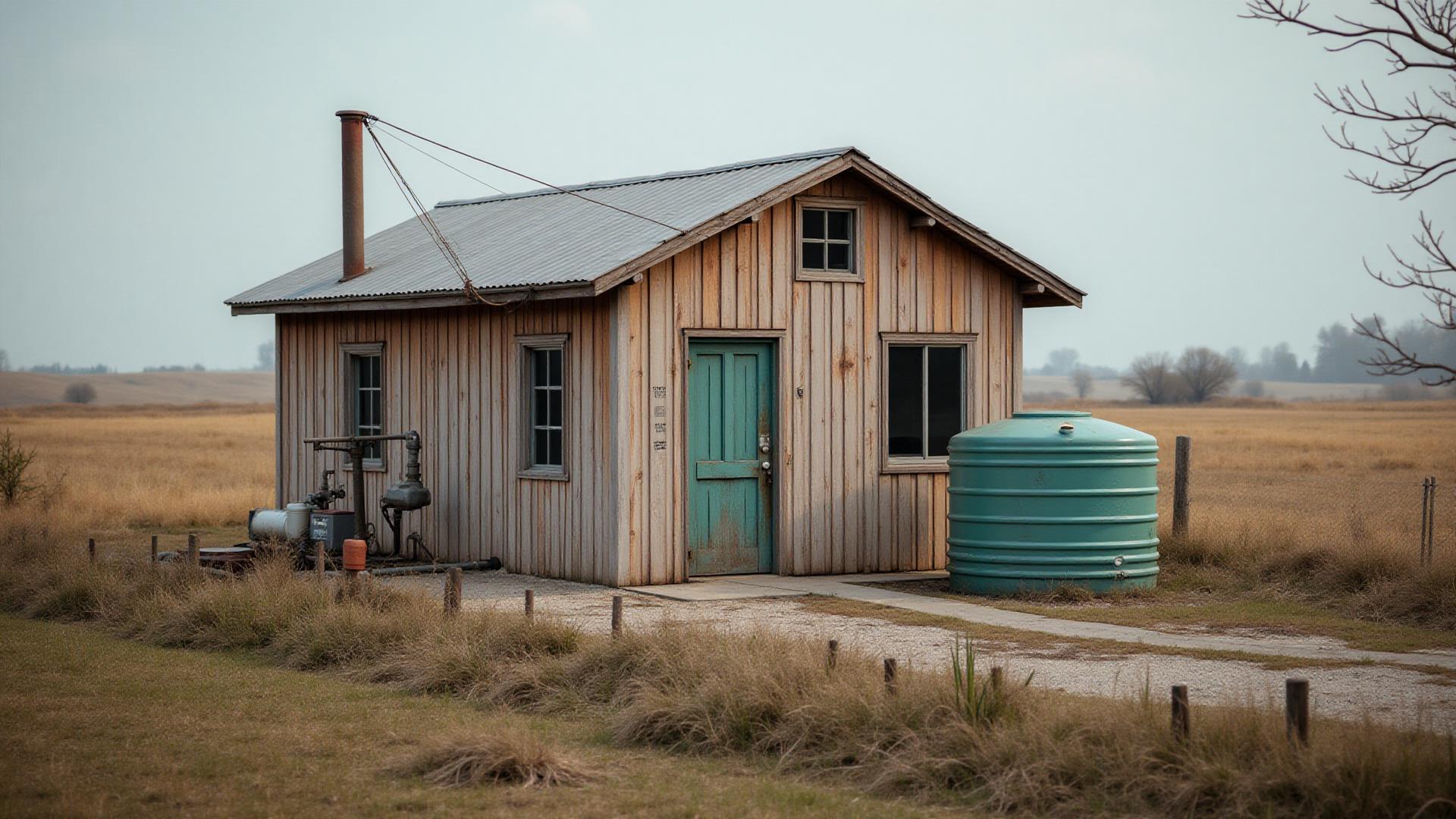
Groundwater access requires understanding complex state regulations
Surface Water
Surface water includes rivers, streams, lakes, and ponds. Rights to use surface water are generally more regulated and well-documented than groundwater. In prior appropriation states, you'll need to check state water registries to understand existing claims and your potential rights.
Groundwater
Groundwater (accessed through wells) has historically been less regulated, but this is changing rapidly as water scarcity increases. Many states now require permits for drilling wells, especially for commercial or agricultural use.
Critical Groundwater Considerations
- • Well drilling permits may be required
- • Depth and usage limits may apply
- • Aquifer depletion can affect neighboring wells
- • Commercial use often requires additional permits
- • Some areas have well spacing requirements
Prior Appropriation vs Riparian Rights: Which State Uses Which?
Roughly speaking, states east of the 100th meridian follow riparian doctrine, states west of it use prior appropriation, and a handful in between (plus California) run hybrid systems. Here's the full map by state — useful when you're checking whether a parcel's water rights pass with the deed or sit in a separate state-agency file.
| State | Surface Water Doctrine | Notes |
|---|---|---|
| Alabama | Riparian | Reasonable use |
| Alaska | Prior Appropriation | Permits via DNR |
| Arizona | Prior Appropriation | Strict groundwater AMAs |
| Arkansas | Riparian | Reasonable use |
| California | Hybrid (Riparian + Appropriative) | SGMA regulates groundwater |
| Colorado | Prior Appropriation | Decreed in water court |
| Connecticut | Riparian | DEEP permits for diversions |
| Delaware | Riparian | DNREC regulates withdrawals |
| Florida | Regulated Riparian | WMD permits required |
| Georgia | Regulated Riparian | EPD withdrawal permits |
| Hawaii | Public Trust / Riparian-like | Native rights apply |
| Idaho | Prior Appropriation | IDWR adjudications |
| Illinois | Riparian | Reasonable use |
| Indiana | Riparian | Significant withdrawal permits |
| Iowa | Regulated Riparian | DNR permits over threshold |
| Kansas | Prior Appropriation | DWR permits |
| Kentucky | Riparian | Reasonable use |
| Louisiana | Riparian (civil law) | Unique civil-law overlay |
| Maine | Riparian | Natural flow / reasonable use |
| Maryland | Regulated Riparian | MDE appropriation permits |
| Massachusetts | Riparian | WMA permits |
| Michigan | Riparian | Great Lakes Compact rules |
| Minnesota | Regulated Riparian | DNR appropriation permits |
| Mississippi | Regulated Riparian | MDEQ permits |
| Missouri | Riparian | Reasonable use |
| Montana | Prior Appropriation | DNRC adjudications |
| Nebraska | Hybrid | Surface = appropriation; groundwater = correlative |
| Nevada | Prior Appropriation | NDWR permits |
| New Hampshire | Riparian | Reasonable use |
| New Jersey | Regulated Riparian | NJDEP allocation permits |
| New Mexico | Prior Appropriation | OSE permits & adjudications |
| New York | Riparian | DEC permits over threshold |
| North Carolina | Regulated Riparian | Withdrawal registrations |
| North Dakota | Prior Appropriation | State Engineer permits |
| Ohio | Riparian | Reasonable use |
| Oklahoma | Hybrid | Surface = appropriation; groundwater = correlative ownership |
| Oregon | Prior Appropriation | OWRD certificates |
| Pennsylvania | Riparian | Reasonable use |
| Rhode Island | Riparian | Reasonable use |
| South Carolina | Regulated Riparian | DHEC permits |
| South Dakota | Prior Appropriation | DENR permits |
| Tennessee | Riparian | Reasonable use |
| Texas | Hybrid | Surface = appropriation; groundwater = rule of capture |
| Utah | Prior Appropriation | Division of Water Rights |
| Vermont | Riparian | Reasonable use |
| Virginia | Regulated Riparian | DEQ withdrawal permits |
| Washington | Prior Appropriation | Ecology certificates |
| West Virginia | Riparian | Reasonable use |
| Wisconsin | Riparian | DNR high-capacity well permits |
| Wyoming | Prior Appropriation | State Engineer permits |
Note: "Regulated Riparian" states still follow riparian principles but layer state permitting on top of larger withdrawals. Always confirm with the relevant state agency before relying on this for a transaction.
Western State Focus: California, Arizona, Oklahoma, Colorado, New Mexico
Western water law is where most buyers and sellers get caught off guard. In these states, water rights are treated as a separate property interest with their own paperwork, priority dates, and forfeiture rules. Here's what to look for in five of the most common states we hear about from landowners.
California
California uses a hybrid of riparian and appropriative rights. Surface water rights are recorded with the State Water Resources Control Board (SWRCB) — search the eWRIMS database by APN or owner name. Groundwater is regulated locally under the Sustainable Groundwater Management Act (SGMA) through Groundwater Sustainability Agencies (GSAs). For any rural parcel, ask: is it inside a SGMA basin, and what does the local GSA's plan allow?
Where to check: SWRCB eWRIMS, your county's GSA, well completion reports via DWR.
Arizona
Arizona separates surface water (prior appropriation, administered by ADWR) from groundwater (regulated heavily inside Active Management Areas like Phoenix, Tucson, Pinal, Prescott, and Santa Cruz). Inside an AMA, new development typically requires a Certificate of Assured Water Supply showing a 100-year supply. Outside AMAs, well drilling is more permissive but still requires a registered well with ADWR.
Where to check: ADWR Wells-55 database, AMA designation, INA boundaries.
Oklahoma
Oklahoma runs a hybrid system. Stream (surface) water is allocated by the Oklahoma Water Resources Board (OWRB) under prior appropriation, while groundwater follows a "correlative ownership" model — landowners overlying an aquifer share its allocation by acreage. That means owning land alone doesn't give you unlimited pumping rights; you need a permit for non-domestic groundwater use.
Where to check: OWRB permit database, basin yield studies.
Colorado
Colorado is the textbook prior appropriation state. Water rights are decreed by one of seven water courts and tracked by the Division of Water Resources (DWR). Every right has a priority date — older dates are "senior" and get filled first in dry years. Even small domestic wells require a permit, and changing the use of a water right requires a court application.
Where to check: Colorado DWR HydroBase, water court decrees, well permits.
New Mexico
New Mexico applies prior appropriation to both surface and groundwater, all administered by the Office of the State Engineer (OSE). Most basins are fully appropriated, meaning new rights are essentially unavailable — buyers usually purchase existing rights and apply to transfer them. Many areas are also covered by ongoing stream adjudications, which can affect priority and quantity for years.
Where to check: OSE WATERS database, adjudication status, declared groundwater basin maps.
Senior vs Junior Water Rights — What It Actually Means
In every prior appropriation state, each water right has a priority date — the day the right was first claimed and put to beneficial use. In a shortage, the state engineer "calls the river": the most senior right gets filled to its full allocation first, then the next, and so on down the line. Junior rights at the bottom may receive nothing at all in a dry year.
This is why the same number of acre-feet on paper can be worth wildly different amounts. A 100-acre-foot right with an 1880 priority date is gold; a 100-acre-foot right with a 1995 priority date may be paper only. Always check the priority date — not just the volume.
For two more common scenarios — Texas surface water under prior appropriation alongside the groundwater "rule of capture," and North Carolina's regulated riparian system — see the doctrine table above.
How to Verify Water Rights Before Buying or Selling
Whether you're buying a 5-acre lot in Sussex County or 500 acres in northern New Mexico, the process is similar. Work through these steps in order and you'll catch most water-rights problems before closing.
- 1
Identify the state's water rights doctrine
Look at the doctrine table above. This tells you whether rights pass with the deed (riparian) or live in a separate state-agency file (prior appropriation). It changes everything about where you look next.
- 2
Pull the deed and title commitment
Read both carefully for water rights reservations, severances, or exceptions. In western states it's common for a previous owner to have sold or reserved the water rights when conveying the land — meaning you'd buy the dirt without the water.
- 3
Search the state water agency database
Pull every record tied to the parcel: California SWRCB eWRIMS, Arizona ADWR Wells-55, Colorado DWR HydroBase, New Mexico OSE WATERS, Oklahoma OWRB. Search by APN, owner name, and quarter-section description.
- 4
Confirm priority dates and seniority
For each appropriative right, write down the priority date and decreed amount. Cross-check against the most recent state engineer 'call' history to see how often the right actually gets water in dry years.
- 5
Verify groundwater and well permits
Get the well log, completion report, and any pumping permits or meter records. In regulated basins (SGMA, AMAs, declared groundwater basins) confirm what the local plan allows for your acreage.
- 6
Get a written water rights opinion
For any parcel where water materially affects value — irrigated farmland, ranchland, anything in a fully-appropriated basin — pay a water rights attorney or engineer for a short written opinion before closing. It's the cheapest insurance you'll buy.
Water Rights FAQ
Do I automatically own water rights with my land?
Not always. In riparian states (mostly east of the 100th meridian), water rights generally pass with the land if the parcel touches a natural watercourse. In prior appropriation states, water rights are separate property and may have been severed, sold, or never claimed at all — owning the dirt does not automatically mean you own the water.
How do I find out if my property has water rights?
Start with the deed and title commitment, then search the state water agency database (such as California SWRCB eWRIMS, Arizona ADWR, or Colorado DWR HydroBase) for permits and decreed rights tied to the parcel. For high-value land, hire a water rights attorney to confirm in writing before closing.
Can water rights be sold separately from land?
In prior appropriation (western) states, yes — appropriative water rights are a separate property interest and can be transferred apart from the land, subject to state engineer or water court approval. In riparian states, water rights are generally tied to the land and cannot be sold separately.
What are riparian rights?
Riparian rights give the owner of land bordering a natural water source the right to make reasonable use of that water. The rights are tied to the land, shared with other riparian owners, and limited by what is reasonable relative to other users — you cannot meaningfully harm downstream owners.
What is prior appropriation?
Prior appropriation is the 'first in time, first in right' doctrine used in most western states. The earliest user (senior right holder) gets their full allocation in a shortage before later (junior) right holders receive any water. Rights must be put to beneficial use or risk forfeiture under 'use it or lose it' rules.
Does groundwater have separate rights from surface water?
Often, yes. Many states regulate groundwater under a different framework than surface water — for example, Texas uses 'rule of capture' for groundwater while regulating surface water by prior appropriation, and California regulates groundwater locally under SGMA. Always check both regimes for the parcel you are buying or selling.
Water Rights and Agricultural Land Value
For agricultural land, water rights can represent more than half of the property's total value. In arid Western states, farmland without water rights may be nearly worthless for cultivation, while the same land with senior water rights commands premium prices.
Agricultural Water Considerations:
- Irrigation Rights: Verify annual allocation amounts and priority dates
- Ditch Companies: Understand shares and assessment fees
- Drought Restrictions: Know how rights are affected during shortages
- Transfer Limitations: Some rights can't be changed from agricultural use

Irrigation rights are essential for agricultural land use and value
Essential Due Diligence: Verifying Water Rights Before Purchase
When conducting due diligence on rural property, water rights deserve special attention. Here's what you need to investigate:
Documentation to Request
- • Water rights certificates or decrees
- • Well permits and completion reports
- • Ditch company share certificates
- • Historical water usage records
- • Survey showing water features
- • State water registry search results
- • Any water-related easements or agreements
Professional Reviews Needed
- • Water rights attorney review
- • Title company water rights examination
- • Hydrologist assessment (for wells)
- • State water board consultation
- • Environmental compliance review
- • Adjudication status verification
- • Neighboring property rights check
Red Flags That Should Concern Buyers
- ⚠️ Vague or missing water rights documentation
- ⚠️ Seller claims rights but can't provide proof
- ⚠️ Property was recently subdivided (water rights may not transfer)
- ⚠️ Pending water rights disputes or litigation
- ⚠️ Well with no permit or exceeding allowed depth
- ⚠️ Water rights in junior position during drought
- ⚠️ Restrictions on transferring or changing use
- ⚠️ Environmental regulations limiting water access
The Growing Impact of Water Scarcity and Climate Change
Climate change and population growth are making water rights increasingly valuable and contested. The Western U.S. is experiencing its worst drought in 1,200 years, leading to unprecedented restrictions on water use and growing conflicts between senior and junior water rights holders.
Emerging Trends in Water Rights:
- Increased Regulation: States are tightening groundwater regulation and permit requirements
- Water Markets: Trading of water rights is becoming more common and sophisticated
- Legal Conflicts: Disputes between states, users, and environmental interests are intensifying
- Technology Solutions: Water conservation and monitoring technology becoming mandatory in some areas
For landowners, this means water rights are likely to become even more important—and valuable—in the coming decades. Properties with well-documented, senior water rights will command increasing premiums, while land without clear water access may face diminishing value and utility.
Selling Land: How Water Rights Affect Your Property Value
If you're considering selling rural property, having comprehensive water rights documentation can significantly increase your sale price and speed up the transaction. Buyers are increasingly sophisticated about water issues and will conduct thorough due diligence.
Maximize Your Land Sale Value:
- Gather all water rights documentation before listing
- Have wells tested and provide recent water quality reports
- Document historical water usage and reliability
- Highlight water features and access in marketing materials
- Consider professional water rights appraisal for valuable rights
At PlaceAcre, we understand the complexities of water rights and their impact on rural property values. Whether you have prime water rights or challenging water access situations, we can help you navigate the sale process and get fair value for your property. Learn more about how to sell land fast and for cash.
Need Help Selling Land with Complex Water Rights?
Don't let water rights complications delay your land sale. PlaceAcre specializes in purchasing rural properties with all types of water access situations. Get a no-obligation cash offer today.
Conclusion: Water Rights Are Non-Negotiable
Water rights represent one of the most critical—and often overlooked—aspects of rural land ownership. Whether you're buying, selling, or simply managing your property, understanding and documenting your water rights is essential for protecting your investment and ensuring your land's future usability and value.
As water scarcity intensifies and regulations tighten, properties with clear, senior water rights will become increasingly valuable. Conversely, land without proper water access may face significant challenges in development, use, and marketability. Taking the time to thoroughly investigate water rights before any land transaction isn't just prudent—it's absolutely essential.
For more information on evaluating rural property, check out our comprehensive due diligence checklist and learn about hidden costs of land ownership that every buyer should understand.
Related Articles
Rural Land Due Diligence Checklist
Complete guide to evaluating rural property before purchase
How to Sell Land Fast
Sell your land quickly without paying realtor commissions
Hidden Costs of Land Ownership
Understand all the expenses that come with owning rural property