In the parched landscape of northwestern Arizona, a quiet revolution is reshaping how America thinks about land ownership, water rights, and resource control. Out-of-state investors and foreign-backed entities are systematically purchasing farmland in Hualapai Valley—not for the soil, but for the liquid gold beneath it.
With the Colorado River basin in historic crisis and federal water allocation negotiations intensifying, these land acquisitions represent more than simple agricultural investment. They're creating what critics call a "de facto transfer basin"—a privately controlled groundwater export operation that circumvents Arizona's own water conservation efforts while threatening the sustainability of local communities.
The Water Rights Reality
In Arizona's rural areas, groundwater remains largely unregulated under the state's "reasonable use" doctrine. Landowners can pump unlimited quantities of groundwater without restriction—a 19th-century legal framework colliding with 21st-century water scarcity.
The Investment Rush: Follow the Water, Not the Soil
Over the past three years, a constellation of out-of-state investment groups has quietly assembled a land empire in Hualapai Valley, purchasing over 15,000 acres of farmland at prices that shocked local ranchers. These aren't traditional agricultural operations seeking fertile soil—they're water extraction facilities disguised as farms.
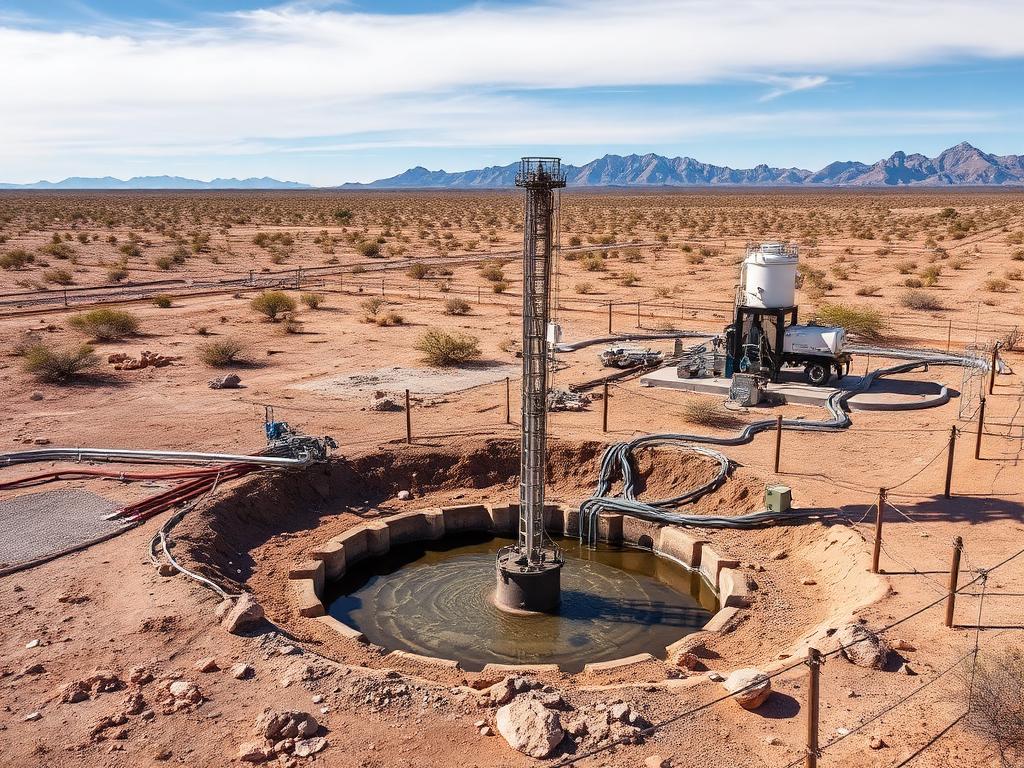
The business model is straightforward but controversial: Purchase cheap land in unregulated groundwater basins, install high-capacity wells, grow water-intensive crops like alfalfa and hay, then export that embedded water to California and Nevada dairies and feedlots facing severe supply restrictions.
According to a 2023 Arizona Republic investigation, some of the largest purchasers include Saudi-owned Fondomonte Arizona and California-based investment groups with ties to major dairy operations. These entities recognized a regulatory arbitrage opportunity: unlimited Arizona groundwater could substitute for increasingly scarce Colorado River allocations.
The Economics of Water Export
- •Land Acquisition: $2,000-$5,000 per acre in Hualapai Valley vs. $15,000-$40,000 in California's Central Valley
- •Water Value: Each acre-foot of embedded water in exported alfalfa worth $300-$500 vs. spot water market prices of $1,000-$2,000 per acre-foot
- •Production Costs: Minimal regulatory compliance in Arizona compared to California's stringent Sustainable Groundwater Management Act (SGMA)
- •ROI: Estimated 15-25% annual return on water-focused agricultural operations
The Colorado River Context: Why This Matters Now
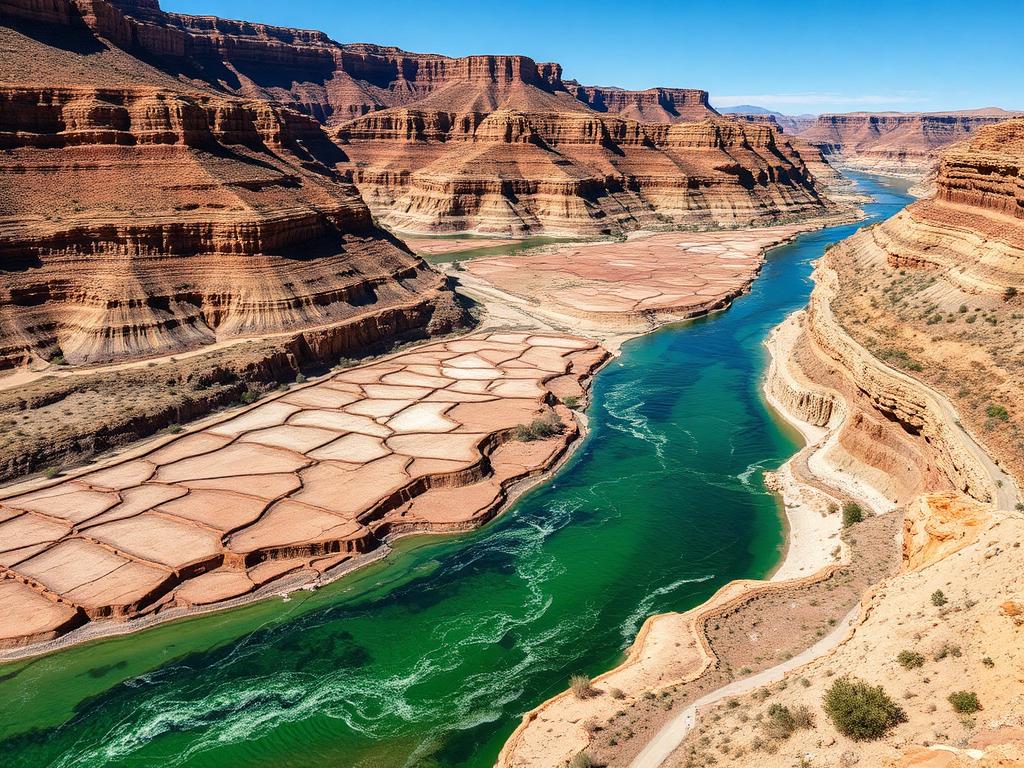
The Hualapai Valley groundwater rush isn't happening in isolation—it's a direct response to the Colorado River basin's unprecedented water crisis. Lake Mead and Lake Powell, the basin's massive reservoirs, are at historic lows, prompting federal negotiations over mandatory water cuts across seven states.
As reported by the U.S. Bureau of Reclamation, the Colorado River system faces a structural deficit of 1.5 million acre-feet annually—roughly the amount of water used by 3 million households. This deficit is driving water prices skyward and pushing agricultural operations to find alternative sources.
California and Nevada face the most severe restrictions under the Colorado River Compact's priority system. Large-scale agricultural operations in these states—particularly alfalfa growers supplying the massive dairy and feedlot industries—are watching their historic water allocations evaporate.
The Regulatory Paradox
While California implements strict groundwater management under SGMA and Nevada faces Colorado River cuts, Arizona's rural basins remain the Wild West of water law. This disparity creates powerful economic incentives for water to flow—via hay trucks—from Arizona to water-restricted states.
Local Impact: When Corporate Water Meets Rural Communities
For generational ranchers and farmers in Hualapai Valley, the investor land rush represents an existential threat. Domestic wells serving family homes and small operations are going dry as high-capacity agricultural wells draw down the aquifer at unprecedented rates.
"We've ranched this land for four generations," says one longtime resident interviewed by local media. "Now we're watching our wells fail while investors pump millions of gallons to grow crops that leave the state. The state tells us it's all legal—that's what terrifies us most."
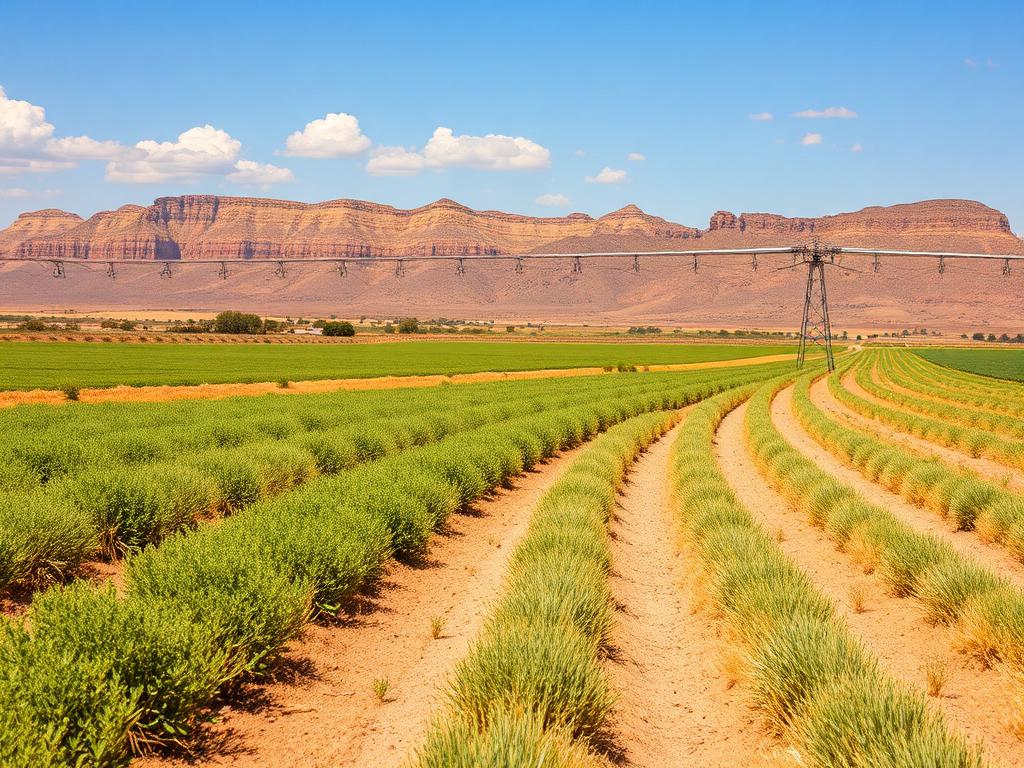
The social costs extend beyond failed domestic wells. Property values for traditional agricultural operations are plummeting as investors outbid local buyers. Small-scale farmers can't compete with entities willing to pay premium prices for land based on water extraction potential rather than agricultural productivity.
Meanwhile, those looking to sell vacant land in Arizona's rural areas face difficult questions: Is their property more valuable as traditional agricultural land or as a potential groundwater mining operation? The answer increasingly determines whether they'll sell to neighbors or to out-of-state water speculators.
The Legal and Regulatory Vacuum
Arizona's groundwater governance presents a patchwork of regulation. Urban areas within designated Active Management Areas (AMAs) face strict pumping limits and conservation requirements. But rural areas like Hualapai Valley fall outside AMA boundaries, remaining subject only to the antiquated "reasonable use" doctrine.
Under this framework, landowners can pump unlimited groundwater as long as it's used beneficially on their property. Growing alfalfa—even if that alfalfa is immediately exported—satisfies this requirement. There's no limit on pumping quantities, no requirement to monitor aquifer levels, and no mechanism to restrict exports.
Failed Reform Attempts
Arizona legislators have attempted to close groundwater loopholes multiple times, facing fierce opposition from agricultural interests and property rights advocates. Key failed proposals include:
- • Statewide groundwater pumping limits (defeated 2019, 2021, 2023)
- • Mandatory well monitoring and reporting requirements (defeated 2020, 2024)
- • Restrictions on foreign ownership of agricultural land with water rights (defeated 2022)
- • Creation of new Active Management Areas in rural basins (ongoing litigation)
The Arizona Department of Water Resources acknowledges the problem but lacks statutory authority to restrict pumping in rural areas. Meanwhile, neighboring states watch helplessly as Arizona becomes the pressure relief valve for the West's water crisis—at Arizona's own expense.
Beyond Hualapai: A National Trend Emerges
While Hualapai Valley captures headlines, similar dynamics are playing out across the American West. From Kansas to Texas, investors are targeting agricultural land in unregulated groundwater basins, recognizing that water scarcity transforms subsurface rights into premium assets.
This represents a fundamental shift in agricultural land valuation. Historically, land prices reflected soil quality, rainfall, growing season length, and market access. Now, groundwater availability and regulatory environment increasingly determine value—particularly for large-scale investors playing the long game on water scarcity.
The implications extend to national food security. As traditional farming communities are displaced by water-mining operations, regional agricultural diversity declines. Productive farmland transitions to monoculture alfalfa production optimized for water extraction rather than local food supply.
Investment Implications
For land investors, the Hualapai situation highlights how water rights increasingly drive rural property values. Key considerations:
- • Groundwater-rich properties in unregulated basins command premium pricing
- • Water export markets create arbitrage opportunities between jurisdictions
- • Regulatory risk cuts both ways: lax oversight enables profits but invites political backlash
- • Long-term sustainability questions cloud future valuations as aquifers deplete
Federal Intervention: The Coming Showdown
As state-level reforms stall, attention turns to federal action. Several scenarios could reshape the groundwater landscape:
1. Endangered Species Act Enforcement: Federal protections for groundwater-dependent species could limit pumping in critical habitats, creating de facto regulation where state law fails.
2. Colorado River Renegotiation: The 2026 expiration of current interstate compact guidelines provides an opportunity to address groundwater as part of basin-wide water budgets.
3. Agriculture Department Restrictions: USDA could condition farm program benefits on groundwater stewardship, creating economic incentives where legal mandates don't exist.
4. Infrastructure Bill Conditions: Federal water infrastructure funding could require recipient states to implement minimum groundwater management standards.
Each approach faces legal and political obstacles, but the status quo appears increasingly untenable. As one water law expert told reporters: "We're watching the tragedy of the commons play out in real time. Someone will regulate this—the only question is whether it happens before or after the aquifers collapse."
What Happens Next: Three Possible Futures
Scenario 1: Regulatory Intervention
Arizona implements emergency groundwater restrictions, creating Active Management Areas in rural basins and limiting out-of-state exports. Existing operations face pumping caps while domestic wells receive priority protection. Property values adjust as water extraction potential decreases, but long-term sustainability improves.
Scenario 2: Market-Based Solutions
Water trading markets formalize the informal export system, with aquifer monitoring ensuring sustainable yields. Investors pay premium prices for certified sustainable water rights while local communities receive compensation through basin management fees. This approach maximizes economic efficiency but risks entrenching water commodification.
Scenario 3: Aquifer Collapse
Without intervention, high-capacity pumping depletes the aquifer beyond recovery. Both investor operations and domestic wells fail as water tables drop beyond economic pumping depths. The valley becomes a cautionary tale—an American example of how short-term resource extraction destroys long-term productivity.
Expert Perspective
"Hualapai Valley is a microcosm of America's water future. As climate change intensifies scarcity and interstate competition grows, we'll see more of these regulatory arbitrage plays. The question isn't whether we regulate—it's whether we regulate proactively or react to crisis. History suggests we'll choose the latter."
— Dr. Sarah Chen, Water Resources Policy Institute
The Broader Implications: Land as Water Delivery System
The transformation of Hualapai Valley illuminates a disturbing trend: In water-scarce regions, land ownership increasingly means water control. This shift has profound implications for agricultural policy, environmental sustainability, and rural community viability.
Traditional conservation easements and agricultural preservation programs focus on preventing development—but they don't prevent resource extraction disguised as farming. A ranch protected from suburban sprawl can still be drained of groundwater by a new owner with high-capacity wells.
This reality demands new frameworks for thinking about land stewardship. Water rights can no longer be treated as incidental to surface ownership—they're the primary asset. Any serious attempt at sustainable land management must directly address subsurface resources and their interstate impacts.
For property owners considering whether to sell vacant land, understanding water rights valuation becomes crucial. Buyers may value groundwater potential far above agricultural productivity, creating opportunities and ethical dilemmas for sellers.
Conclusion: The Water Wars Go Mainstream
Hualapai Valley's transformation from quiet farming community to groundwater export hub represents more than a local controversy—it's a preview of conflicts that will intensify as water scarcity deepens across the American West.
The investors drilling wells in northwestern Arizona aren't villains in a simple morality play. They're responding rationally to price signals created by inconsistent regulation and unsustainable water allocations. When California restricts pumping while Arizona doesn't, economic forces inevitably push water across state lines.
But rational individual decisions can produce collectively catastrophic outcomes. That's the tragedy of the commons—and it's playing out beneath Arizona's desert soil.
Whether through state intervention, federal action, or market mechanisms, the era of unlimited groundwater pumping is ending. The only question is whether we'll act before the wells run dry—or learn the hard way that you can't build prosperity on a foundation of depleted aquifers.
Understanding Water Rights in Your Land Transaction
Whether you're buying agricultural property or looking to sell vacant land, water rights increasingly drive property values in the American West. Understanding groundwater regulations, aquifer health, and future regulatory risks is essential for informed decision-making.