
Updated: August 2026
If you have ever tried to figure out what your acreage is worth, you already know the problem: a house has interior square footage, a bedroom count, and three nearly identical sales on the same street. Raw land has none of that. Understanding how vacant land is appraised means understanding that appraisers working on vacant parcels lean on a different set of data — recent land sales that may be counties away, soil and topography, road frontage, water and mineral status, zoning, and what the property could legally be used for rather than what it is used for today. That difference is exactly why so many owners are surprised by the number when it finally lands on the page, in both directions.
The backdrop matters. USDA NASS's 2026 Land Values Summary, released July 31, 2026, put U.S. cropland at a record $6,020 per acre — the first time the national average has topped $6,000 — with pasture at $2,000 per acre. But a national average is an abstraction. It blends irrigated Corn Belt row crop with dryland Southern Plains rangeland, and it says nothing about your access road, your soil map, or the three sales that closed in your township last spring. Accounting for exactly those parcel-level swings is the entire job of an appraisal. See our coverage of the 2026 USDA land-value numbers.
Pricing a 40-Acre Parcel: Realtor vs. FSBO vs. Cash Buyer
Here is how the same hypothetical $180,000 parcel plays out across three paths. Figures are illustrative estimates, not quotes.
| Realtor (MLS) | FSBO (owner-priced) | Cash Buyer (PlaceAcre) | |
|---|---|---|---|
| How the price gets set | Formal appraisal plus MLS comps | Your own comp research; appraisal optional but recommended ($300–$2,000+) | PlaceAcre's own valuation, at no cost to you |
| Commission & fees | ~6% commission (~$10,800 on $180,000) | No commission, but you handle marketing and negotiation | No commission, no appraisal fee, no seller closing costs |
| Buyer type | Often financing-contingent | Mixed; financing contingencies common | Cash — no lender appraisal or loan approval |
| Time to close | 60–120 days | 90–180+ days typical | 7–24 days |
| Estimated net proceeds | ~$165,000–$169,000 after commission and closing costs | ~$172,000–$176,000 if it sells at your target price | ~$140,000–$155,000 (reflects the discount for speed and certainty) |
The Four-Step Appraisal Roadmap
- Understand the three appraisal approaches. The sales comparison approach is the workhorse for vacant land: the appraiser pulls recent comparable land sales and adjusts each one up or down for size, access, topography, soil quality, and water or mineral rights until the comps line up with your parcel. The income approach comes into play when the land actually produces money — cash rent on tillable acres, a hunting lease, a cell tower or billboard easement, a solar option — and values that income stream directly. The cost approach is rarely the primary method for raw land, since there is nothing built to depreciate; it matters mostly when a parcel carries improvements like fencing, wells, barns, or a road system that has real replacement value.
- Order the right report type. A full narrative appraisal from a state-certified general appraiser is the most rigorous option, and it is what lenders require above certain loan thresholds and what unique or very large rural parcels usually demand. A desktop or restricted appraisal is faster and cheaper but less thorough, and it may not satisfy a lender. A broker price opinion (BPO) is not a legal appraisal at all, but it is a useful, low-cost gut-check when you simply want to know whether your asking price is in the right neighborhood before spending real money.
- Gather your documentation before the site visit. Have a current survey or plat map, soil test results if you have them, your mineral and water rights status, any easements or right-of-way agreements, and your recent tax assessments ready to hand over. Incomplete paperwork is the single biggest cause of appraisal delays on rural land — an appraiser who has to go digging at the courthouse for your easement history is an appraiser whose report arrives two weeks late.
- Use the number to price and negotiate. An appraisal gives you a defensible floor. When a buyer opens low, "here is the certified appraisal" is a far stronger answer than "that feels too low to me." For FSBO sellers in particular, it supplies the same third-party credibility a realtor's CMA would provide — without the commission attached to it.
2026 U.S. cropland average (USDA NASS 2026 Land Values Summary)
2026 U.S. pasture average (USDA NASS 2026 Land Values Summary)
Typical land appraisal cost, depending on parcel size and complexity
Typical turnaround for a full rural-land appraisal
Getting a Formal Appraisal Before an FSBO Sale: Advantages vs. Challenges
Advantages
- A defensible asking price backed by third-party analysis
- A stronger negotiating position when offers come in low
- Useful documentation for tax, estate, and partition purposes
- Required anyway if your buyer is financing the purchase
Challenges
- Costs $300–$2,000+ upfront with no guarantee the land sells
- Rural or unique parcels can be genuinely hard to comp
- The number can come in below owner expectations
- Doesn't account for buyer urgency or off-market demand
What the Commission Actually Costs You
Run the math on a $150,000 parcel. A 6% listing commission is $9,000. Add typical seller-side closing costs of roughly $1,500 to $3,000 — title work, recording fees, prorated taxes, sometimes a survey — and you are looking at $10,500 to $12,000 leaving the table before you see a dollar. That is the real, unavoidable price of the listed path, and it is the number your appraised value has to clear before the comparison is apples-to-apples.
A direct cash sale flips that structure: $0 in commission and $0 in seller closing costs. The honest trade-off is that a cash offer will typically come in below appraised or list value, because the buyer is pricing in speed, certainty, and the fact that you are not marketing the property, waiting on a lender's appraisal, or doing anything to prepare the land. Whether that trade is worth it depends entirely on how much your time and certainty are worth to you — which is a judgment call only you can make, and one you make better with an appraised number in hand.
Five Tactical Steps for a Better Appraisal
- Hire from your state's certified general appraiser roster. Most states publish a searchable roster through their appraiser licensing board. Use it. A residential-only appraiser who does excellent work on three-bedroom houses is often the wrong fit for 80 acres of mixed pasture and timber, and the report will show it.
- Confirm USPAP compliance. Nearly all mortgage-eligible appraisals must follow the Uniform Standards of Professional Appraisal Practice, set by The Appraisal Foundation. Ask directly whether the report will be USPAP-compliant, because a non-compliant report can be rejected by a lender after you have already paid for it.
- Pull your own comps first. County assessor records, recent MLS land listings, and land-listing sites will give you a rough range before the appraiser ever arrives. You are not trying to do their job — you are trying to be able to read the finished report critically and ask intelligent questions if something looks off.
- Understand "highest and best use." Appraisers value land based on its most profitable legal use, not necessarily its current one. That is why an ag parcel on the growth path of an expanding town can appraise well above pure farmland value, and why zoning and utility availability can move your number more than soil quality does.
- Budget extra time and money for hard parcels. Unusually large acreage, mixed or split zoning, and a thin market with few comparable sales all push you toward a certified general appraiser and a longer turnaround. If your property fits that description, plan for the top of the fee range and the far end of the timeline rather than being surprised by both.
Legal Requirements and Typical Fees
Nearly all appraisals tied to federally related mortgage transactions must comply with USPAP, the Uniform Standards of Professional Appraisal Practice administered by The Appraisal Foundation. On top of that, most states require a state-issued appraiser license or certification, which you can verify through your state's appraiser licensing board before you write a check. Verification takes a few minutes and is worth doing.
Typical fee ranges — illustrative, not a quote:
- $300–$600 for a small residential-adjacent lot
- $800–$1,500 for mid-size rural acreage
- $1,500–$5,000+ for large farm, ranch, or timberland parcels requiring a certified general appraiser
Where your property lands in those ranges depends on acreage, travel distance for the appraiser, the depth of the local comp market, and how complicated your title and zoning picture is. Get a written engagement letter with the fee and delivery date before work begins.
Regional Land Values in 2026
USDA NASS's 2026 Land Values Summary, released July 31, 2026, gives you useful anchors — as long as you treat them as anchors and not as your property's value. The Corn Belt (Illinois, Indiana, Iowa, Missouri, Ohio) averaged $8,590 per acre, the highest of the major regions. The Pacific region (California, Oregon, Washington) averaged $8,440 per acre, driven heavily by irrigated and permanent-crop ground. Nationally, cropland averaged $6,020 per acre and pasture averaged $2,000 per acre.
Southern Plains and Appalachian/Southeast rangeland and timberland typically run well below the national cropland average, often somewhere in the $1,500 to $4,000 per acre range depending on soil, water availability, and road access. That said, regional averages are the weakest possible guide to an individual parcel: recreational appeal, hunting quality, merchantable timber, frontage on a river or a paved county road, and proximity to a growing town can each push a specific tract well above whatever its region averages. A parcel-level appraisal exists precisely because the average does not apply to anyone in particular.
Turning the Number Into Better Marketing
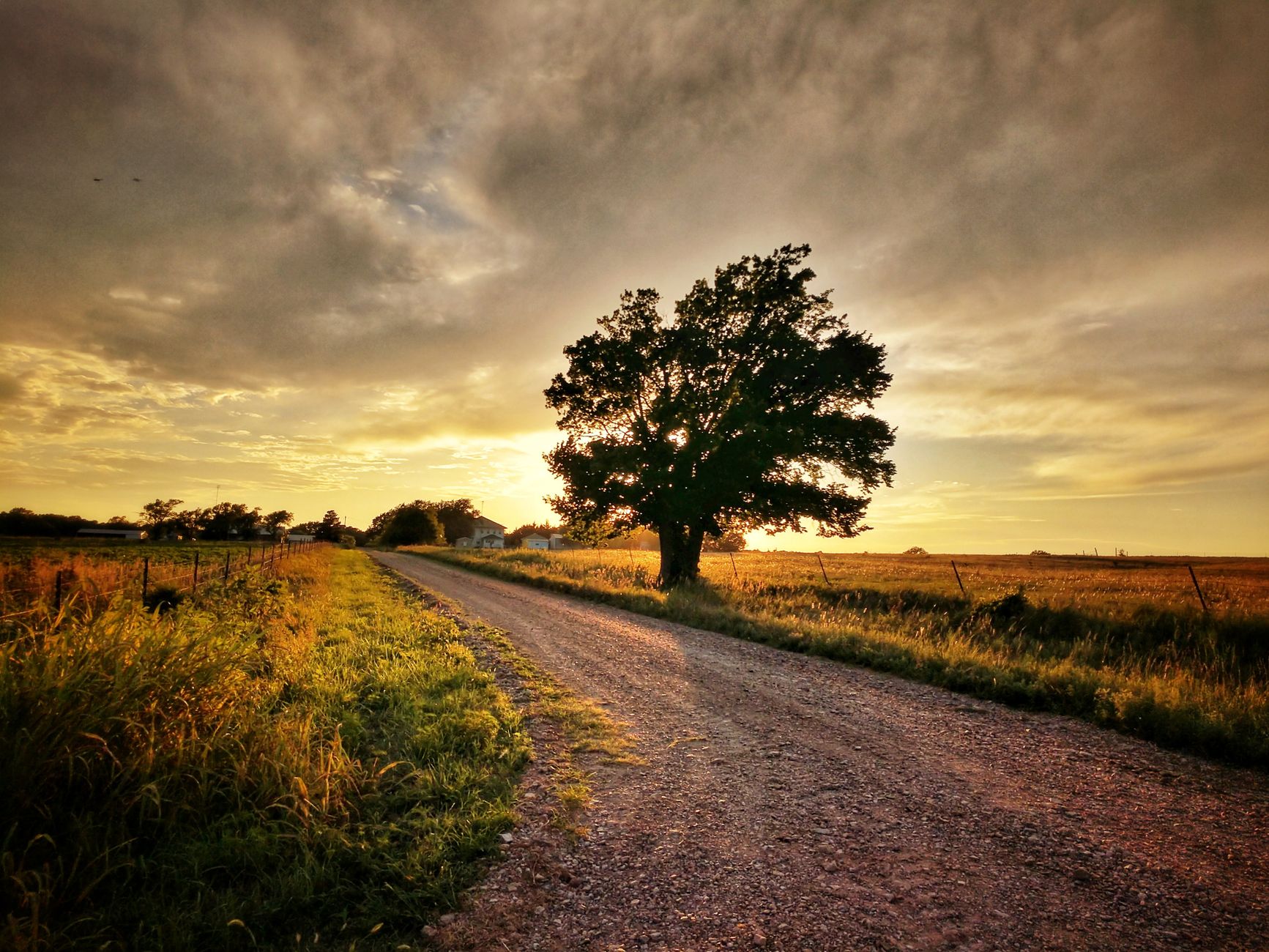
A credible appraisal makes everything else you do more effective. Pair it with drone or aerial photography that shows boundaries, access points, and how the parcel actually sits in its surroundings — buyers looking at raw land are trying to picture shape and access more than anything else, and a ground-level photo of a tree line cannot do that. Shoot during golden hour, when low light shows contour and texture that flat midday sun flattens out.
Then disclose the awkward things up front. Easements, shared driveways, right-of-way agreements, seasonal access limits: put them in the listing. A buyer who learns about your utility easement from their own appraiser three weeks into escrow starts re-trading the deal. A buyer who knew from day one is a buyer who already priced it in.
Skip the Hassle
An appraisal is one way to find out what your land is worth. If you would rather see a real number without paying for a report or waiting a month, we will do our own valuation and send you a cash offer — no fee, no commission, no obligation to accept it.
Frequently Asked Questions
How much does a land appraisal cost?
Typically $300 to $2,000 or more, depending on parcel size, location, and whether a certified general appraiser is required. Small lots near existing development sit at the low end; large farm, ranch, or timber tracts sit at the high end.
How long is a land appraisal valid?
Most lenders treat an appraisal as valid for 90 to 120 days. Beyond that, shifting market conditions can make an older appraisal unreliable as a negotiating tool, and a lender will usually ask for an update or a new report.
Do I need an appraisal to sell land for cash?
No. Cash buyers like PlaceAcre typically do their own valuation at no cost to the seller, which is one reason cash sales close faster than financed ones. An appraisal is still useful if you want an independent second opinion before accepting any offer.
What hurts a land appraisal the most?
Poor or no recent comparable sales nearby, unclear boundaries or a missing survey, unresolved easements, and limited road or utility access are the most common value-reducers on rural parcels.