
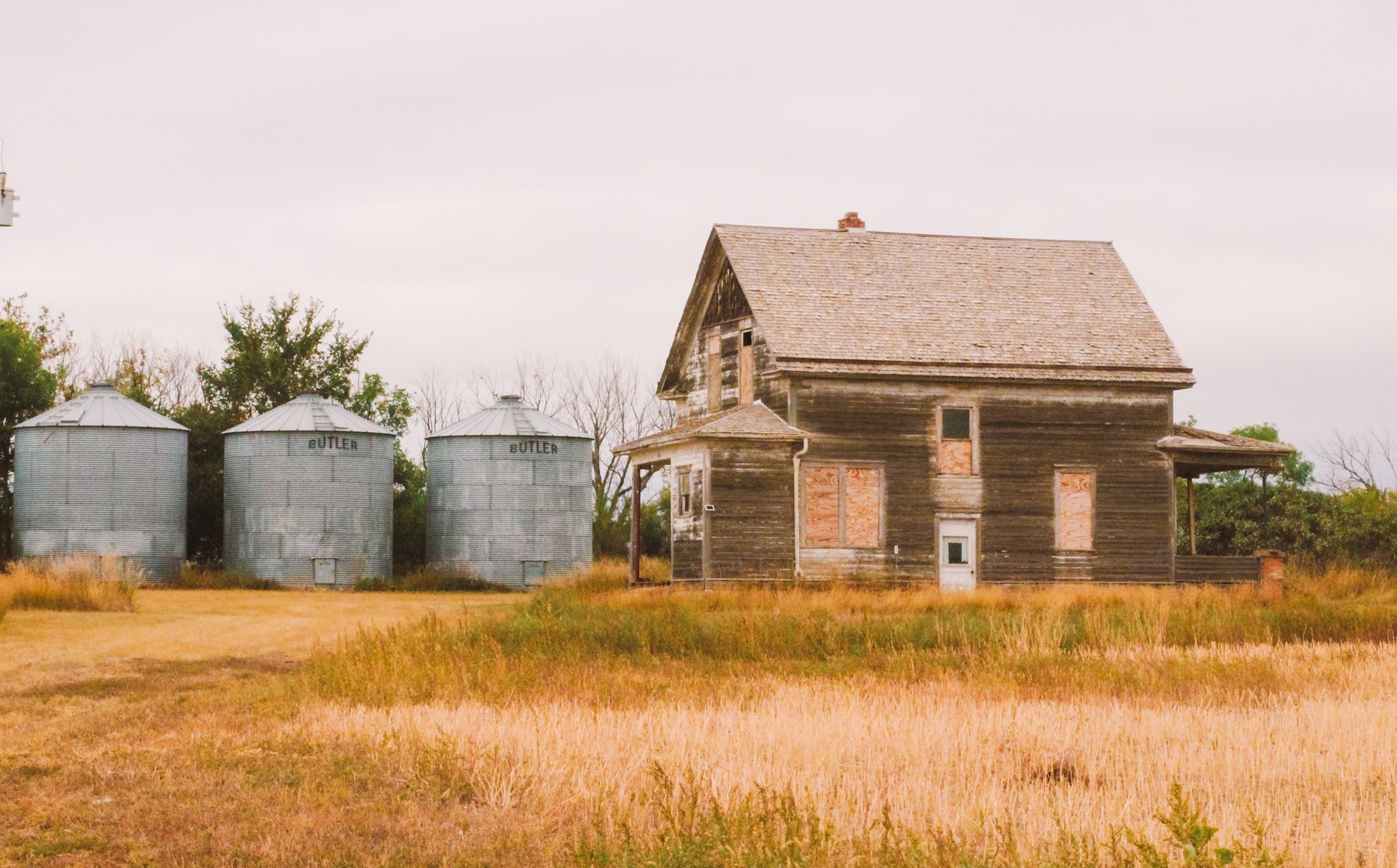
South Dakota has roughly 43 million acres of farm and ranch land — a working landscape that splits cleanly along the Missouri River. East River delivers some of the country's most productive row-crop ground; West River is cattle country, mile after mile of native rangeland; and the Black Hills fringe carries a recreational premium you won't find anywhere else in the state. If you want to sell land by owner in South Dakota, the first move is figuring out which of those three markets your parcel actually sits in.
This guide walks you through pricing, paperwork, marketing, and closing an FSBO land sale in South Dakota — plus a side-by-side comparison against listing with a realtor or selling to a cash buyer. Numbers cited below come from USDA NASS and South Dakota Codified Laws; treat any per-acre range as an illustrative starting point, not an appraisal of your specific parcel.
Institutional buyers are actively hunting South Dakota land right now
A 34,000-acre USDA-certified organic mega-farm in Stanley County — Gunsmoke Ranch — is being sold via sealed bid with offers due July 30, 2026. It's a very different scale than a typical FSBO tract, but the buyer interest driving that sale is the same interest reaching down to individual sections and quarters across the state: out-of-state investors, ag funds, and 1031 exchange money looking for productive Plains ground.
The takeaway for FSBO sellers: don't underestimate the buyer pool for your parcel just because you're not in a metro market. Read the full Gunsmoke Ranch story →
Realtor vs. FSBO vs. Cash Buyer
Illustrated on a sample 80-acre East River cropland parcel valued around $368,800 (80 acres × $4,610/acre, the 2025 South Dakota statewide cropland average per USDA NASS). Your parcel's regional multiplier will shift these numbers — but the structure of the comparison holds.
| Realtor (MLS) | FSBO | Cash Buyer (PlaceAcre) | |
|---|---|---|---|
| Est. time to close | 4–9 months | 3–12 months (variable) | 7–21 days |
| Commission | ~6% (~$22,128) | $0 | $0 |
| Net proceeds (illustrative) | ~$340,000 | ~$360,000–$365,000 (after marketing/closing costs) | Fair cash offer, no fees or repairs |
| Effort required | Low (agent-led) | High (self-managed) | Low |
All net figures are illustrative; actual proceeds depend on buyer, terms, and closing costs.
The 4-Step FSBO Roadmap for South Dakota Land
Step 1 — Price your land
Start with the county Director of Equalization — South Dakota's county-level assessor equivalent — for recent comparable sales in your township and section. Pull three to five comparables at your acreage tier before you settle on an asking number.
Cross-reference those comps against USDA NASS county-level land value data. As a statewide anchor, South Dakota cropland averaged $4,610/acre in 2025 and pastureland averaged $1,340/acre (USDA NASS). East River cropland trades well above that statewide average; West River pasture trades below it.
For unusual parcels — Black Hills recreational tracts, hunting-lease ranches, or older Sections with unresolved mineral rights — a paid appraisal usually pays for itself in negotiating leverage against out-of-state investor buyers.
Step 2 — Get your documents in order
South Dakota transfers title via a signed, notarized warranty deed recorded with the county Register of Deeds. Sellers (grantors) pay a real estate transfer fee of $0.50 per $500 of the property's value under SDCL § 43-4-21 at the time of recording. Certain family transfers, gifts, and divorce-related conveyances are exempt — confirm with your Register of Deeds if you think you qualify.
Recording fees typically run $20–$35 on top of the transfer fee. Also gather your most recent property tax statement, any existing survey or plat map, mineral rights documentation, and — if the parcel has been leased — the current cash-rent or grazing lease.
Step 3 — Market the parcel
Don't rely on residential MLS feeds alone — they're built for houses, not sections. Instead, list on regional platforms that take rural and agricultural land seriously (LandWatch, Lands of America, Land And Farm) and rotate the listing through ranch- and farm-specific channels.
Given how much of South Dakota's land base is grazing and cattle operations, target ranch-buyer networks explicitly: state cattlemen's association classifieds, hunting-lease boards, and farmer/rancher Facebook groups. Word travels fast in tight-knit rural communities — a well-priced parcel with clean photos often gets its first serious call from someone two townships over.
Step 4 — Close the sale
South Dakota closings are typically handled by a title company or a real estate attorney managing title search and escrow. Neither is legally required, but one of them should be running the file so title issues surface before funds move.
Once the deed is signed and notarized, it must be recorded promptly with the county Register of Deeds to formally protect both parties. The recording is where the transfer fee is paid and where the buyer's ownership becomes public record.
FSBO in South Dakota — Advantages vs. Challenges
Advantages
- • No listing commission — keep the full sale price minus your own costs
- • Full pricing control based on your own comps and appraisal
- • Direct buyer relationships, common in tight-knit rural communities
- • No state income tax, which affects net-proceeds math if you're relocating funds
Challenges
- • Smaller buyer pool for remote West River parcels
- • Seasonal market — spring and fall carry most of the serious activity
- • Title and mineral-rights complexity is common on older South Dakota tracts
- • DIY marketing, showings, and negotiation on parcels an hour or more from town
Worked example: commission savings on a $368,800 parcel
On the sample $368,800 East River cropland parcel above, a standard 6% realtor commission would cost roughly $22,128 — money a South Dakota FSBO seller keeps in full. Budget a portion of that back for marketing (listing fees, drone photography, a plat map printout) and closing coordination, but the net capture stays with you rather than a listing agent.
Expanded Step-by-Step: 5 Tactical Moves
1. Order an appraisal on anything unusual
Rural-land appraisals in South Dakota typically run $400–$1,200 depending on size, access, and complexity. For a standard quarter section of tillable East River ground, comps alone may be enough. For a mixed-use West River ranch with grazing, mineral, and water-right components, pay for the appraisal — you'll recover the cost in the first serious negotiation.
2. Build a listing packet buyers actually ask for
Every strong SD land listing surfaces: drone photos of the parcel and boundary, a county plat map with the section highlighted, a mineral rights disclosure (surface only, or surface + minerals), and soil productivity data if the parcel is cropland (NRCS Web Soil Survey is free and 15 minutes of work).
3. Set your negotiation floor before the first call
Decide in writing what your walk-away number is — and what non-price terms matter (closing timeline, retention of a mineral interest, lease-back through harvest). Sellers who negotiate without a pre-set floor tend to give up more than sellers who have one on paper.
4. Handle multiple offers with structure, not urgency
If two or more offers come in, set a written response deadline (72 hours is standard) and ask for proof of funds from any cash buyer or a lender pre-approval letter from any financed buyer. Ranchland especially draws non-serious tire-kickers; the paperwork ask filters them fast.
5. Run a pre-closing document checklist
Before the closing table: signed purchase agreement, executed and notarized warranty deed, title commitment reviewed and cleared, property tax proration calculated, transfer fee and recording fee prepared, and any lease assignments (grazing, hunting, cash-rent) documented. Missing a single item usually pushes closing back a week.
South Dakota Legal Requirements
Method of transfer. Title moves via a signed, notarized warranty deed recorded with the county Register of Deeds. The deed must be notarized before recording.
Transfer fee. Under South Dakota Codified Laws § 43-4-21, the seller pays a real estate transfer fee of $0.50 per $500 of the property's value at recording. Common exemptions include certain intra-family transfers, gifts, and divorce-related conveyances — confirm with the Register of Deeds if you think an exemption applies.
Recording and closing costs. Recording fees typically run $20–$35. Additional closing costs commonly include a title search, notary fees, and property tax proration. There is no state income tax in South Dakota, which affects the net-proceeds math for sellers relocating proceeds out of state.
Attorneys. Not required by law. Most FSBO transactions are handled through a title company; add a real estate attorney when the parcel has mineral, easement, or title complexity.
Regional Land Values in South Dakota
All ranges below are illustrative regional estimates layered on top of the 2025 USDA NASS statewide averages ($4,610/acre cropland, $1,340/acre pastureland) — not a substitute for a local appraisal of your parcel.
East River (Sioux Falls / Brookings / Yankton)
Premium row-crop ground — corn, soybeans, small grains. Top cropland commonly trades $6,000–$9,000+/acre, well above the statewide cropland average.
West River / Black Hills fringe
Pastureland and rangeland typically $900–$1,800/acre, with a recreational-use premium for parcels bordering the Black Hills National Forest.
Missouri River corridor
Mixed ag and recreational ground. Moderate demand from hunting-lease buyers and out-of-state recreational owners chasing pheasant and waterfowl access.
South-central / Rosebud ranching country
Among the state's lowest per-acre values, driven by grazing capacity rather than crop yield. Buyer pool is smaller but committed — largely working cattle operators expanding an existing base.
Marketing & Photography Tips
South Dakota land buyers — especially out-of-state investor buyers — underwrite from the listing before they ever drive out. Three habits pay off:
- Drone aerials showing field boundaries and water access — one clean aerial does more work than ten ground-level shots.
- Include soil-type and productivity index if the parcel is cropland (NRCS Web Soil Survey generates this for free in a few minutes).
- Highlight mineral rights status upfront. "Surface only" or "surface + minerals" in the first paragraph of your listing is a routine South Dakota buyer question — answering it early filters your inbound.
Skip the Hassle — Get a Cash Offer on Your South Dakota Land
One option among several. No commissions, no marketing wait, no back-and-forth with financed buyers. Tell us about your South Dakota parcel and we'll come back with a no-obligation cash offer.
Frequently Asked Questions
Do I need a real estate attorney to sell land by owner in South Dakota?
Not required by law — most FSBO sellers use a title company for closing, though an attorney is recommended for complex title or mineral-rights situations.
How much is the South Dakota land transfer fee?
$0.50 per $500 of the property's value (SDCL § 43-4-21), paid by the seller at recording, with some family-transfer and gift exemptions.
How long does it typically take to sell land by owner in South Dakota?
FSBO timelines vary widely, commonly 3–12 months depending on region and land type, versus 7–21 days for a direct cash offer.
What's the difference in per-acre value between East River and West River South Dakota land?
East River cropland trades well above the statewide average ($4,610/acre cropland, USDA NASS 2025) due to row-crop productivity, while West River pastureland trades closer to or below the $1,340/acre statewide pasture average.