
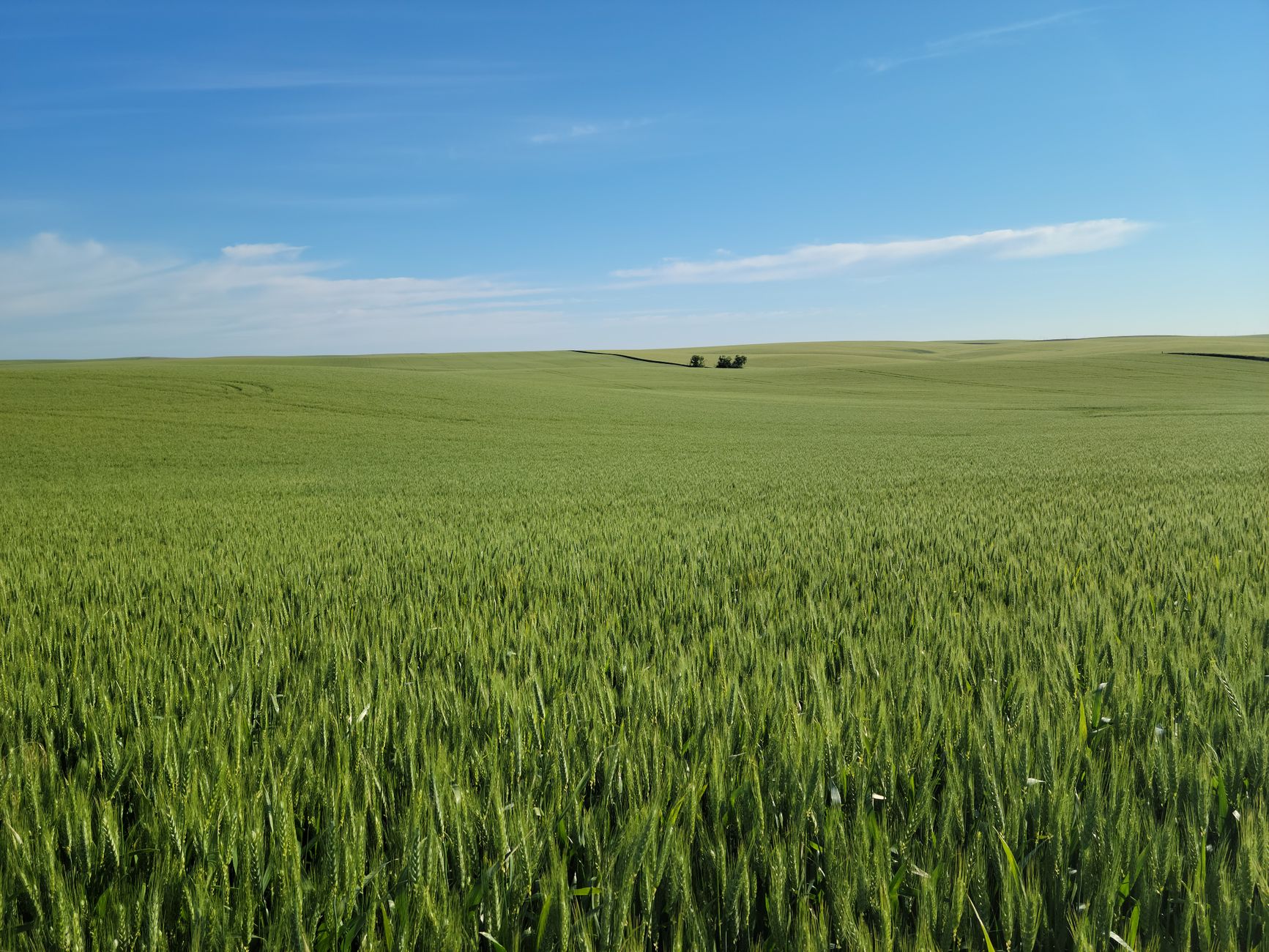
If you want to sell land by owner in Oregon, the first thing to understand is that "Oregon land" is really several different products. On the west side of the Cascades, prime Willamette Valley vineyard and specialty-crop ground can trade for $80,000+ per acre. Cross into Eastern Oregon and you'll find rangeland selling for as little as $500 per acre. The rules you follow, the buyers you attract, and the paperwork you need all shift with your parcel's location and intended use.
This guide walks you through pricing, disclosure obligations under Oregon law, marketing, and closing your own sale — and stacks FSBO against listing with a realtor or accepting a cash offer. Every figure is either sourced (USDA NASS, county assessor data, ORS statutes) or explicitly flagged as illustrative. The cash-offer path exists as one option among several; the right choice depends on your timeline, price target, and appetite for handling paperwork yourself.
Big Ranch Deals Are Pulling Outside Investors Into Eastern Oregon
Record cattle prices and a wave of large ranch consolidations across Harney, Malheur, and Baker counties have drawn outside investor interest into Eastern Oregon rangeland that used to trade almost exclusively among neighboring ranchers. Grazing ground, water rights, and contiguous acreage all carry a premium in this environment. If your parcel is anywhere near a recent auction or a growing ranch operation, that context can meaningfully change your asking price.
See how this played out in a recent Harney County ranch auctionRealtor vs. FSBO vs. Cash Buyer: Oregon Land Sale Comparison
Illustrated on a sample 40-acre Central Oregon parcel valued at $180,000 (~$4,500/acre). Figures are illustrative examples on a hypothetical parcel, not guaranteed pricing.
| Realtor (MLS) | FSBO | Cash Buyer (PlaceAcre) | |
|---|---|---|---|
| Commission | ~6% ($10,800) | $0 | $0 |
| Typical time to close | 60–120+ days | 90–180+ days (harder to find land buyers without MLS reach) | 7–14 days |
| Net proceeds (illustrative) | ~$165,000 after commission + closing costs | ~$172,000 after closing costs, no commission | ~$150,000–$160,000 (below-market cash offer, but no fees, no marketing costs, no financing contingencies) |
The Oregon FSBO Roadmap: Price → Documents → Market → Close
1. Price
Oregon's price spread is one of the widest in the country, so anchoring to a state average will almost always mislead you. Start with your county assessor — the Deschutes County Assessor, Marion County Assessor, and Harney County Assessor all publish sales history and comparable parcel data you can access without hiring anyone. Pull the last 12–24 months of sales for parcels similar in size, zoning, and use.
Cross-check the assessor data against active listings on land marketplaces (Land.com, LandWatch) and, if you're in wine country or on productive cropland, USDA NASS county-level cash-rent and land-value releases. The statewide farm real estate average is around $2,890/acre — useful as a floor for undeveloped rangeland, and essentially irrelevant if you're near Dundee or Willamette Valley vineyard country.
2. Documents
Oregon requires a completed Seller's Property Disclosure Statement under ORS 105.462–105.490 (statutory form specified at ORS 105.464) for most residential-use transfers. Vacant or rural land sold strictly for non-residential use has narrower obligations, but you should still document — in writing — water rights, easements, road access, any known environmental issues, and prior uses that could matter to a buyer (former livestock operations, spray histories, or fill).
Under the statute, buyers have 5 business days after receiving the disclosure statement to revoke their offer or request additional time. Delivering the disclosure early — with the marketing packet, ideally — shortens the timeline and reduces the odds a buyer walks after you've already taken the parcel off the market.
3. Market
MLS access in Oregon typically requires a licensed agent or a flat-fee MLS service. For-sale-by-owner sellers usually lean on land-specific marketplaces — Land.com, Lands of America, and LandWatch — plus local county Facebook groups, which often outperform national portals for smaller and more specialized parcels.
Whichever channels you use, invest in the marketing packet before you publish: parcel map, zoning summary, water-rights documentation, tax history, and 8–15 quality photos. Under-marketed land listings stay online for months; well-packaged ones move.
4. Close
Oregon closings are handled through a title/escrow company rather than an attorney at the table. Typical total closing costs run 1–3% of sale price, split between buyer and seller by local custom (which varies by county). Your title/escrow officer will coordinate the title search, prepare the deed, handle the fund transfer, and record the deed with the county — you don't need a lawyer for a straightforward FSBO close, though one is worth the fee for anything involving contested easements, complex water rights, or partition/estate work.
FSBO in Oregon: Advantages vs. Challenges
Advantages
- Keep the full sale price minus your own costs.
- Control your own timeline and showings.
- Direct negotiation with buyers, without an intermediary.
- No agent scheduling delays or dual-agency conflicts.
Challenges
- Limited buyer reach without MLS access.
- You handle all paperwork and disclosure compliance yourself.
- Land buyers are a smaller, more specialized pool than home buyers.
- Pricing raw or rural land correctly is harder without recent comps.
Commission Savings: Worked Example
On a $180,000 Central Oregon parcel, a typical 6% listing commission would cost $10,800. Selling FSBO keeps that $10,800 in your pocket — though it shifts marketing, showings, negotiation, and disclosure preparation onto you. If your time is scarce, that $10,800 is really the price of buying it back.
Five Tactical Steps Beyond the Basics
- Get a professional appraisal or CMA. Rural or vacant-land appraisals in Oregon typically run $400–$1,200, and are money well spent on any parcel worth more than a few tens of thousands. If you want a cheaper starting point, pull a comparative market analysis from your county assessor's sales data.
- Pull your deed and confirm the legal description. Verify the parcel ID and legal description with the county clerk. Errors here are one of the most common reasons Oregon land closings stall in escrow.
- Order a boundary survey if lines aren't clearly marked. Budget $500–$2,500 depending on acreage and terrain. Timbered or steep parcels in the Coast Range or Cascades sit at the higher end; open valley ground at the lower end.
- Build a marketing packet. Include parcel maps, zoning info, water-rights documentation, easement details, tax history, and high-quality photos. This packet is what separates a listing that closes in 90 days from one that lingers for a year.
- Vet buyers for proof of funds before accepting an offer. Especially important on higher-value timber, vineyard-suitable ground, or waterfront parcels, where "buyers" without financing can tie your land up for months.
Legal Requirements & Closing Costs
Oregon's Seller's Property Disclosure Statement is governed by ORS 105.462 to 105.490, with the statutory form set out at ORS 105.464. Even where the statute doesn't strictly compel disclosure (e.g., transfers of vacant land intended for non-residential use), written disclosure of known defects, easements, and access limitations remains the safest route.
Closing costs to budget for on a typical Oregon land sale:
- Owner's title insurance: roughly 0.5–1% of sale price.
- Escrow/closing fee: often split between buyer and seller, $500–$1,500 total.
- Recording fees: typically under $100.
- Prorated property taxes at closing.
Water Rights: Confirm Before You Market
Water rights in Oregon follow the prior appropriation doctrine ("first in time, first in right"). Confirm any water right associated with your parcel is properly documented with the Oregon Water Resources Department before you market land that relies on it. Selling a parcel with a water right that later fails to transfer is one of the fastest ways to end up in litigation.
Regional Land Values Across Oregon
Willamette Valley — Marion, Lane, Benton, Yamhill counties
$10,000–$80,000+/acre for vineyard, orchard, and other high-value specialty cropland. The strongest demand of any Oregon region, with a large pool of local and out-of-state buyers competing for scarce quality ground.
Central Oregon — Deschutes, Jefferson, Crook counties
Elevated pricing driven by Bend-area recreational and residential demand, well above the rural-use value in many cases. Parcels with irrigation rights, views, or paved-road access command steep premiums over raw range.
Southern Oregon — Jackson, Josephine counties
Mixed ag, timber, and recreational demand with moderate pricing. Vineyard interest continues to spread south of the Willamette, but overall volumes are lower than the northern valley.
Eastern Oregon — Harney, Malheur, Grant, Baker counties
The state's most affordable land, largely rangeland and grazing ground. Statewide farm real estate averages around $2,890/acre, with Eastern Oregon rangeland often well below that. Deals here can move slowly, but recent ranch-consolidation activity has pushed premium grazing tracts higher than they'd have traded five years ago.
Marketing & Photography Tips
- Drone/aerial photos for anything over 5 acres — they show scale and topography in a way ground-level shots can't.
- Shoot at golden hour (the first and last hour of daylight); midday sun flattens land photos badly.
- Include water features and road frontage in the primary shots — these are usually the two biggest value drivers for rural land buyers.
- Provide a parcel map overlay so buyers can see boundaries against the real terrain.
- Disclose easements and access points up front — it filters serious buyers and prevents late-stage renegotiations.
Skip the Hassle
Selling by owner isn't for everyone. If you'd rather skip showings, paperwork, and buyer financing risk, get a no-obligation cash offer in 24 hours.
Frequently Asked Questions
Do I need a real estate attorney to sell land by owner in Oregon?
Not legally required, but recommended for complex transactions involving easements, water rights, or unclear boundaries.
What disclosures am I legally required to make when selling Oregon land?
It depends on intended use — residential-use transfers require the statutory Seller's Property Disclosure Statement (ORS 105.462–105.490); land sold strictly for agricultural/non-residential use has narrower requirements, but written disclosure of known defects, water rights, and easements is still best practice.
How long does it typically take to sell land by owner in Oregon?
Plan for 90–180+ days without MLS access, longer in Eastern Oregon's thinner buyer pool.
Is selling for cash a better option than FSBO in Oregon?
It depends on your priorities — cash offers close in 7–14 days with no fees or financing risk, but typically below full market value; FSBO can net more but takes longer and requires more seller effort.
Related Resources
- Due Diligence Checklist for Buying Rural Land →
- How to Sell Land Without a Realtor →
- Water Rights & Land Ownership →
- How to Finance Raw Land →
Explore Oregon Land
Ready to dig into local market data or sell an Oregon parcel today?
Visit the Oregon land hub