
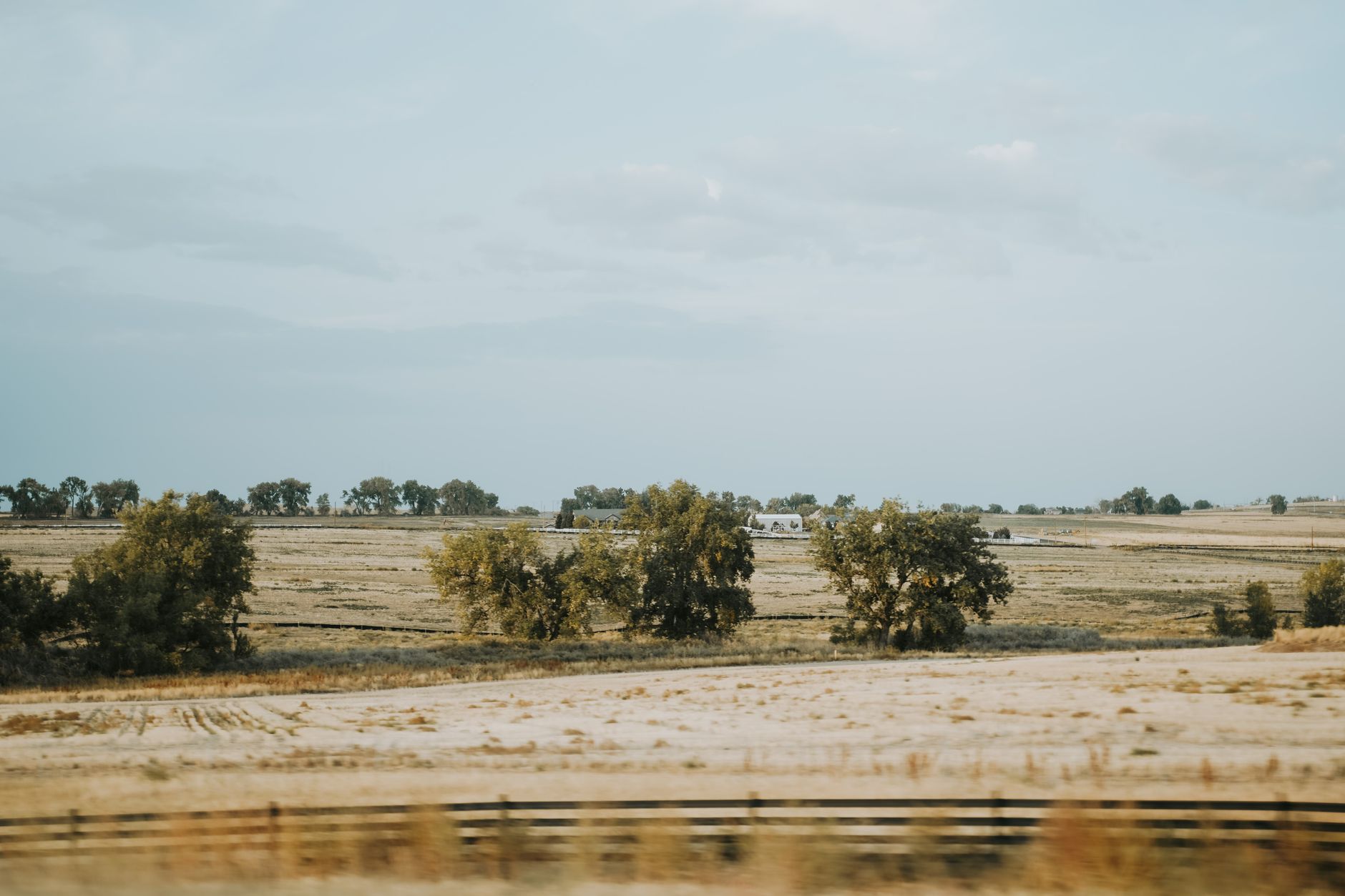
Colorado is really several land markets wearing one state's name. A quarter-section of dryland pasture in Kit Carson County and a five-acre building site outside Golden are both "Colorado land," but they trade at prices two orders of magnitude apart — a few hundred dollars an acre on the Eastern Plains versus six figures per acre along the northern Front Range. That's why the single most common mistake owners make when they decide to sell land by owner in Colorado is anchoring to a statewide average. Statewide averages describe nobody's parcel. Your pricing, your marketing channels, and even your buyer type should match your submarket, not the state.
The good news: Colorado is one of the friendlier states for a for-sale-by-owner land transaction. It's a title-company closing state, the disclosure framework is standardized through the Colorado Real Estate Commission, and the county assessor system gives you free, public access to comparable sales. The complications are mostly geographic and hydrologic — water rights, legal access, and mineral estate severance — and this guide walks through each of them in the order you'll actually hit them.
Ranchland values hit new record highs in the Tenth District
According to the Federal Reserve Bank of Kansas City's Q1 2026 Agricultural Credit Survey, ranchland values across the Tenth District — which covers Colorado, Kansas, Nebraska, Oklahoma, Wyoming, and parts of New Mexico and Missouri — rose nearly 11% year-over-year, reaching new record highs. Cropland values moved up more modestly over the same period, in the range of 2.5% to 4%.
That split matters for Colorado sellers: strong cattle prices have pushed grazing and rangeland demand harder than row-crop ground. If your parcel is pasture or rangeland, the market has moved in your favor more than the headline "farmland" numbers suggest.
Source: Federal Reserve Bank of Kansas City, Q1 2026 Agricultural Credit Survey (Tenth District).
For national context — the USDA's most recent full-year figure of $4,350/acre, up 4.3% year-over-year for 2025 (the 2026 report isn't published until August) — see PlaceAcre's coverage: Farmland Hits Record $4,350 Per Acre →
Realtor vs. FSBO vs. Cash Buyer
Illustrated on a sample 40-acre Eastern Plains dryland/pasture parcel valued at $40,000 ($1,000/acre). Your regional multiplier will move these numbers substantially — a Front Range parcel changes the math entirely — but the structure of each path holds.
| Realtor (MLS) | FSBO | Cash Buyer (PlaceAcre) | |
|---|---|---|---|
| Typical commission | 5–6% ($2,000–$2,400) | 0% | 0% |
| Time to close | 6–12+ months (vacant land sits longer than homes) | 3–9 months | As fast as 7–14 days |
| Closing costs paid by seller | Seller-customary + commission | Seller-customary only | $0 — buyer covers closing costs |
| Net proceeds (illustrative, on $40,000 parcel) | ~$36,600–$38,000 | ~$38,500–$39,500 | ~$40,000 (offer reflects as-is condition) |
All net-proceeds figures above are illustrative estimates, not guarantees. Actual results vary by parcel condition, title issues, negotiated terms, and market conditions at the time of sale.
The 4-Step FSBO Roadmap for Colorado Land
Step 1 — Price your land
Start with your county assessor's office. Colorado assessors publish parcel records and sales data online, and most will help you pull comparable sales for free. If you're working a Front Range or Eastern Plains parcel, the Weld County Assessor and the El Paso County Assessor both maintain searchable property and sales databases that are genuinely useful for FSBO pricing.
Then adjust for region, hard. Eastern Plains grazing land can run as low as roughly $2,200/acre for better-quality grass with water, while Front Range parcels near Boulder or Golden can exceed $60,000/acre where development pressure and views drive the price (2026 market ranges, illustrative). A parcel's road access, fencing, well or water-tap status, and whether the mineral estate is intact all move the number within those bands.
Price for the buyer you're realistically going to attract. Grazing ground competes with other grazing ground on carrying capacity per animal unit; a rural residential lot competes on build-ability, utilities, and commute time. Don't market one as the other.
Step 2 — Get your documents in order
Colorado sellers should complete the Colorado Real Estate Commission's Seller's Property Disclosure (Land) form. It's the standardized instrument buyers and title companies expect, and it specifically covers water rights, mineral rights, legal access, and any known material defects. Filling it out carefully early is the cheapest deal insurance you can buy — most FSBO blowups trace back to something the seller knew, didn't think mattered, and never wrote down.
Alongside the disclosure, gather your deed (so you can confirm the exact legal description), your most recent property tax statement, and any existing survey. If you have well permits, ditch company shares, or easement documents, put them in the same folder now rather than hunting for them under contract deadline.
Step 3 — Market the parcel
Vacant land buyers don't shop where house buyers shop. List on the rural-land-specific platforms — LandWatch, Lands of America, and Land And Farm — in addition to any MLS-adjacent FSBO service you use. Those marketplaces carry the buyers who are actively searching by acreage, county, and use type.
Photography matters disproportionately for vacant land. There's no kitchen to photograph, so what sells the parcel is aerial and drone imagery that shows boundary context, terrain, water features, and how the property connects to a road. A listing with good aerials and a clear parcel map routinely outperforms an identical parcel represented by four ground-level phone photos.
Step 4 — Close the sale
Colorado is a title-company closing state, not an attorney-closing state. A title company handles escrow, prepares the closing documents, records the deed, and issues title insurance. You can absolutely complete an FSBO land sale in Colorado without hiring a lawyer, though nothing stops you from having one review the contract.
Budget roughly 1–2% of the sale price for typical seller closing costs — title work, recording fees, and prorated property taxes. If your buyer is financing the purchase, their lender will require a title insurance commitment, which is one more reason to clear title issues early rather than discovering them three weeks before closing.
FSBO in Colorado — Advantages vs. Challenges
Advantages
- • Keep the full sale proceeds — no listing commission
- • Direct control over pricing and timeline
- • Direct relationship with the buyer, with no message passed through two agents
Challenges
- • Vacant land sits on-market considerably longer than homes
- • You must independently verify water rights and legal access — critical under Colorado's prior-appropriation system
- • Marketing reach is narrower without the MLS and an agent's network
- • Buyer financing for raw land is harder to arrange than home financing
Worked example: commission savings on a $150,000 Colorado land sale
On a $150,000 Colorado land sale, a typical 6% listing commission would run $9,000. Selling by owner — or selling to a cash buyer who charges no commission — keeps that $9,000 with you. Weigh it honestly against the cost of the marketing, the months of carrying taxes, and your own time.
Expanded Step-by-Step: 5 More Tactical Moves
1. Order a title search or O&E report early
An ownership and encumbrance (O&E) report is inexpensive and will surface old liens, unreleased deeds of trust, severed mineral interests, and easements before they become closing-week emergencies. On inherited or long-held rural parcels, a missing heir's signature or an unreleased 1980s lien is common enough that you should assume you'll find something.
2. Get 2–3 comps — or a broker's opinion of value
Pull comparable sales from the county assessor, or ask a local land broker for a broker's opinion of value. If you want a formal number, appraisals for raw land typically run $800–$2,000 depending on acreage, access, and how far the appraiser has to drive.
3. Build a marketing packet
Assemble a single PDF a serious buyer can actually use: a parcel map, GPS boundary pins if you have them, a water rights summary, the mineral rights status, and access/easement details. Buyers who can answer their own questions from your packet move faster and negotiate less aggressively than buyers left guessing.
4. Pre-qualify your buyers
Raw land buyers skew toward cash and seller-financing candidates far more than mortgage-financed buyers, because most conventional lenders won't write a loan on unimproved acreage without a large down payment. Ask early how the buyer intends to pay. A contract that dies in financing after 60 days costs you a season of marketing momentum.
5. Use a title company — and settle who pays for the owner's policy
Colorado has no fixed statewide convention on who pays for the owner's title policy; it's genuinely negotiable, unlike states with a rigid custom. Nail it down in the contract rather than assuming, and confirm the title company's fee schedule up front.
Colorado Legal Requirements
Seller's Property Disclosure (Land). Colorado requires sellers to complete the Real Estate Commission's Seller's Property Disclosure (Land) form, disclosing known material defects along with water rights, mineral rights status, and legal access. Answer from actual knowledge, and say "unknown" where you genuinely don't know rather than guessing.
Water rights are a separate property right. Colorado is governed by the prior appropriation doctrine — "first in time, first in right" — under the state constitution and the 1969 Water Right Determination and Administration Act. Water rights are a distinct, transferable property interest from the land itself, and they must be explicitly addressed in the sale contract. A parcel's water rights, or lack of them, can swing its value dramatically, especially on irrigated Eastern Plains cropland where the difference between a decreed senior right and no right at all is the difference between two very different properties.
Closing cost breakdown (illustrative, seller side). Title insurance runs roughly 0.5–1% of sale price; recording fees typically $50–$150; plus prorated property taxes through the closing date and any HOA or special district transfer fees where applicable. Special district fees are worth checking specifically on Front Range exurban parcels, where metro districts are common.
Regional Land Values in Colorado
All regional per-acre figures below are illustrative market ranges, not appraisals of any specific parcel.
Front Range / Denver Metro exurbs
Douglas, Elbert, and Weld counties carry a heavy development-pressure premium, ranging roughly $10,000–$60,000+/acre as you move closer to Boulder and Golden. Build-ability, water tap availability, and zoning drive most of the spread here.
Eastern Plains
Yuma, Phillips, Logan, Kit Carson, and Baca counties: dryland and pasture generally $450–$1,200/acre, while sprinkler-irrigated cropland in Phillips and Yuma counties runs $4,000–$7,200/acre (2026 figures, Premier Farm Credit). Irrigation is the single biggest value lever out here.
Western Slope
Mesa, Delta, Montrose, and Garfield counties see mixed agricultural and recreational demand, with ranchland values tracking the broader ~11% YoY Tenth District surge. Orchard and vineyard ground near Palisade and Delta prices on its own logic.
Mountain resort counties
Eagle, Pitkin, Summit, Routt, and San Miguel counties trade as premium recreational and second-home land, reaching well into six figures per acre in prime locations. Treat this as a distinct submarket from working agricultural land — the buyers, the comps, and the marketing all differ.
Marketing & Photography Tips
- Lead with aerials. Drone shots that show boundary context, water features, and road access answer a buyer's first three questions before they ask them.
- Shoot in more than one season if you can. Eastern Plains buyers value seeing land both green during the growing season and dormant — it tells them what the grass actually does, not just what it looked like on one good June afternoon.
- Show the access road. Photograph the approach from the county road all the way in, including gates and cattle guards.
- Overlay the boundary. A simple parcel-map overlay on an aerial photo removes the ambiguity that keeps buyers from making an offer.
Skip the Hassle — Get a Cash Offer on Your Colorado Land
One option among several. PlaceAcre buys Colorado land for cash, covers closing costs, and can close in as little as 7–14 days if you'd rather not spend months marketing the parcel yourself.
Frequently Asked Questions
How long does it take to sell land by owner in Colorado?
Typically 3–9 months FSBO, versus as fast as 7–14 days with a direct cash buyer. Vacant land has a smaller buyer pool than housing, so time-on-market runs longer at every price point.
Do I need to disclose water rights when selling Colorado land?
Yes. Water rights status — including whether any rights convey with the land — is a required and closely scrutinized part of the Colorado Seller's Property Disclosure (Land) form.
Is Colorado an attorney-closing state?
No. Colorado closings are handled through title companies, not attorneys, though buyers and sellers can still choose to involve one for contract review.
What's my Colorado land worth per acre?
It depends heavily on region: Eastern Plains dryland can be under $1,000/acre while Front Range or mountain-resort parcels can exceed $60,000/acre. Try PlaceAcre's land value calculator for a property-specific estimate.
Related Resources
Related Locations in Colorado
Explore more of PlaceAcre's Colorado resources.