On December 8, 2025, the Trump administration unveiled one of the largest agricultural relief programs in recent American history: $12 billion in emergency "Farmer Bridge" payments designed to stabilize food production, prevent farm foreclosures, and keep millions of acres of rural farmland in active agricultural use. This sweeping initiative comes at a critical juncture for American agriculture, as farmers face mounting pressures from volatile commodity prices, supply chain disruptions, and escalating trade tensions that have left many family operations teetering on the brink of financial collapse.
The Emergency Declaration
Speaking from the Rose Garden, administration officials characterized the Farmer Bridge program as a direct response to what they termed "unfair market disruptions" affecting American agricultural producers. The program represents a significant expansion of executive authority in agricultural policy, bypassing traditional congressional appropriation processes to deliver rapid relief directly to farmers and landowners across all 50 states.
"American farmers are the backbone of our nation's food security. These bridge payments will ensure that not a single family farm is lost to the market chaos created by foreign manipulation and unfair trade practices."
— USDA Statement, December 8, 2025
The Department of Agriculture has outlined a streamlined application process, with payments expected to reach eligible farmers within seven business days of approval. Unlike previous farm support programs that required extensive documentation and multi-month waiting periods, the Farmer Bridge initiative prioritizes speed over bureaucratic procedure—a decision that has drawn both praise from agricultural advocates and scrutiny from fiscal conservatives concerned about oversight.

Family farmers across America's heartland stand to receive direct financial support under the new initiative
Who Qualifies for Farmer Bridge Payments
The Farmer Bridge program casts a wide net across American agriculture. According to USDA guidelines released alongside the announcement, eligible recipients include active farming operations, agricultural landowners who lease acreage to farmers, and ranchers managing livestock operations on qualifying lands. The program specifically targets operations that can demonstrate revenue losses attributable to market disruptions since January 2025.
Active Farm Operations
Row crop, specialty crop, and diversified farming operations
Agricultural Landowners
Owners who lease land to active farming operations
Livestock Operations
Cattle, dairy, poultry, and other animal agriculture
Beginning Farmers
Priority consideration for operations under 10 years
Payment amounts are calculated based on a complex formula that weighs acreage, crop type, historical production levels, and documented market losses. According to preliminary estimates from agricultural economists at USDA's Farm Service Agency, the average payment for mid-sized row crop operations is expected to fall between $15,000 and $45,000, with larger operations potentially receiving significantly more based on scale and demonstrated need.
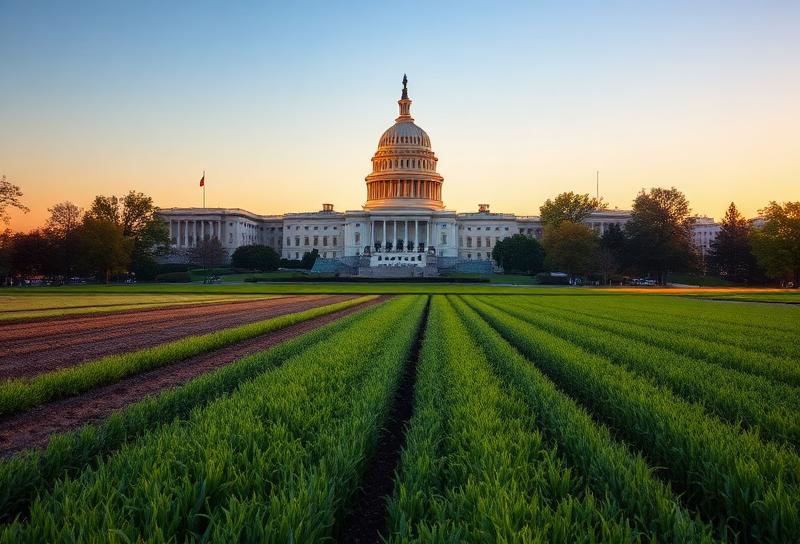
The intersection of federal policy and agricultural land use continues to shape rural America's economic landscape
What This Means for Agricultural Land Values
The announcement has already begun rippling through rural real estate markets. Agricultural land appraisers report a notable uptick in inquiries from both buyers and sellers seeking to understand how the Farmer Bridge payments might affect property values. The infusion of $12 billion into the agricultural economy is expected to provide immediate liquidity relief, potentially preventing distressed sales that could have depressed land values across major farming regions.
Market Implications
- Short-term stabilization: Fewer forced sales expected in Q1 2026, supporting current price levels
- Investor interest: Institutional buyers may view program as validation of agricultural land as stable asset class
- Regional variation: States with higher concentration of eligible operations may see stronger land market activity
For landowners contemplating whether to hold or sell their agricultural properties, the Farmer Bridge program introduces both opportunities and considerations. Those receiving direct payments will enjoy improved cash flow that may reduce pressure to sell, while the program's existence signals continued federal commitment to supporting agricultural land use—a factor that could enhance long-term property values. However, some market observers caution that reliance on emergency programs creates uncertainty about future support, potentially making this an opportune moment for landowners to sell vacant land while market conditions remain favorable.
Preventing the Next Farm Crisis
The specter of the 1980s farm crisis looms large over any discussion of agricultural policy intervention. During that devastating period, falling commodity prices, high interest rates, and declining land values created a cascade of farm foreclosures that reshaped rural America for a generation. Entire communities were hollowed out as families lost operations that had been passed down for decades.
The Stakes Are Real
Before the Farmer Bridge announcement, agricultural lenders were reporting a 23% increase in loan delinquencies compared to the same period in 2024. Farm bankruptcy filings in the Midwest had reached levels not seen since 2019, with projections suggesting the trend would accelerate without intervention.
Administration officials explicitly invoked this history when framing the Farmer Bridge program, arguing that early intervention is far more cost-effective than attempting to rebuild communities after widespread foreclosures have occurred. By providing bridge financing during a period of market instability, the program aims to preserve the social fabric of rural America while maintaining the nation's agricultural productive capacity.
Conservation and Rural Development Considerations
The Farmer Bridge program's design includes several provisions that intersect with conservation policy. Recipients must certify compliance with existing conservation requirements, and the USDA has indicated that a portion of the $12 billion will be directed specifically toward operations implementing cover cropping, reduced tillage, and other soil health practices. This integration of production support with conservation incentives represents an evolution in agricultural policy that land investors should monitor closely.
For landowners considering their options, understanding these conservation requirements is crucial. Properties with existing conservation easements or enrollment in programs like the Conservation Reserve Program (CRP) may interact with Farmer Bridge eligibility in complex ways. Consulting with local USDA Farm Service Agency offices before making decisions about evaluating raw land transactions is strongly advisable during this transitional period.
Rural development patterns may also shift in response to the program. Communities that might have faced population decline due to farm consolidation following foreclosures may instead see stabilization or even modest growth as family operations remain viable. This has implications for rural land values beyond pure agricultural use, affecting residential, recreational, and commercial property markets throughout America's heartland.
What Landowners Should Do Now
Whether you're an active farmer, an agricultural landowner leasing to operators, or an investor holding rural acreage, the Farmer Bridge announcement warrants careful consideration of your position and options. For those experiencing financial pressure, applying promptly for program benefits could provide critical breathing room. For landowners weighing a sale, the stabilizing effect of the program on land values creates a potentially favorable market environment.
Assess Eligibility
Review USDA guidelines to determine if your operation or property qualifies
Document Losses
Gather records showing market-related revenue impacts since January 2025
Evaluate Options
Consider whether to hold, develop, or sell based on current market conditions
The agricultural real estate market often moves in response to policy developments like the Farmer Bridge program. Landowners who act decisively—whether by securing program benefits or by positioning properties for sale during periods of market stability—typically achieve better outcomes than those who wait passively for conditions to clarify. For guidance on due diligence in land transactions, consulting with experienced professionals who understand both agricultural operations and real estate markets is essential.
Looking Ahead
The $12 billion Farmer Bridge program represents a significant moment for American agriculture and the millions of acres of farmland that underpin the nation's food security. While questions remain about the program's long-term fiscal implications and whether it will be followed by additional interventions, the immediate effect is clear: rural America has received a substantial lifeline at a moment of genuine need.
For landowners, investors, and agricultural operators, the weeks and months ahead will require close attention to program implementation, market responses, and evolving policy discussions. The intersection of government support, market dynamics, and individual decision-making will ultimately determine whether the Farmer Bridge succeeds in its ambitious goal of preserving American farmland for future generations. PlaceAcre will continue monitoring these developments and providing the insights landowners need to navigate this complex landscape.
Considering Your Land Options?
Whether you're looking to capitalize on current market stability or explore alternatives to traditional real estate sales, PlaceAcre offers fair cash offers with no commissions, no repairs, and closings in as little as 7 days.
Get Your Cash Offer Today