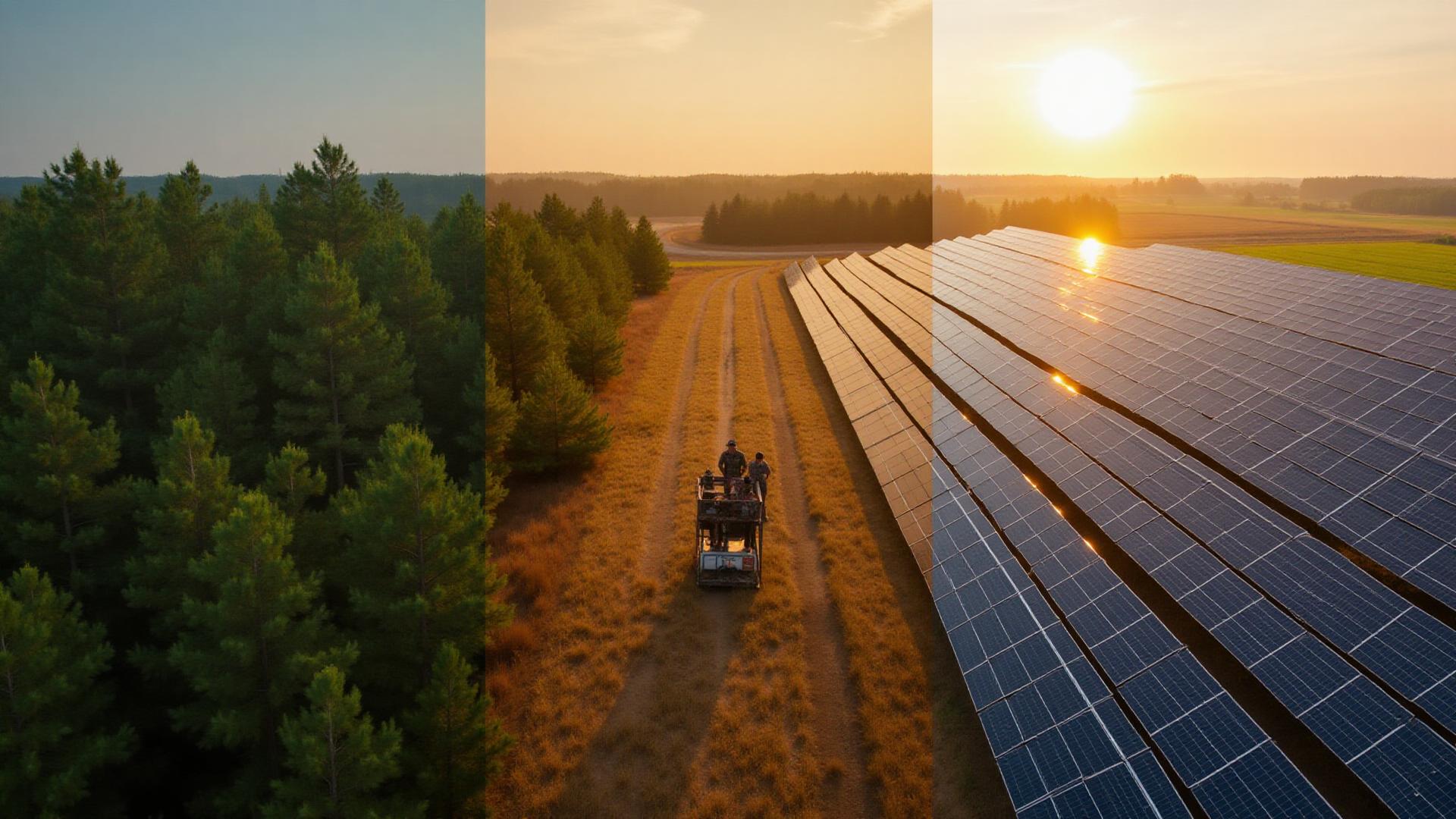
Owning vacant land doesn't mean your property needs to sit idle. Whether you've inherited rural acreage, invested in raw land, or simply aren't ready to develop your property yet, there are multiple proven strategies to generate substantial income from land while maintaining ownership. Some landowners earn $200-$1,000+ per acre annually through strategic land management—without lifting a shovel.
This comprehensive guide explores three of the most lucrative and accessible income streams for vacant landowners: timber harvesting, recreational hunting leases, and solar farm development. We'll cover real income potential, minimum acreage requirements, contract considerations, and how to maximize returns while preserving your land's long-term value.
If you're considering whether to hold or sell vacant land, understanding these income opportunities can significantly impact your decision and financial planning.
5 Ways to Earn From Idle Land at a Glance
| Income Type | Avg Annual Return | Setup Complexity | Best For |
|---|---|---|---|
| Timber rights | $50–$225/acre/year (averaged over rotation) | Medium — needs forester & harvest plan | 20+ acres of mature pine or hardwood |
| Hunting leases | $5–$50/acre/year | Low — lease agreement & liability insurance | 40+ rural acres with game (deer, turkey, waterfowl) |
| Solar farm rentals | $700–$2,500/acre/year for 25–35 years | High up-front — developer vetting & long-term contract | Flat 20+ acres within ~5 miles of a substation |
| Cell tower leases | $1,200–$30,000/year per tower site | Medium — carrier negotiation & small land easement | Elevated parcels near roads or coverage gaps |
| Grazing agreements | $10–$50/acre/year (region & forage dependent) | Low — simple lease with local rancher | Open pasture or rangeland with water access |
Quick Comparison: Timber vs. Hunting vs. Solar (2026)
At-a-glance look at startup cost, revenue range, time commitment, and the land profile each strategy fits best.
| Income Source | Startup Cost | Annual Revenue Range | Time Commitment | Best Land Type |
|---|---|---|---|---|
| Timber harvest | $0 (existing stand) to $200–$400/acre (replanting) | $50–$225/acre/year averaged over rotation | Low (mostly passive, periodic harvests) | 20+ acres of mature pine or hardwood with truck access |
| Hunting lease | $300–$800/year for liability insurance | $5–$50/acre annual lease · $100–$5,000/day for guided | Very low (sign lease, collect check) | 40+ rural acres with deer, turkey, or waterfowl |
| Solar lease | $2,500–$5,000 for attorney to review lease | $700–$2,500/acre/year for 25–35 years | Very low (developer handles everything) | Flat 20+ acres within ~5 miles of a substation |
Numbers reflect 2026 market context. Solar rates have climbed 15–25% in the past two years as hyperscaler data centers push utility demand. Hunting lease rates remain steady. Southern pine timber prices are recovering from 2023–2024 lows as housing starts stabilize.
Timber Revenue: The Patient Landowner's Paycheck
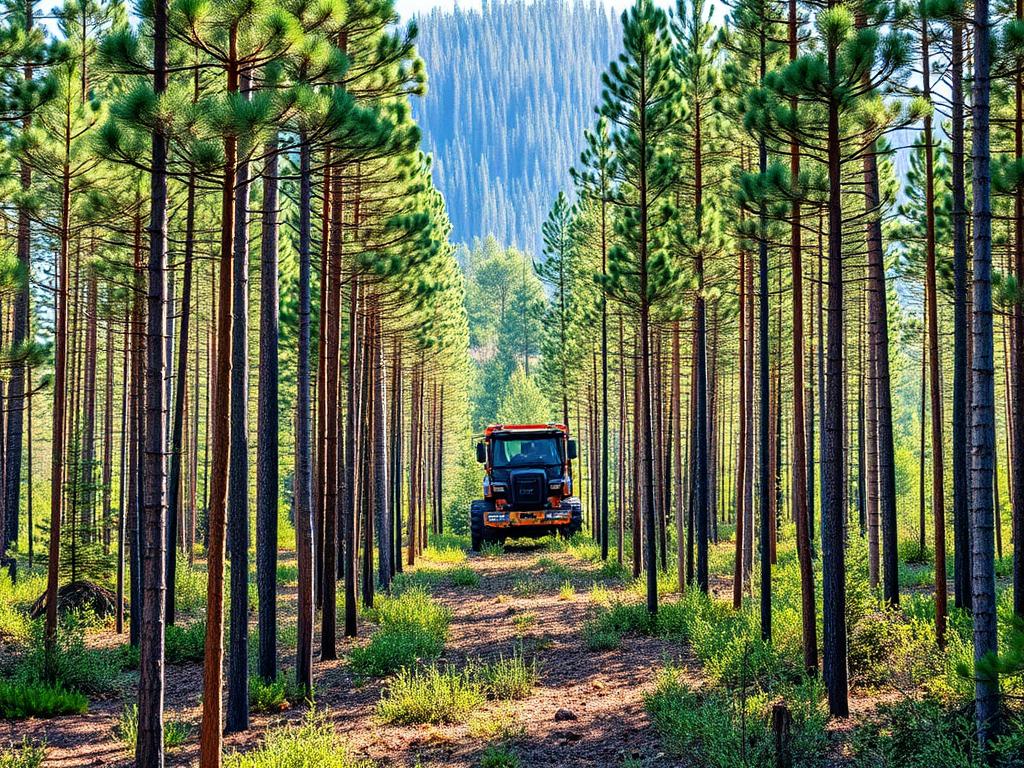
Timber management represents one of the most sustainable and profitable long-term land income strategies. If your property has existing mature trees or you're willing to invest in forestry, timber can provide recurring revenue for generations while actually increasing your land's value over time.
Timber Income Potential by Region
Southern Pine (TX, AL, GA, SC, NC)
- • Rotation cycle: 25-30 years to maturity
- • Revenue per acre: $1,500-$3,000 per harvest (clearcut)
- • Annual equivalent: $50-$100/acre/year average
- • Thinning revenue: $300-$800/acre at year 15 (selective harvest)
Hardwood Timber (Eastern US, Mid-Atlantic)
- • Rotation cycle: 40-60 years to premium quality
- • Revenue per acre: $3,000-$8,000+ per harvest
- • Annual equivalent: $60-$150/acre/year average
- • Premium species: Black walnut, cherry, oak command highest prices
Western Timber (Pacific Northwest)
- • Rotation cycle: 35-45 years (Douglas fir, redwood)
- • Revenue per acre: $4,000-$10,000+ per harvest
- • Annual equivalent: $90-$225/acre/year average
- • Note: Higher growth rates but steeper terrain affects harvest costs
Minimum Requirements for Timber Income
- ✓Acreage: Minimum 20-40 acres for commercial viability (loggers need scale to justify equipment mobilization)
- ✓Tree maturity: Existing stands 15+ years old, or willingness to wait for new plantings
- ✓Access: Road access for logging trucks and equipment (harvest roads can be temporary)
- ✓Management plan: Work with consulting forester (typically 5-10% of harvest value as fee)
Timber Management Strategies That Maximize Returns
Selective Harvesting (Thinning)
Remove 30-40% of trees at mid-rotation to generate immediate income while accelerating growth of remaining high-value trees. This approach provides cash flow while maintaining forest canopy and wildlife habitat. Typical thinning generates $500-$1,500/acre while improving final harvest value by 20-30%.
Sustainable Harvest Rotation
Divide property into management blocks harvested on rotating schedule. For example, on 80 acres divided into four 20-acre blocks on 25-year pine rotation, you harvest one block every 6-7 years—creating regular income stream while always maintaining mature timber. This strategy provides predictable cash flow and continuous wildlife habitat.
Carbon Credits (Emerging Market)
Certified forest management can now generate carbon offset credits worth $10-$50/acre annually. Programs like the American Carbon Registry and California Forest Project Protocol allow landowners to monetize carbon sequestration while maintaining timber. Minimum acreage typically 40+ acres, requires 100-year commitment. Combined with selective harvesting, carbon credits can add 20-40% to total forest revenue.
Pro tip: Hire a consulting forester before any timber sale. Their fee (5-10% of sale) is more than offset by ensuring fair prices, sustainable practices, and preventing land damage. Consulting foresters market your timber competitively, supervise harvest operations, and ensure you're not leaving money on the stump through poor cutting practices.
Hunting Lease Income: Quick Cash with Minimal Land Changes
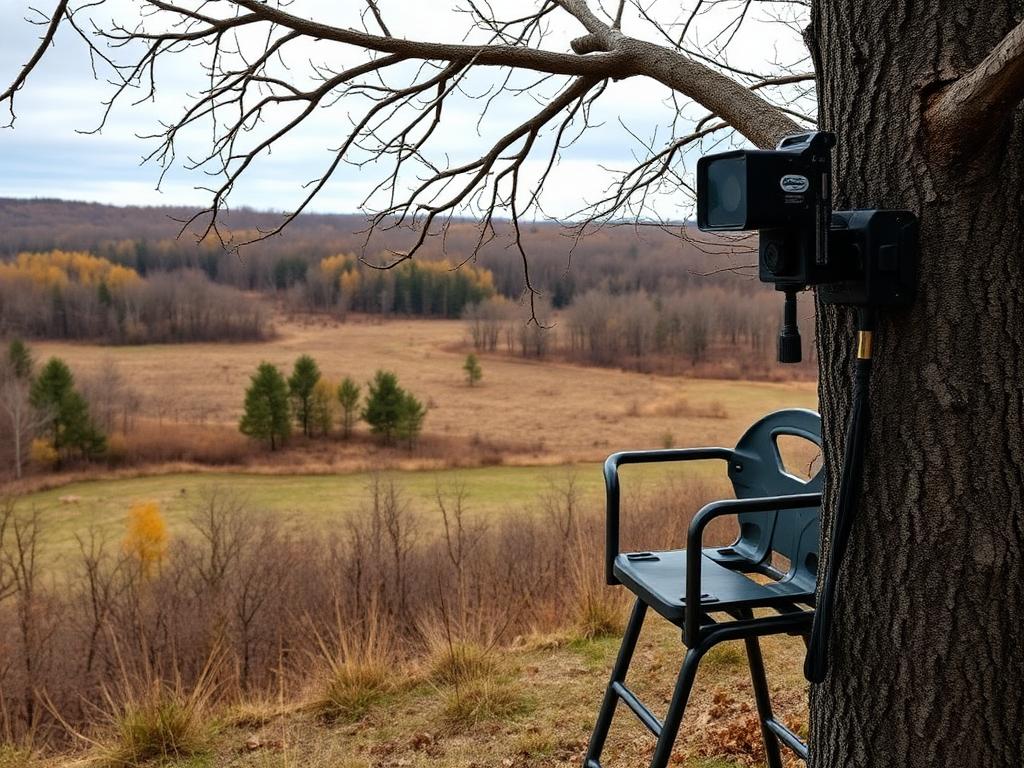
Recreational hunting leases offer one of the fastest paths to land income with virtually zero startup costs. If your property has game populations and isn't in a residential area, you can potentially start collecting lease payments within weeks. The hunting lease market has exploded in recent years as public hunting lands become overcrowded and hunters seek quality private land experiences.
Hunting Lease Income by Type and Region
Annual Hunting Leases (Most Common)
- • Texas: $8-$20/acre (whitetail deer) | $15-$50+/acre (exotic game properties)
- • Midwest (IA, IL, KS, MO): $15-$40/acre (premium whitetail states)
- • Southeast (AL, GA, SC, TN): $5-$15/acre (deer, turkey, small game)
- • Plains States (OK, AR, KY): $4-$12/acre (deer, turkey)
- • Western States: $3-$10/acre (varies by game species access)
Day Leases & Guided Hunting (Higher Per-Acre Returns)
- • Waterfowl day leases: $100-$400 per hunter per day
- • Turkey hunting day rates: $200-$500 per hunter
- • Guided deer hunts: $1,500-$5,000+ per hunt (premium properties)
- • Dove field leases: $25-$75 per hunter per day
Note: Day leases and guided operations require more management and liability insurance but can generate 3-5x annual lease income on smaller acreage.
Minimum Requirements for Hunting Leases
- ✓Acreage: 40+ acres minimum (100+ acres ideal for exclusive leases)
- ✓Wildlife: Huntable game populations (deer most common, but turkey, waterfowl, upland birds work)
- ✓Access: Road or trail access for hunters (doesn't need to be maintained year-round)
- ✓Insurance: Liability coverage for recreational use (often $300-$800/year)
- ✓Boundaries: Clear property lines marked (fencing not required but helpful)
Property Features That Increase Lease Rates
- • +20-40%: Food plots or agricultural fields (deer attractant)
- • +15-30%: Water sources (ponds, creeks, springs)
- • +25-50%: Lodging facilities (cabin, bunkhouse, RV hookups)
- • +10-20%: Trail camera systems already installed
- • +30-60%: Documented trophy harvest history
- • +40-100%: High-fenced exotic game (TX especially)
Example: 200-acre property in rural Georgia with creek, small food plot, and basic cabin could command $12-$18/acre instead of base $8-$10/acre = $2,400-$3,600 annually vs $1,600-$2,000.
Hunting Lease Agreement Essentials
A solid lease agreement protects both landowner and hunters while preventing disputes. Work with a local attorney familiar with recreational land leases to create your base contract. Key provisions to include:
Duration & Payment Terms
Specify lease start/end dates (typically Aug 1-July 31 or Sept 1-Aug 31 to cover full hunting seasons). Require payment in full upfront or two installments (50% signing, 50% mid-season). Include late payment penalties and termination rights.
Hunter Rights & Restrictions
Define which species can be hunted, legal hunting methods, guest policies, maximum number of hunters, and any off-limit areas. Specify whether lease is exclusive or shared. Include quiet hours, fire restrictions, and trash removal requirements.
Liability & Insurance
Require hunters to carry liability insurance and sign waivers. Many states have recreational use statutes limiting landowner liability, but insurance is still essential. Require proof of insurance before access granted. Clearly state landowner is not responsible for injuries or accidents.
Property Rules & Conservation
Prohibit littering, damage to timber/fences, harassment of livestock if adjacent. Require harvest reporting to track game populations. Consider including wildlife management practices like doe harvest requirements to maintain healthy herds.
Marketing Your Hunting Lease: List on platforms like BaseCampLeasing.com, LandTrust.com, HuntingLeaseNetwork.com, and local Facebook hunting groups. Quality photos of property, wildlife camera footage, and aerial imagery dramatically improve response rates. Consider offering 1-2 free scouting days to serious prospects. Lease rates are negotiable—established relationships with responsible hunters who maintain property often better than maximizing dollars.
Solar Farm Leases: Premium Long-Term Income for Larger Properties
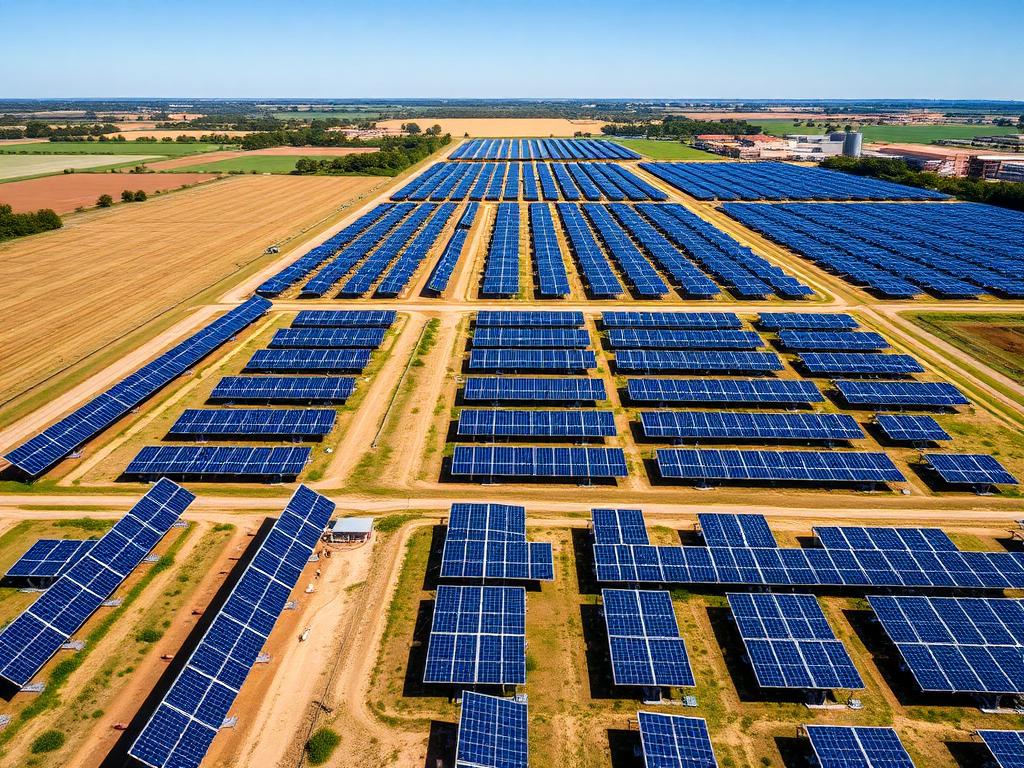
Solar farm ground leases represent the highest per-acre income potential for vacant land, often generating $500-$2,000+ per acre annually with minimal landowner involvement. As renewable energy mandates expand and solar technology costs decline, developers are aggressively seeking suitable rural land for utility-scale solar projects. If your property meets the criteria, a solar lease can provide dependable income for 25-40 years with a single tenant.
Solar Lease Income Potential by Region
Premium Solar Markets (Highest Rates)
- • Northeast (NY, NJ, MA, MD): $800-$2,000/acre/year (high electricity rates + strong renewable mandates)
- • California: $700-$1,500/acre/year (aggressive climate goals, grid constraints)
- • Mid-Atlantic (VA, NC, DE): $600-$1,200/acre/year (growing solar markets)
Strong Solar Markets
- • Southeast (GA, SC, TN, AL): $500-$900/acre/year (rapidly expanding solar deployment)
- • Texas: $400-$800/acre/year (huge market but more supply of suitable land)
- • Southwest (AZ, NM): $400-$700/acre/year (excellent solar resource, lower electricity prices)
Emerging Solar Markets
- • Midwest (OH, IN, IL, MI): $300-$700/acre/year (market developing as policy improves)
- • Plains States: $300-$600/acre/year (limited by transmission access)
Note: Lease rates typically include 1.5-3% annual escalation clauses, so year-one $800/acre becomes $1,200-$1,500/acre by year 25.
Requirements for Solar Farm Consideration
- ✓Minimum acreage: 20-40 acres for smaller community solar projects | 100-500+ acres for utility-scale installations (larger properties preferred—economies of scale matter)
- ✓Terrain: Relatively flat or gently rolling (5-15% slope maximum). South-facing slopes preferred but not required for modern tracking systems.
- ✓Transmission access: Within 1-5 miles of existing electrical transmission lines (3-phase power). Closer to substations significantly more valuable.
- ✓Zoning & land use: Agricultural or unzoned land preferred. Some residential zoning compatible. Heavy industrial or contaminated sites may face challenges.
- ✓Clear title: Clean title without restrictions on solar development. Properties with mineral rights complications can still work.
- ✓Few obstructions: Limited tree coverage (30-40% tree coverage may still work with clearing). No major wetlands or protected habitats.
Solar Lease Structure & Timeline
Solar development follows a multi-year process with distinct phases. Understanding the timeline helps set realistic income expectations:
Phase 1: Option Period (2-5 years)
Developer pays modest option fee ($20-$100/acre/year) for exclusive right to develop while securing permits, interconnection, and financing. You retain full use of land during this phase. Option fee typically credited toward first year lease payment if project proceeds.
Landowner commitment: Allow site studies, provide title documentation, cooperate with permitting.
Phase 2: Construction Period (12-24 months)
Once project approved and financed, construction begins. Full lease payments typically start at construction commencement or commercial operation. Developer pays for all installation costs, equipment, transmission upgrades.
Landowner commitment: Allow construction access, minor disruptions. Developer responsible for restoration of any damage.
Phase 3: Operating Period (25-40 years)
Solar farm generates electricity and revenue. You receive lease payments quarterly or annually with escalation clauses (1.5-3% annual increases). Developer maintains all equipment, pays property taxes on improvements in most structures.
Landowner commitment: Essentially none. Allow occasional maintenance access. Collect checks.
Phase 4: Decommissioning & Restoration
At lease end, developer removes all equipment and restores land to agricultural condition at their expense (typically bonded upfront). Land returned to you or you can negotiate lease extension/renewal.
Landowner benefit: Land restored, 25-40 years of income received, possibly with improved soil from lack of tilling.
Critical Solar Lease Contract Provisions
Solar leases are complex. Always hire an attorney experienced in solar ground leases—fee typically $2,500-$5,000 but protects you from costly mistakes. Key negotiation points:
- • Base rent + escalation: Negotiate competitive base rate and minimum 2% annual escalation
- • Production royalty option: Some leases offer base rent + percentage of revenue (0.5-2%)
- • Option payment credits: Ensure option fees credited toward operating lease payments
- • Property tax responsibility: Clarify who pays increased taxes (usually developer pays on improvements)
- • Decommissioning bond: Require upfront bonding for equipment removal (typically $50K-$150K)
- • Land use restrictions: Negotiate continued rights for activities that don't interfere (livestock grazing underneath panels increasingly common—"agrivoltaics")
- • Termination rights: Understand conditions under which lease can be terminated early
Finding Solar Developers: You don't need to find them—they'll find you if your property fits. Large solar developers actively use GIS software to identify suitable parcels and contact landowners. You can also proactively list your property on LandGate.com or PowerMarket.io to receive offers. If approached, always get competing proposals from multiple developers before signing. Rates and terms vary significantly between companies.
Comparing Income Strategies: Which is Right for Your Land?
| Strategy | Min. Acreage | Annual Income/Acre | Startup Cost | Time to Income | Landowner Effort |
|---|---|---|---|---|---|
| Timber (existing) | 20-40 acres | $50-$225/acre | Low ($500-2K) | 0-15 years | Low |
| Hunting Lease | 40-100 acres | $5-$40/acre | Very Low ($0-1K) | Immediate | Low-Medium |
| Solar Farm Lease | 40-100+ acres | $300-$2,000/acre | None | 3-7 years | Very Low |
Combination Strategies That Maximize Revenue
Many properties can support multiple income streams simultaneously. Strategic combinations create diversified revenue while maintaining land health:
Timber + Hunting Lease
Perfect pairing: Selective timber harvesting every 10-15 years provides capital while maintaining hunting habitat. Hunters often prefer properties with mix of mature forest and thinned areas that create edge habitat favored by deer and turkey.
Example: 160-acre Georgia property with 100 acres pine timber + 60 acres in annual hunting lease. Hunting generates $800-$1,200/year base income. Selective thinning of 40 acres every 5 years generates $20,000-$32,000 per harvest. Combined average annual income: $4,800-$7,600/year.
Solar + Livestock Grazing (Agrivoltaics)
Emerging opportunity: Many solar developers now allow sheep or cattle grazing underneath and between panel rows as vegetation management strategy. Instead of mowing, livestock keep growth controlled while you earn additional grazing lease or livestock income.
Example: 200-acre North Carolina solar farm at $700/acre = $140K/year base. Sheep grazing rights underneath add $2,000-$5,000/year additional revenue or feed savings. Total: $142K-$145K annually.
Hunting + Agricultural Lease
Dual-use strategy: Lease portion of property to farmer for crop production (particularly crops attractive to wildlife like corn, soybeans, wheat). Hunting lease on entire property at premium rates due to food source. Farmer gets land, hunters get food plot, you get double income.
Example: 240-acre Arkansas property with 120 acres in agricultural lease ($100-$150/acre = $12K-$18K) plus hunting lease on full 240 acres at premium rate of $12/acre = $2,880. Combined: $14,880-$20,880/year.
Tax Advantages of Land Income Strategies
Understanding tax treatment of land income can significantly impact your net returns. Always consult with a tax professional familiar with agricultural and energy property taxation, but here are key considerations:
Agricultural Classification & Property Tax Reduction
Timber, hunting leases, and agricultural uses often qualify land for reduced "agricultural use" property tax assessment instead of full market value taxation. This can reduce property taxes by 50-80%. Requirements vary by state but typically require minimum acreage (10-20 acres), active management, and agricultural income. Solar farms may not qualify but developers often pay the differential.
Timber Income Tax Treatment
Timber sales receive favorable capital gains treatment if you've held land more than one year (currently 15-20% federal rate vs ordinary income rates up to 37%). Establishes timber basis through "timber cruise" appraisal. Cost of forestry consultant and management expenses are deductible. Section 1031 exchanges allow deferring taxes by reinvesting in other timber property.
Hunting Lease Income Reporting
Recreational lease income generally reported as rental income on Schedule E. Property expenses (insurance, maintenance, property taxes) are deductible against lease income. If you provide substantial services (guided hunts, lodging, food), income may be subject to self-employment tax—consult CPA on activity classification.
Solar Lease Tax Implications
Solar ground lease payments are passive rental income (Schedule E). Developer typically pays property taxes on solar equipment/improvements as specified in lease. Some states offer property tax exemptions for renewable energy equipment. Landowner doesn't receive solar investment tax credits (ITC) or depreciation—those belong to equipment owner/developer.
Professional advice essential: Land income taxation is complex with state-specific rules. A qualified agricultural tax accountant or forestry tax specialist can help structure activities for maximum tax efficiency and ensure compliance. Initial consultation ($300-$800) often saves thousands in avoided taxes and penalties.
How to Get Started: First Steps for Each Strategy
Starting a Timber Management Program
- Contact state forestry agency for free property visit and basic timber assessment
- Hire consulting forester for detailed timber cruise and management plan ($500-$1,500)
- Apply for agricultural tax classification if available in your state
- If mature timber present, get competitive bids from multiple logging companies (consultant manages)
- Consider enrolling in Forest Stewardship Program or Tree Farm certification (opens cost-share funding)
- Implement recommended practices: prescribed burns, thinning, replanting as needed
State forestry resources: All states have forestry extension services offering free educational workshops and site visits.
Marketing Your First Hunting Lease
- Walk property boundaries and document game signs (trails, rubs, scrapes, droppings)
- Take quality photos: aerials, water sources, habitat types, access roads
- Set up trail cameras 4-6 weeks before marketing to capture game photos
- Research comparable lease rates in your county (call other landowners or check online listings)
- Draft basic lease agreement (templates available from state farm bureaus or attorneys)
- List on hunting lease websites and local Facebook groups 3-4 months before season
- Vet potential lessees: ask for references, verify insurance, meet in person
- Start with 1-year trial lease before committing to multi-year agreements
Pursuing Solar Farm Development
- Verify your property meets minimum criteria (acreage, slope, transmission proximity)
- Research local zoning—contact county planning to understand solar farm regulations
- Compile property information: survey, title insurance, aerial photos, utility maps
- List property on LandGate.com or wait for developer outreach (if viable, you'll be contacted)
- When approached, request proposals from 3-5 different solar developers
- Hire experienced solar lease attorney to review offers before signing ($2,500-$5,000 investment)
- Negotiate key terms: base rent, escalation, option payments, decommissioning, continued use rights
- Understand project may take 3-7 years from signing to construction—patience required
Warning: Avoid "solar scammers" offering unrealistic rates or requesting upfront fees. Legitimate developers pay you, not vice versa.
Frequently Asked Questions
How much can you make leasing land for solar?▾
Solar lease rates in 2026 typically run $700–$1,500 per acre per year, with premium markets (parts of Texas, the Carolinas, the Mid-Atlantic, and California) reaching $1,500–$2,500 per acre. Most utility-scale developers want at least 20–40 contiguous acres within a few miles of a substation. Leases run 25–35 years with built-in escalators of about 1.5–2.5% per year.
What does a hunting lease pay per acre?▾
Annual hunting lease rates in 2026 range from about $5–$15 per acre across the Southeast, $4–$12 in the Plains states, $8–$20 in Texas (whitetail) with exotics pushing $15–$50+, and $15–$40 in premium Midwest whitetail states like Iowa, Illinois, Kansas, and Missouri. Day leases for waterfowl, turkey, or guided deer hunts can earn 3–5x that on smaller acreage.
How often can you harvest timber?▾
Most Southern pine stands are clear-cut every 25–30 years, with a thinning around year 15 that pays $300–$800 per acre. Eastern hardwoods run 40–60 years to premium quality and pay $3,000–$8,000+ per acre at harvest. The smartest landowners divide acreage into rotation blocks (e.g., four 20-acre blocks on a 25-year cycle), so a portion harvests every 6–7 years for steady cash flow.
What's the easiest land income stream to start?▾
A hunting lease is by far the fastest and cheapest land income to start — often $0 in startup costs, a simple lease agreement, basic liability insurance, and you can be collecting payments within 30–60 days. Solar requires a developer to find you (longer timeline) and timber requires existing mature trees or decades of patience.
Do I need permits for a hunting lease?▾
In most states, no special permit is required to lease your land for hunting — the hunters themselves carry the licenses and tags. You should, however, have a written lease agreement, a recreational liability insurance policy ($300–$800/year), and check your state's hunter access laws (some states like Texas require specific posted-land notices). A real estate attorney familiar with recreational leases can draft a base contract you reuse year after year.
Want the full menu? See all 15 ways to earn from vacant land.
Timber, hunting, and solar are the heaviest hitters — but there are a dozen other paths worth considering, from RV hosting to billboard leases to specialty crops.
Read: 15 Ways to Make Money from Vacant Land →Turning Vacant Land Into Income-Producing Assets
Vacant land ownership doesn't mean idle assets. Whether you're generating quick cash from hunting leases, building long-term wealth through sustainable timber management, or securing premium income from solar development, strategic land management can transform raw acreage into profitable investments while maintaining ownership and appreciation potential.
The best strategy depends on your property's characteristics, location, your income timeline, and personal involvement preferences. Many landowners successfully combine multiple approaches—using hunting lease income to cover property taxes and insurance while managing timber for larger periodic paydays or positioning property for eventual solar development.
Start by assessing your land's income potential. Walk your property, research local markets, and talk to forestry consultants, hunting lease brokers, and neighboring landowners who've implemented these strategies. Most income opportunities require minimal upfront investment—your primary assets are the land itself and the willingness to explore options beyond traditional sale or development.
Not ready to commit to long-term management? If maximizing land income seems overwhelming or you'd prefer immediate liquidity, we can help you understand your property's value and provide a fair cash offer within 48 hours.
Whether you decide to hold and generate income or sell vacant land for upfront capital, understanding all your options helps you make the best financial decision for your situation.
Ready to Explore Your Land's Income Potential?
Get a free property assessment and cash offer. Whether you decide to hold and generate income or sell, we'll help you understand your land's true value.
Get Your Free Cash Offer
Fill out the form below and receive a no-obligation offer within 24 hours