
If you're buying or selling vacant land in rural areas, there's one test that can determine whether your property is worth six figures—or practically worthless. It's called a percolation test, commonly known as a "perc test," and understanding it is crucial for anyone involved in raw land transactions. It's one of the most important checks on any rural land due diligence checklist, right alongside title work and zoning verification. Whether you're a first-time land buyer or looking to sell vacant land quickly, this guide will explain everything you need to know about perc tests and septic system approval.
What Is a Perc Test?
Understanding the basics of percolation testing
A percolation test (perc test) measures how quickly water drains through soil on a piece of property. The test determines whether the land can support a conventional septic system—the standard wastewater solution for rural properties without access to municipal sewer lines.
During a perc test, a soil scientist or licensed professional digs holes at specific depths on your property, fills them with water, and measures the rate at which the water absorbs into the surrounding soil. This "percolation rate" is measured in minutes per inch (MPI) and determines what type of septic system, if any, can be installed.
Most counties require perc test results before issuing a building permit for any structure with plumbing. Without a passing perc test, you generally cannot build a home or any habitable structure on the property.
Why Perc Tests Can Make or Break Your Land Deal
The importance of perc tests cannot be overstated for vacant land buyers. Here's what's at stake:
Passing Perc Test
- • Property can support conventional septic
- • Building permits achievable
- • Higher market value
- • Easier to sell or finance
- • More development options
Failed Perc Test
- • May require costly alternative systems
- • Building permits may be denied
- • Significantly reduced property value
- • Limited buyer pool
- • Potential for unbuildable classification
A failed perc test can reduce a property's value by 50% or more. In some cases, land that fails a perc test becomes virtually unmarketable for residential development. This is why experienced land investors always make purchase offers contingent on satisfactory perc test results.

Soil composition directly impacts percolation rates and septic system viability
How Does a Perc Test Work?
Understanding the perc test process helps you know what to expect when evaluating raw land for purchase. Here's the step-by-step procedure most health departments and soil scientists follow:
The Perc Test Process
Site Evaluation
A licensed professional assesses the property to identify potential septic system locations based on topography, setbacks, and regulations.
Hole Excavation
Multiple test holes (typically 2-3) are dug at specified depths, usually between 18-36 inches deep.
Pre-Soaking
Holes are pre-soaked with water for several hours or overnight to simulate saturated soil conditions.
Measurement
Water is added to a specific level, and the rate of absorption is measured at intervals over 30-60 minutes.
Results & Report
The percolation rate is calculated and compared against local requirements. A formal report is issued.
How Soil Type Affects Perc Test Results
Different soil types produce vastly different percolation rates. Understanding your land's soil composition can help predict perc test outcomes before you invest in testing. This knowledge is especially valuable for anyone looking to evaluate raw land for potential purchase.
| Soil Type | Perc Rate | Septic Suitability |
|---|---|---|
| Sandy Soil | Very Fast (1-5 MPI) | Excellent drainage, may need engineered system |
| Sandy Loam | Fast (5-15 MPI) | Ideal for conventional septic |
| Loam | Moderate (15-30 MPI) | Good for most septic systems |
| Silt Loam | Slow (30-60 MPI) | May require alternative system |
| Clay | Very Slow (60+ MPI) | Often fails, requires expensive alternatives |
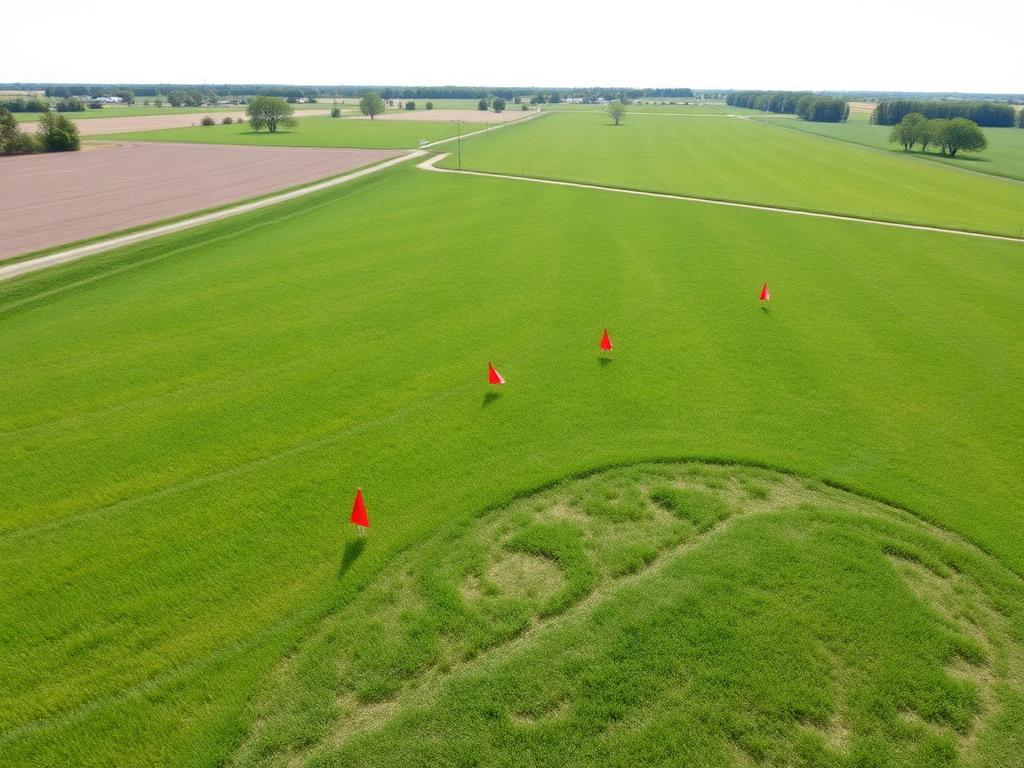
Multiple test locations are typically evaluated across a property to find suitable septic sites
How Much Does a Perc Test Cost?
Perc test costs vary significantly by location and who performs the test. Here's what you can expect to pay:
Basic Perc Test
$200-$500
County health department or basic soil evaluation
Full Soil Analysis
$500-$1,500
Licensed soil scientist with detailed report
Complex Sites
$1,500-$3,000+
Multiple test locations, challenging terrain
While perc tests may seem expensive, they're a fraction of what you could lose by purchasing unbuildable land. Smart buyers always budget for perc testing as part of their due diligence checklist when buying rural land.
Typical Perc Test Costs by Region
Pricing varies a lot from one part of the country to the next. Here's what landowners typically pay, and what tends to push costs up.
| Region | Low | Average | High | What Affects Price |
|---|---|---|---|---|
| Northeast (NY, PA, NJ, CT, MA) | $500 | $1,000 | $2,500 | Strict state oversight, frozen-ground delays, dense rock layers |
| Mid-Atlantic (DE, MD, VA, WV) | $400 | $900 | $2,500 | Licensed soil-scientist requirements (DE, VA), Chesapeake Bay setbacks |
| Southeast (NC, SC, GA, FL, AL, TN, KY) | $300 | $700 | $1,800 | Heavy clay soils, karst limestone, high water tables in coastal zones |
| Midwest (OH, IN, IL, MI, WI, MN, IA) | $400 | $850 | $2,000 | Glacial till variability, frost depth, county-by-county rule differences |
| Plains (KS, NE, SD, ND, OK) | $300 | $650 | $1,500 | Drought-hardened clay, larger lots that need multiple test pits |
| Mountain West (CO, MT, WY, ID, UT) | $500 | $1,100 | $3,000 | Rocky soils, steep slopes, snowpack scheduling, engineered system frequency |
| Pacific (CA, OR, WA) | $600 | $1,400 | $3,500 | Strict environmental review, fire-zone setbacks, expensive licensed labor |
What If Your Land Fails a Perc Test?
A failed perc test doesn't necessarily mean your land is worthless—but it does mean you'll need to explore alternatives. Here are your options:
Alternative Septic Systems
Engineered systems like mound systems, aerobic treatment units (ATUs), or drip irrigation systems can work on properties with poor perc rates. Cost: $15,000-$30,000+ depending on system type.
Retest at Different Locations
If your property is large enough, different areas may have different soil conditions. A second test location might yield passing results.
Variance or Waiver
Some jurisdictions grant variances for marginal failures. This typically requires engineering documentation and additional review fees.
Non-Residential Use
Land that fails for residential development may still be valuable for agriculture, recreation, hunting, or timber. Consider alternative uses that don't require a septic system.
Perc Test Requirements by State
Every state runs perc testing a little differently — who certifies it, what they measure, what counts as a pass, and what the failure backup looks like. Here's how it works in six of the states where land buyers most often run into perc questions.
Delaware
Who Regulates It
Delaware DNREC's Ground Water Discharges Section licenses Class H soil scientists. They — not the county — run and certify perc tests statewide.
Typical Cost
$600–$1,200 for a standard Class H soil evaluation; complex sites with multiple test pits can run $1,500–$2,500.
Turnaround Time
Field work usually takes one day. The stamped report is typically returned in 2–3 weeks once DNREC reviews the submission.
Pass / Fail Criteria
DNREC's standard is based on soil profile and seasonal high water table rather than a strict MPI cutoff. Sandy and sandy-loam soils with the water table well below the trench almost always pass; tight clay or properties with shallow groundwater (under 24 inches) usually require an engineered alternative system.
Maryland
Who Regulates It
Local county health departments run perc testing under Maryland Department of the Environment (MDE) rules. Each county has its own scheduling and fee schedule.
Typical Cost
$400–$900 for the county application; private engineering reports for failed or borderline sites can add $1,000–$3,000.
Turnaround Time
County inspectors are often booked 4–8 weeks out. Once the field test is done, results are usually issued within 1–2 weeks.
Pass / Fail Criteria
Most Maryland counties require a percolation rate of 1 to 30 MPI for conventional gravity systems. Slower than 30 MPI usually means a sand mound or BAT (best available technology) system. Properties in the Critical Area near Chesapeake Bay face stricter setbacks and often need nitrogen-reducing systems.
Virginia
Who Regulates It
The Virginia Department of Health (VDH) regulates onsite sewage disposal, but most private testing is done by an Authorized Onsite Soil Evaluator (AOSE) — a state-licensed private professional.
Typical Cost
$400–$1,200 for an AOSE soil evaluation. VDH-issued construction permits add $325 to $425 in state fees.
Turnaround Time
AOSEs can usually be scheduled within 2–4 weeks. The full evaluation, application, and VDH permit typically take 30–60 days end to end.
Pass / Fail Criteria
Virginia uses a soil-profile-based system rather than a strict perc rate. Soils rated Class I–III generally support conventional gravity systems; Class IV soils require pressure-dosed or alternative on-site systems. A failure usually means a recirculating sand filter or peat-based system, which can add $20,000–$40,000 to a build.
Alabama
Who Regulates It
The Alabama Department of Public Health (ADPH), through county health departments, regulates onsite sewage. Soil evaluations can be done by ADPH staff or by a Professional Soil Classifier (PSC).
Typical Cost
$300–$700 for a PSC soil evaluation; ADPH application and permit fees typically add $150–$400.
Turnaround Time
ADPH inspections are usually scheduled within 2–6 weeks. PSC reports come back in 1–2 weeks.
Pass / Fail Criteria
Alabama uses a soil-classification system from Class I (best) through Class V (severely limited). Class I–III parcels almost always pass for conventional septic. Class IV usually requires an alternative system; Class V typically fails entirely. Heavy red clay and high water tables in south Alabama are the most common failure causes.
Kentucky
Who Regulates It
Local county health departments operate under the Kentucky Onsite Sewage Disposal Systems regulations. Some counties accept reports from Kentucky Registered Soil Classifiers; others require state inspectors.
Typical Cost
$200–$500 for a county-run perc test; private classifier reports run $500–$1,500.
Turnaround Time
Most Kentucky counties can perform field tests within 2–4 weeks. Reports are typically issued within 1–2 weeks of testing.
Pass / Fail Criteria
Kentucky uses both perc rate (typically required between 5 and 60 MPI for conventional systems) and soil profile evaluation. Limestone outcrops and karst terrain in central Kentucky frequently cause failures because of fast, unfiltered drainage to groundwater. Failed sites often need a low-pressure pipe (LPP) or drip-distribution system.
Tennessee
Who Regulates It
The Tennessee Department of Environment and Conservation (TDEC), Division of Water Resources, licenses Subsurface Sewage Disposal System (SSDS) installers and certified soil consultants.
Typical Cost
$350–$900 for a soil consultant evaluation; TDEC permit fees add roughly $150 to $300.
Turnaround Time
Soil consultants are usually available within 2–3 weeks. TDEC permit issuance after a passing report is generally 2–4 weeks.
Pass / Fail Criteria
Tennessee assesses depth of suitable soil (typically needing at least 24–36 inches above any restrictive layer) plus percolation rate. Conventional systems usually require 5 to 45 MPI. Rocky East Tennessee terrain and tight clay in West Tennessee both produce frequent failures, often requiring shallow-trench or pumped systems.
Perc Test Tips for Land Buyers and Sellers
For Buyers
- Always make offers contingent on perc test results
- Request copies of existing perc test reports
- Check perc test expiration dates (typically 2-5 years)
- Research alternative system costs before purchasing
- Visit during wet season to observe drainage patterns
For Sellers
- Get a current perc test before listing
- Disclose all known test results to buyers
- Highlight passing results in marketing materials
- If failed, research and present alternative options
- Consider selling to cash buyers who understand land value
Frequently Asked Questions
How long does a perc test take?
The actual field measurement usually takes 30 to 60 minutes once the holes are pre-soaked, but the full process — scheduling, digging, soaking, testing, and getting the stamped report back — typically runs 2 to 4 weeks. Expect longer in spring, when health departments and soil scientists are booked solid.
What does a failed perc test mean?
A failure means the soil drains too slowly (or sometimes too quickly) to safely support a conventional gravity-fed septic system. It does not always mean the land is unbuildable — alternative systems like sand mounds, aerobic treatment units, or drip distribution can work, but they typically add $15,000 to $40,000 to a build and require additional engineering and permits.
Can you build without a perc test?
Only if the property is connected to a municipal sewer system or if you're building a structure with no plumbing (a barn, storage shed, or unimproved cabin in some jurisdictions). Any habitable structure with bathrooms or kitchens on land without sewer access will require a passing perc test or an approved alternative septic plan before a permit will be issued.
How much does a perc test cost?
Most perc tests cost between $300 and $1,500 depending on your state, the number of test pits required, and whether the work is done by the county health department or a private licensed soil scientist. Complex sites with multiple test locations or steep terrain can run $2,500 to $3,500.
Is a perc test the same as a soil test?
Not exactly. A soil test (or soil evaluation) examines the soil's profile, texture, and depth to bedrock or water table. A perc test specifically measures how fast water drains through the soil. Many states have moved toward soil-profile-based evaluations as a replacement for the traditional perc test, but most people still use 'perc test' as shorthand for both.
Who orders the perc test — buyer or seller?
Either can. Sellers who order a perc test before listing make their land easier to sell at full value, because buyers don't have to take on the risk. Buyers typically order one as a contingency in their purchase contract so they can walk away if it fails. The party who pays usually depends on local custom and what's negotiated in the offer.
The Bottom Line on Perc Tests
A percolation test is one of the most important factors in determining vacant land value and development potential. Whether you're buying land for a future homesite or selling property you no longer need, understanding perc tests helps you make informed decisions and avoid costly mistakes.
If you own vacant land that's difficult to sell—whether due to a failed perc test or other challenges—cash land buyers like PlaceAcre can provide fast, fair offers without the complications of traditional real estate transactions. We buy land in any condition, with or without passing perc tests.
Don't let your vacant land become a burden. Get a cash offer today and close in as little as 7 days.