Choosing to sell land by owner in Rhode Island looks a lot like FSBO anywhere else on paper — price it, disclose it, market it, close it — but the mechanics are unusual in one specific way that trips up almost every out-of-state seller: Rhode Island has five counties (Providence, Kent, Washington, Newport, and Bristol), yet it has no county governments. Every meaningful function you'd normally handle at a county courthouse — property records, tax assessment, permitting, deed recording — happens at the city or town level instead. That changes where you pull comps, where you record your deed, and who you call when you have a zoning question.
This guide walks through the full FSBO process for Rhode Island land — pricing off town assessor records, meeting the state's disclosure requirements, navigating the mandatory attorney-closing rule, and paying the recently-increased Real Estate Conveyance Tax before the deed can be recorded. Selling to a cash buyer is one option among several; the right path depends on your timeline, your net-proceeds target, and how much of the paperwork you want to run yourself.
Rhode Island Farmland Values Are Riding a National Record High
U.S. farmland hit a record $4,350/acre in 2025 per USDA — and Rhode Island's own farm real estate values sit at roughly $22,000–$22,500/acre in 2025, among the highest per-acre farm values of any state despite Rhode Island being the smallest state by land area. Tight supply, coastal-adjacent demand, and land-use constraints (wetlands, watershed protection, and historic-district overlays) keep per-acre values elevated relative to almost every peer state.
What that means practically: if you're pricing off national averages, you'll under-price Rhode Island ground almost every time. Anchor your price on local town assessor comps and USDA state-level data, not on generic national land-value calculators.
Read the farmland record-prices reportRealtor vs. FSBO vs. Cash Buyer: Rhode Island Land Sale Comparison
Illustrated on a sample 5-acre Washington County parcel valued at $175,000 (an illustrative example, not an appraisal — Rhode Island per-acre land values vary widely by town and use).
| Realtor (MLS) | FSBO | Cash Buyer (PlaceAcre) | |
|---|---|---|---|
| Commission | ~6% (~$10,500) | $0 (seller pays attorney + marketing ~$1,500–$3,000) | $0 |
| Typical time to close | 3–9 months | 2–6 months | 7–30 days |
| Net proceeds (illustrative) | ~$164,500 minus closing costs | ~$172,000–$173,500 after attorney and marketing | Offer amount, no commissions or fees deducted (note: cash offers reflect a fair-market discount for speed and certainty — we're transparent about that tradeoff) |
The Rhode Island FSBO Roadmap: Price → Documents → Market → Close
1. Price
Start at the town tax assessor — not a county assessor, because Rhode Island doesn't have them. Every one of Rhode Island's 39 cities and towns maintains its own assessment database, and most (Providence, Warwick, Cranston, South Kingstown, Newport, Bristol, and many others) publish parcel records and recent sales online. Pull the last 12–24 months of sales for parcels comparable to yours in acreage, zoning, and use.
Rhode Island's per-acre value spread is unusually wide for such a small state. Rural and agricultural land in Washington County ("South County") and Newport County trends toward the state's $22,000–$22,500/acre farm real estate average per USDA. Vacant land closer to the Providence and Kent County metro areas often carries far higher per-acre listing prices — one commonly cited statewide listing-price average is roughly $90,500/acre for vacant land, though that's a listing-price average (not sold-price), reflects heavy weighting from small developable lots near metros, and should be treated as illustrative given how wide the variance is.
Cross-check assessor data against active listings on Land.com, LandWatch, and Zillow's land filter, and — if your parcel is agricultural — against USDA NASS state-level cash-rent and land-value releases. Because Rhode Island's raw-land market is small, a handful of recent local sales will tell you more than any national calculator.
2. Documents
Rhode Island FSBO closings need four core documents in place: a purchase and sale agreement, a written property condition disclosure, a federal lead-based paint disclosure (required for any structures built before 1978 — mostly relevant if there's an existing house, barn, or outbuilding on the parcel), and a completed title search.
And then the piece that surprises out-of-state sellers: Rhode Island requires a licensed attorney to conduct the closing. Even a pure FSBO seller cannot close the deal solo or through a title agent alone the way you can in many other states. Budget attorney fees into your net-proceeds math from day one — typically $500–$1,500 for a straightforward land-only closing (illustrative — complex title, boundary, or wetlands issues push higher). Hire the attorney early, before you have a buyer, so they can pre-review your title, disclosures, and draft purchase agreement.
3. Market
Without MLS access you'll lean on town-level Facebook groups (nearly every Rhode Island town has one), Rhode Island MLS flat-fee listing services (which get your listing onto the state MLS and syndicated to Zillow/Realtor.com without a full 6% commission), and land-specific marketplaces (Land.com, LandWatch, Lands of America, Zillow's land filter).
A quirk of the Rhode Island market: because the state is so small, buyers routinely cross-shop between counties. Someone considering a lot in Coventry (Kent County) will happily look at similar acreage in Exeter (Washington County) or Foster (Providence County) an hour away. Don't limit your marketing radius the way you would in a bigger state.
4. Close
Your closing attorney prepares (or reviews) the deed — typically a Warranty Deed for arms-length sales or a Quitclaim Deed for family or estate transfers — runs a final title update, coordinates the settlement statement, and calculates the Real Estate Conveyance Tax owed on the sale price.
The conveyance tax must be paid before the deed is recorded, and the deed is recorded at the applicable city or town clerk's office — not a county recorder, because there aren't any. Recording fees are modest (typically ~$100–$200). Once recorded, the sale is complete and you receive net proceeds via wire or check per the settlement statement.
FSBO in Rhode Island: Advantages vs. Challenges
Advantages
- No listing commission — on a $175,000 parcel, avoiding a 6% split keeps roughly $10,500 in your pocket.
- Seller controls the timeline, price adjustments, and showings without an agent's schedule in the loop.
- Direct buyer relationships — often meaningful in small Rhode Island towns where buyers, neighbors, and land trusts frequently overlap.
- Full control over marketing channels: which portals, which town Facebook groups, whether to run a for-sale sign at the parcel.
Challenges
- Mandatory attorney-closing requirement adds cost even when you've skipped the agent — you can't close alone.
- Small statewide buyer pool for raw land relative to bigger states — a national portal listing may sit longer than expected.
- Town-by-town zoning, wetlands buffers, and coastal rules — Rhode Island's Coastal Resources Management Council (CRMC) and Department of Environmental Management (DEM) enforce some of the strictest wetlands and coastal regulations in New England, and FSBO sellers must research these themselves.
- Disclosure liability falls entirely on the seller — no agent's E&O policy backstopping you if a disclosure is missed.
Commission Savings: Worked Example
On the same illustrative $175,000 Rhode Island parcel, a 6% MLS commission would run roughly $10,500. Selling FSBO with roughly $2,000 in attorney and marketing costs nets the seller approximately $8,500 more than the MLS route, before accounting for the seller's own time and marketing effort. Flagged as illustrative and based on typical Rhode Island commission rates and attorney fees — not a guarantee for any specific transaction.
Five Tactical Steps Beyond the Basics
- Get an informal appraisal or CMA from town assessor records and recent sales. For anything over $50,000 in sale price, a formal rural-land appraisal (typically $400–$1,000 in Rhode Island) is money well spent. If you're skipping the appraisal, at minimum pull five to ten recent comparable sales from your town's assessor site.
- Confirm zoning, wetlands buffers, and any conservation easements before marketing. Rhode Island has some of the strictest coastal and freshwater wetlands rules in New England via the CRMC and RI DEM. A parcel that looks buildable on a satellite view may have 50–100+ foot wetland setbacks that eliminate the buildable footprint. Confirm this with the town planner and DEM before you list — surprise wetlands kill more Rhode Island land deals than any other single issue.
- Prepare disclosures and hire the required closing attorney early. Don't wait until you have a buyer. Have your attorney pre-review the title, draft a purchase and sale agreement template, and confirm your disclosure packet is complete before you go to market.
- Market across town Facebook groups, flat-fee MLS services, and regional land marketplaces. LandWatch, Land.com, and Zillow's land filter are the three highest-traffic destinations for out-of-state buyers. Rhode Island Realtors' state MLS via a flat-fee listing service ($200–$500 typical) syndicates broadly and is often worth it even for FSBO sellers.
- Negotiate, sign the purchase agreement, and let your attorney handle the closing. Once you accept an offer, your attorney takes over: they coordinate the title update, calculate the conveyance tax, prepare the deed and settlement statement, collect funds, and record the deed at the town clerk's office. Your job at that point is to sign what your attorney puts in front of you and confirm the wire.
Legal Requirements & Closing Costs
The most important number to memorize: Rhode Island's Real Estate Conveyance Tax is $3.75 per $500 of consideration under the Tier 1 rate effective January 1, 2026 — an increase from $2.30 per $500 that took effect October 1, 2025. It is customarily paid by the seller unless otherwise negotiated in the purchase and sale agreement, and it must be paid before the deed can be recorded at the town clerk's office. On the illustrative $175,000 parcel above, that's roughly $1,313 in conveyance tax owed at closing (calculated as $175,000 ÷ $500 × $3.75).
Rhode Island's mandatory attorney-closing requirement is the other structural piece FSBO sellers can't route around. Every real estate closing in the state must be conducted by a licensed Rhode Island attorney — this is Rhode Island law, not a market convention that varies by county. Required seller-side disclosures include the purchase and sale agreement, the property condition disclosure, and the federal lead-based paint disclosure for any pre-1978 structures on the parcel.
Standard closing cost breakdown to budget for on a Rhode Island land sale:
- Real Estate Conveyance Tax: 0.75% of sale price ($3.75 per $500), seller-side by custom.
- Closing attorney fees: approximately $500–$1,500 for a straightforward land-only closing (illustrative — complex title, boundary, or wetlands issues push higher).
- Recording fees: approximately $100–$200 at the town clerk's office.
- Title search & owner's title insurance: Rhode Island title insurance premiums are regulated and typically run a fraction of a percent of sale price — your closing attorney will quote this as part of the settlement.
- Prorated property taxes at closing.
Regional Land Values Across Rhode Island's 5 Counties
Land-market data for a state Rhode Island's size is thin, so treat every per-acre range below as illustrative — directional, not precise. The single best anchor for any specific parcel is a handful of recent same-town comps from your municipal assessor.
Washington County ("South County")
Coastal and agricultural — includes towns like South Kingstown, Charlestown, Westerly, Narragansett, and Exeter. Strong demand for farmland, coastal-adjacent parcels, and waterfront-influenced acreage. Per-acre values trend toward the state's higher end, particularly on farmland pulling toward the $22,000–$22,500/acre statewide farm real estate average.
Newport County
Island and coastal premium — includes Newport, Middletown, Portsmouth, Tiverton, Little Compton, and Jamestown. Smallest raw-land inventory in the state, highest demand relative to supply, and the strongest waterfront and viewshed premiums. Any usable buildable acreage here trades at a meaningful premium to statewide averages.
Providence County
Most urbanized — includes Providence, Cranston, Warwick's northern edge, Pawtucket, Woonsocket, and rural western towns like Foster, Glocester, and Burrillville. Higher per-acre pricing on developable infill lots close to the metro; lower per-acre pricing on what limited raw acreage remains in the western rural towns.
Kent County
Suburban mix between Providence and South County — includes Warwick, Coventry, West Warwick, and East Greenwich. Moderate demand across a range of lot sizes; developable residential lots command a premium versus rural back-lot acreage.
Bristol County
Smallest county by land area in Rhode Island — includes Bristol, Warren, and Barrington. Waterfront-influenced pricing across most of the county, extremely limited raw-land inventory, and pricing driven heavily by proximity to Narragansett Bay.
Marketing & Photography Tips
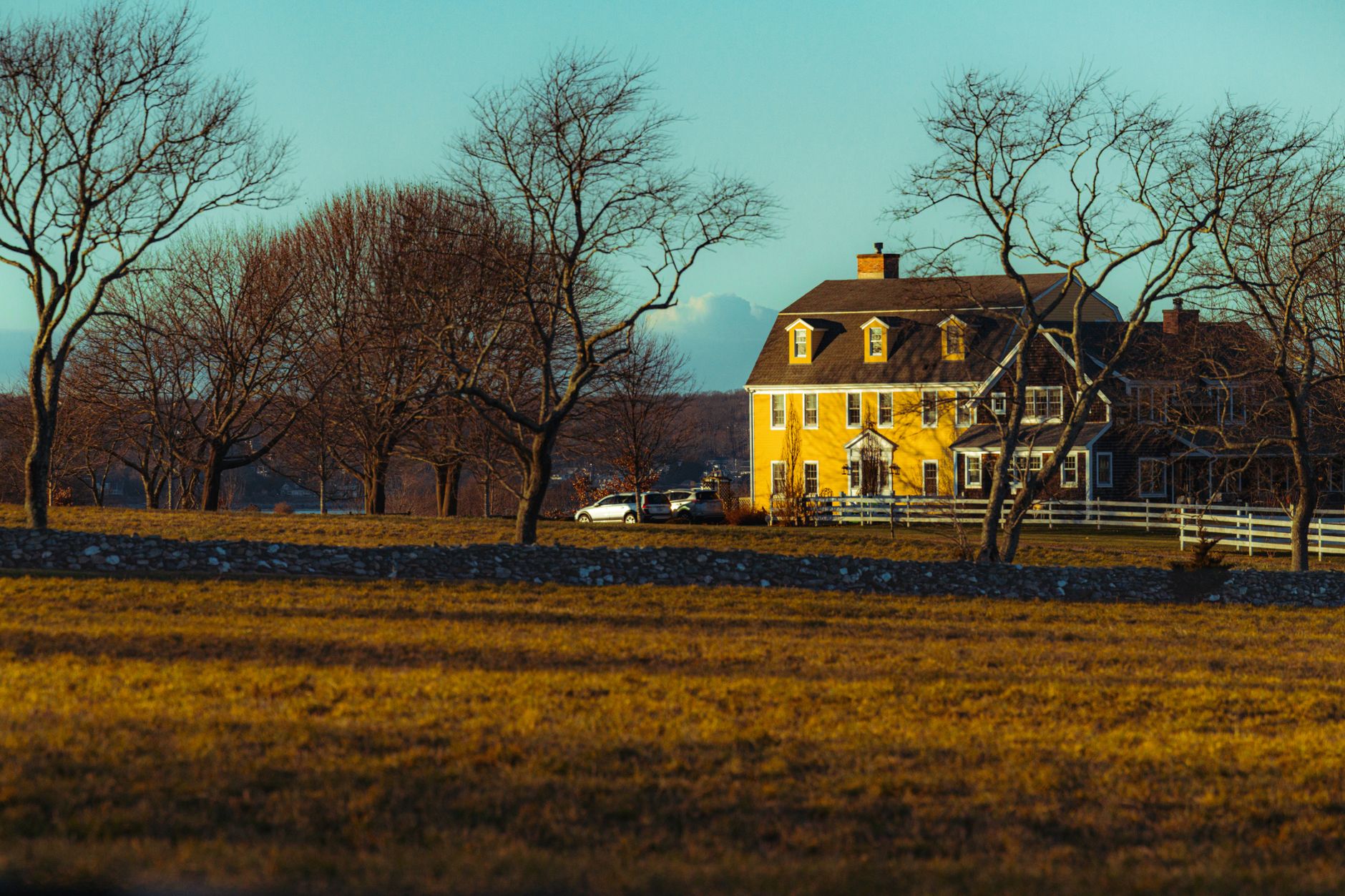
- Lead with the New England signatures buyers actually want: stone walls, water frontage or proximity, mature tree cover, open pasture with intact rural sightlines. These are the highest-signal visual selling points for Rhode Island land.
- Fly a drone. Rhode Island parcels are often small and irregularly shaped, and drone photography is the only reliable way to communicate shape, road frontage, and abutting land use to remote buyers.
- Mark boundary corners visibly (surveyor ribbon or temporary stakes) before shooting so aerial footage shows what you're actually selling — not the neighbor's stone wall.
- Call out proximity to state management areas (Arcadia, Big River), coastal access, and major town amenities in the listing copy.
- Shoot at golden hour — the last hour of daylight — and skip midday sun, which flattens Rhode Island's rolling stone-walled landscape.
Skip the Hassle — Get a Cash Offer on Your Rhode Island Land
If you'd rather skip the marketing, the attorney-fee negotiation, and the conveyance-tax timing stress, we'll make a no-obligation cash offer on your Rhode Island parcel within 24 hours — no commissions, no fees, and we can close in as little as a week.
Frequently Asked Questions
Do I need a real estate agent to sell land in Rhode Island?
No — FSBO is fully legal in Rhode Island. However, Rhode Island requires a licensed attorney to conduct the closing regardless of whether an agent is involved, so budget for attorney fees even if you skip the listing commission.
How much is the Rhode Island real estate conveyance tax?
$3.75 per $500 of the sale price as of January 1, 2026 (Tier 1) — an increase from $2.30 per $500 that took effect October 1, 2025. Typically paid by the seller unless negotiated otherwise, and due before the deed can be recorded.
What disclosures do I have to make when selling land by owner in Rhode Island?
A written property condition disclosure and, for any pre-1978 structures on the parcel, a federal lead-based paint disclosure — in addition to the standard purchase and sale agreement.
Is my land worth more in Providence County or Washington County?
It depends on use. Developable lots near Providence's metro area often command higher per-acre prices, while Washington County's farmland and rural acreage benefits from Rhode Island's high statewide farm real estate values. General market tendencies — not a guarantee for any specific parcel. Pull recent same-town comps for the truest read.
Related Resources
- How to Sell Land Without a Realtor →
- Due Diligence Checklist for Rural Land →
- U.S. Farmland Values Hit a Record High →
Explore Rhode Island Land
Ready to dig into Rhode Island land data or get a cash offer on your parcel?
Visit the Rhode Island land hub