The glamping revolution has transformed the vacation rental landscape, with savvy land investors earning premium nightly rates that rival luxury hotels. While traditional property investors compete for developed real estate, a new wave of entrepreneurs is building glamping empires on raw acreage—and the returns are staggering.
Glamping (glamorous camping) properties on Airbnb command nightly rates 3-5x higher than traditional camping sites, with top-performing locations generating $150,000+ annually on just a few acres. The key isn't just buying land—it's selecting the right acreage type and implementing unique accommodation concepts that guests can't resist booking.
Why Smart Investors Are Rushing Into Glamping Land
The glamping market is projected to reach $5.94 billion by 2030, growing at a compound annual rate of 14.1%. Unlike traditional vacation rentals that face increasing regulatory scrutiny, glamping operations on rural acreage often fall outside conventional zoning restrictions, offering a regulatory arbitrage opportunity.
Key Market Drivers
- • Average glamping nightly rate: $250-$600 vs. $75-$150 for camping
- • Occupancy rates: 65-85% in prime locations
- • Lower property taxes compared to developed real estate
- • Minimal permitting requirements in most rural areas
- • Instagram-worthy experiences command premium pricing
5 Acreage Types That Build Glamping Empires
1. Forested Acreage: Treehouse Cluster Kingdoms
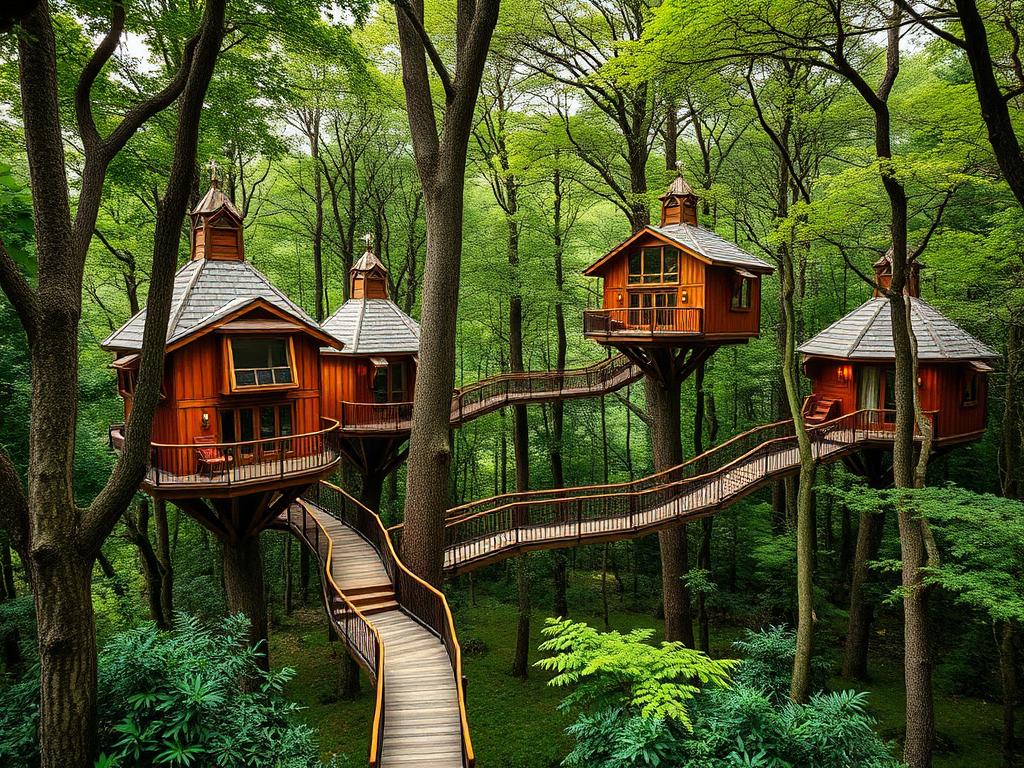
Wooded lots of 5-20 acres are perfect for developing interconnected treehouse clusters. Properties with mature hardwoods (oak, maple, cedar) provide natural structural support and Instagram-worthy canopy views that command $350-$600 per night.
Ideal Features: Mixed-age forest with trees 18+ inches in diameter, natural clearings for communal spaces, proximity to hiking trails, and seasonal foliage changes. Properties near national forests or state parks benefit from guest overflow without maintaining trail systems.
Revenue Potential: A three-treehouse cluster on 8 acres can generate $120,000-$180,000 annually with an initial investment of $60,000-$90,000 per unit. Prefab treehouse kits from companies like Blue Forest or Treehouse Masters dramatically reduce construction costs and timelines.
Pro Tip:
Target properties with existing tree platforms or hunting blinds—they demonstrate structural viability and can be repurposed to reduce costs. Properties marketed as "hunting land" often sell at significant discounts compared to "vacation land."
2. Open Meadow Land: Geodesic Dome Villages
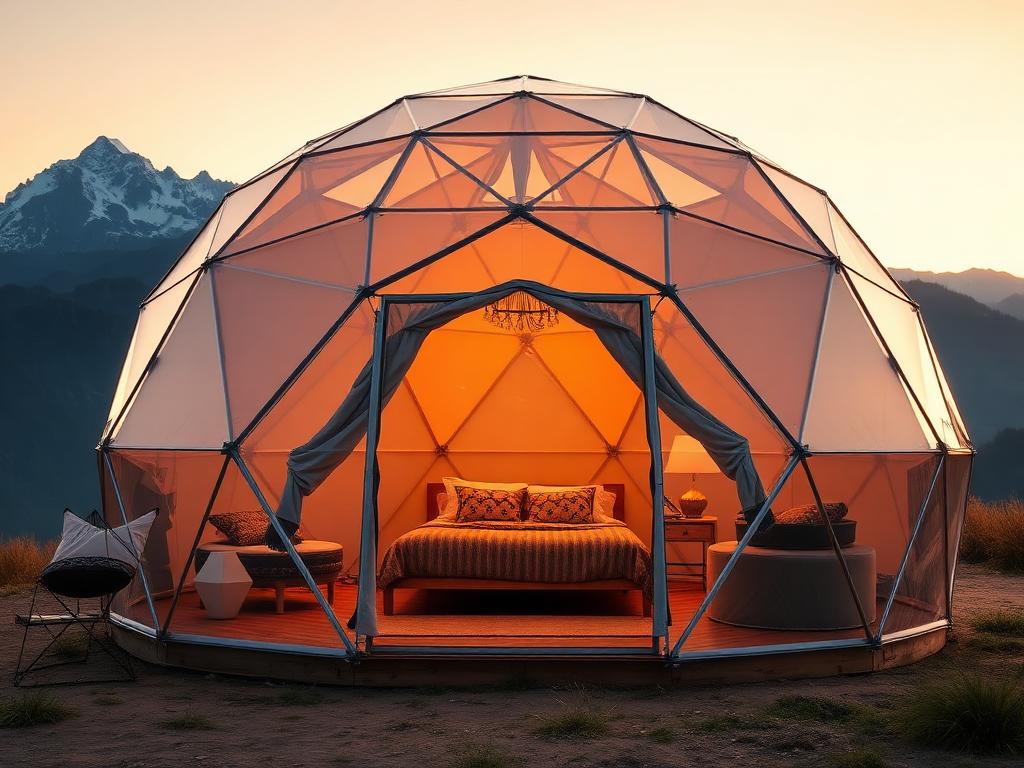
Flat or gently rolling acreage of 10-30 acres provides the perfect canvas for geodesic dome villages. These architectural marvels offer 360-degree views, weather resistance, and the "sleeping under the stars" experience guests crave—without the discomfort of actual camping.
Ideal Features: Unobstructed horizon views (mountains, valleys, or water), dark sky designation for stargazing, year-round accessibility, and land suitable for RV/septic hookups. Properties with existing agricultural exemptions can provide significant tax advantages.
Revenue Potential: Transparent-ceiling geodesic domes command premium rates during celestial events. A five-dome setup can generate $180,000-$275,000 annually with $40,000-$65,000 per dome investment. Companies like Pacific Domes offer turnkey solutions with hospitality-grade interiors.
The geodesic structure's strength-to-weight ratio allows installation without permanent foundations in many jurisdictions, sidestepping traditional building permits. This flexibility enables seasonal operations in areas with recreational zoning that prohibits permanent structures.
3. Desert and Arid Land: Safari Tent Compounds
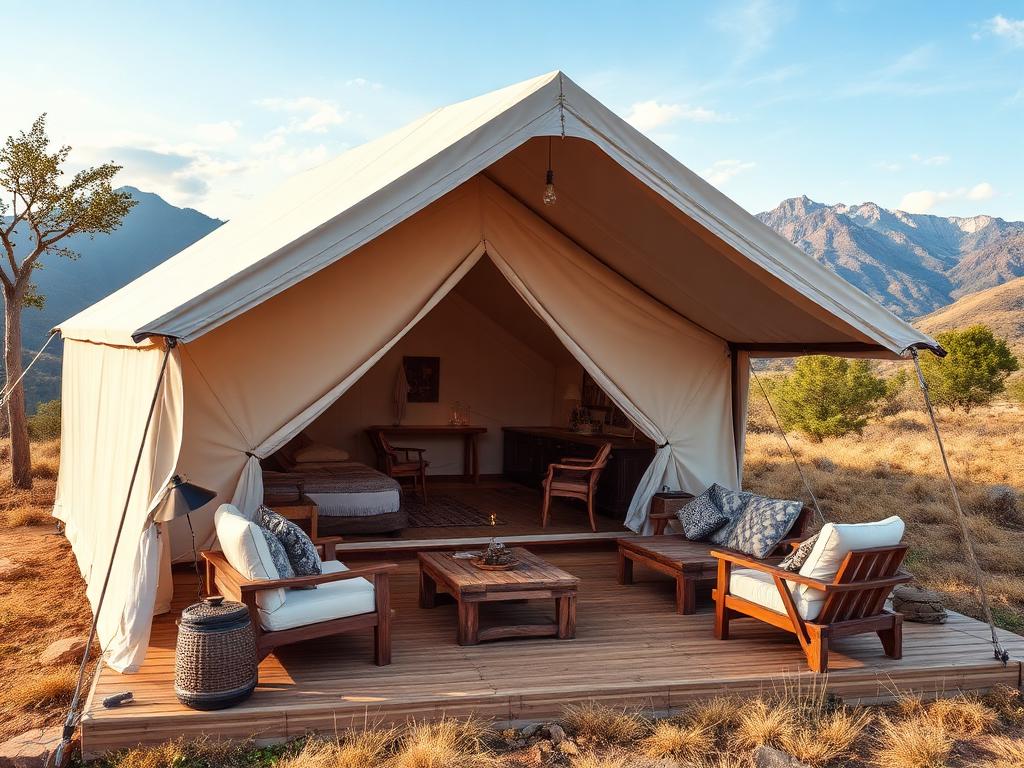
Arid properties of 20-100 acres in the Southwest or High Plains offer the ultimate off-grid glamping experience. Safari-style canvas tents on permanent platforms provide luxury amenities while maintaining the "remote wilderness" aesthetic that commands top dollar.
Ideal Features: Dramatic rock formations or desert vistas, existing well or water rights, solar exposure for off-grid power, and proximity to national parks or recreation areas. Properties with BLM land adjacency provide guests with expansive exploration territory.
Revenue Potential: High-end safari tents with platform decks, outdoor showers, and solar power generate $250-$500 per night. A six-tent compound on 40 acres can produce $150,000-$240,000 annually with $25,000-$40,000 per tent setup costs.
Off-grid capabilities are key—combine solar panels, composting toilets, and rainwater collection systems to eliminate ongoing utility costs. Properties that embrace radical self-sufficiency appeal to eco-conscious travelers willing to pay premium rates for authentic experiences.
Location Strategy for Maximum Returns
The "2-hour rule" maximizes your glamping property's success: locate within 2 hours of major metro areas (population 1M+) but far enough to feel remote. This sweet spot captures weekend warriors while maintaining the "escape" factor essential for premium pricing.
Target areas with tourism infrastructure (wineries, breweries, outdoor recreation) but limited accommodation options. Properties near popular trails or attractions with multi-month booking waitlists represent arbitrage opportunities.
4. Waterfront Acreage: Floating Cabin Clusters
Lakefront, riverside, or coastal properties of 5-15 acres enable floating cabin or dock-mounted glamping structures. Water-based accommodations command extreme premium pricing due to scarcity and the unique experience factor.
Ideal Features: Protected coves or bays with year-round water access, properties with existing dock permits, navigable water depth (6+ feet), and limited seasonal flooding risk. Shoreline properties with buildable upland areas allow for support facilities while maximizing water-based accommodation counts.
Revenue Potential: Floating cabin units generate $400-$800 per night in peak season. A four-unit floating village on 10 acres can produce $200,000-$350,000 annually. Many jurisdictions classify floating structures as vessels rather than buildings, avoiding traditional permitting.
Focus on properties with multiple waterfront aspects—corner lots on peninsulas or island properties provide maximum water views across multiple units. Sunset viewing angles can increase booking rates by 30-50% based on Airbnb search data.
5. Agricultural Land: Converted Barn and Silo Glamping
Working farms or former agricultural properties of 15-50 acres provide existing structures for conversion into unique glamping accommodations. Barns, silos, and outbuildings offer "built-in" charm while reducing construction costs by 40-60%.
Ideal Features: Historic barns or silos with structural integrity, properties with agricultural tax exemptions, existing utilities or well/septic systems, and room for future expansion. Properties with active farming operations can integrate agritourism elements (farm dinners, harvest experiences) that command additional revenue.
Revenue Potential: Converted barn suites with loft bedrooms and modern amenities command $300-$600 per night. A three-structure conversion on 25 acres generates $140,000-$260,000 annually with $50,000-$80,000 per unit renovation costs.
Historic preservation grants and agricultural development incentives can offset 20-40% of conversion costs in many states. Properties with existing event barn permits enable wedding venue revenue (average $8,000-$15,000 per event) alongside nightly glamping rentals.
Building Your Glamping Empire: Critical Success Factors
Financial Fundamentals
- Land Cost Ratio: Keep land costs under 30% of total project budget. A $50,000 property with $150,000 in improvements creates better returns than a $150,000 property with $50,000 in structures.
- Phase Development: Start with 2-3 units to validate market demand before full buildout. This staged approach preserves capital and allows iteration based on guest feedback.
- Operating Costs: Target 25-35% operating expense ratio (cleaning, maintenance, property management, utilities, marketing). Lower ratios indicate underinvestment; higher suggests operational inefficiency.
Permitting and Zoning Navigation
Understanding local regulations separates successful glamping operators from dreamers. Most rural counties lack specific glamping ordinances, creating both opportunities and challenges:
- Agricultural Exemptions: Many jurisdictions allow "agritourism" activities on agricultural land without hospitality licensing. This includes camping structures if tied to educational or agricultural activities.
- RV Classification: Mobile or temporary structures often fall under recreational vehicle regulations rather than building codes—significantly reducing compliance requirements.
- Occupancy Limits: Most rural areas cap "campground" occupancy at 10-15 units without commercial permitting. Design your site to fall below these thresholds.
- Septic and Water: Composting toilet systems eliminate conventional septic requirements in many jurisdictions. Investigate county health department rules before purchasing.
Zoning Hack:
Purchase properties with existing recreational or camp permits—these "grandfathered" allowances are often transferable and can be expanded under existing use provisions. Former scout camps, church camps, or 4-H properties frequently have valuable permits in place.
Marketing and Positioning Strategy
Glamping properties live or die based on their ability to generate stunning visual content. Every design decision should answer: "Will guests photograph this and share it?"
Photo-First Design Principles: Install Instagram-worthy focal points—swing seats overlooking vistas, outdoor copper soaking tubs, fire pits with panoramic views, and distinctive architectural elements. Properties with 20+ high-quality Airbnb photos book 2-3x more frequently than those with fewer images.
Experience Packaging: Bundle accommodations with curated experiences: guided foraging walks, sunset meditation sessions, farm-to-table dinners, or astronomy tours. These add-ons increase average booking value by $75-$200 per stay while differentiating from competitors.
Seasonal Positioning: Design for year-round operation by emphasizing different seasonal appeals—fall foliage, winter stargazing, spring wildflowers, summer lake access. Properties with consistent year-round occupancy achieve 40-60% higher annual revenue than seasonal operations.
Target Demographics That Pay Premium Rates
Glamping appeals to specific demographics willing to pay luxury prices for unique experiences:
- • Millennials and Gen Z seeking "experiential travel" (40% of glamping guests)
- • Affluent families wanting outdoor experiences with hotel amenities (30%)
- • Couples celebrating special occasions demanding unique venues (20%)
- • Remote workers extending weekend trips into "workations" (10%)
From Raw Land to Revenue: Your Implementation Timeline
Transforming acreage into a profitable glamping operation follows a predictable timeline when executed properly:
Months 1-2 (Due Diligence): Verify zoning, test soil for septic if needed, confirm water availability, and survey for optimal unit placement. Hire a local land use attorney for $1,500-$3,000 to navigate permitting—this is cheap insurance against costly mistakes.
Months 3-4 (Site Preparation): Clear minimal access roads, install utility infrastructure if needed, and establish designated guest areas versus private maintenance zones. Resist the urge to over-develop—preserving natural character is essential for authenticity.
Months 5-7 (Structure Installation): Prefab glamping structures can be installed in days or weeks versus months for custom builds. Prioritize getting your first 2-3 units operational over perfecting every detail—guest feedback will guide phase 2 improvements.
Month 8 (Soft Launch): List on Airbnb and Glamping Hub with professional photography. Offer 30% discounts for first 10 bookings in exchange for detailed reviews and social media posts. These early reviews are crucial for algorithm visibility.
Months 9-12 (Optimization): Track which amenities guests mention most, adjust pricing based on demand patterns, and plan phase 2 expansion. Most successful operators add 2-3 units annually for 3-5 years, reaching optimal capacity of 8-12 units per property.
The Bottom Line: Why Glamping Land Beats Traditional Real Estate
While traditional real estate investors compete for finite inventory in crowded markets, glamping entrepreneurs are creating new markets on overlooked rural acreage. The math is compelling:
A $100,000 investment in glamping infrastructure on a $50,000 property can generate $120,000-$200,000 in annual gross revenue—an 80-133% return on capital in year one. Compare this to traditional rental properties generating 8-12% returns, and the opportunity becomes clear.
The glamping land rush rewards operators who move quickly but strategically. Properties in emerging destinations (think: areas that will be "discovered" in 2-3 years) offer the best risk-adjusted returns. Identify regions with growing tourism infrastructure but limited accommodation options.
Most importantly, glamping operations on rural acreage provide multiple exit strategies: continue operating profitably, sell as a turnkey business at 3-5x annual revenue multiples, or pivot to traditional development if zoning evolves. This optionality makes glamping land one of the most compelling alternative real estate investments available today.
Ready to Transform Your Land Into a Glamping Destination?
Whether you're looking to sell vacant land or acquire the perfect acreage for your glamping empire, timing is critical. The best properties in emerging markets are being claimed by forward-thinking investors who understand the unique opportunity this moment presents.
Don't let regulatory changes or market saturation diminish your returns. Properties that qualify for agricultural exemptions or have grandfathered recreational permits are increasingly rare—and valuable.
Get your property evaluated today and discover if you're sitting on the next glamping hotspot.
Get Your Free Cash Offer Today
Sell your land quickly and easily. Fill out the form below to receive a no-obligation cash offer within 24 hours.
Get Your Free Cash Offer
Fill out the form below and receive a no-obligation offer within 24 hours