In the rolling farmlands of Virginia's Piedmont region, a new kind of gold rush is underway. But instead of prospectors with picks and pans, the modern treasure hunters are tech giants armed with billions of dollars, and the gold they seek is measured in megawatts, fiber optic connectivity, and acres of developable land. The result? A tale of two Virginias—one flush with data center wealth, the other fighting to preserve its rural character.
By The Numbers: Virginia's Data Center Dominance
70%
of global internet traffic flows through NoVA
$2.5B+
invested in VA data centers (2024)
450%
land price increase in key corridors
15+
rural counties facing proposed projects
The Northern Virginia Gold Rush
Northern Virginia's transformation into the world's largest data center market didn't happen by accident. The region's proximity to Washington D.C., abundant fiber optic infrastructure, and relatively cheap electricity created the perfect storm for digital infrastructure development. Today, Loudoun County alone hosts more than 300 data centers, earning it the title of "Data Center Alley."
But the industry's appetite for land has grown insatiable. According to recent analysis from CBRE's 2024 Data Center Report, Northern Virginia absorbed more than 400 megawatts of new capacity in the first half of 2024 alone—more than any other market in the world. This voracious demand has sent land prices into the stratosphere.
Land Price Explosion in Key Corridors:
For landowners in these corridors, the financial opportunity is staggering. Agricultural land that sold for $10,000 per acre a decade ago is now commanding prices that would have seemed fantasy. Many families who have farmed these lands for generations now face a profound decision: hold onto their heritage or cash in on what may be a once-in-a-lifetime windfall. Those looking to sell vacant land in Virginia's data center corridors are finding unprecedented buyer interest.
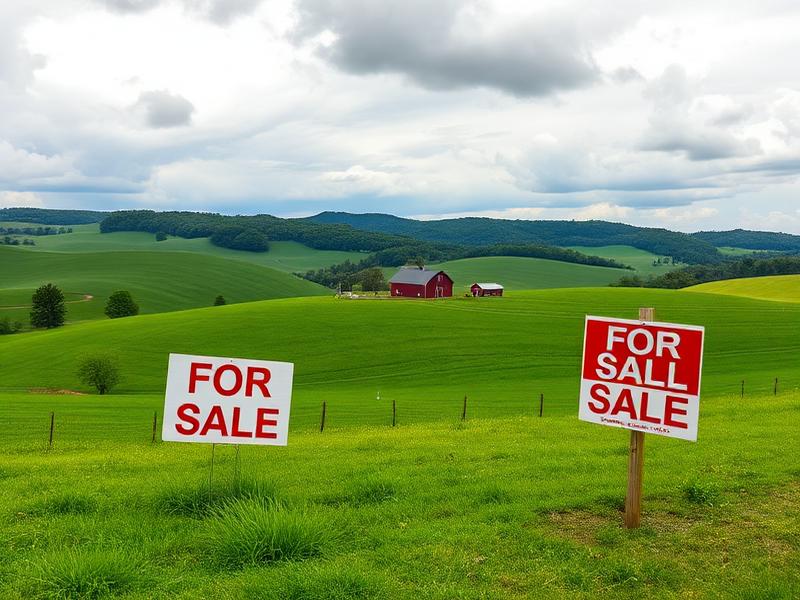
"For Sale" signs have become increasingly common across Virginia's rural landscape as data center developers scout new territory.
The Rural Pushback: Communities Fight Back
As data center development pressure has radiated outward from Loudoun County into more rural areas, it has sparked fierce opposition from communities that see the massive industrial facilities as incompatible with their agricultural heritage and quality of life. The backlash has been particularly intense in counties like Fauquier, Culpeper, and Prince William.
Community Concerns
- Visual Impact: Massive warehouse-style buildings disrupting scenic viewsheds
- Noise Pollution: 24/7 cooling systems creating constant industrial noise
- Water Usage: Massive water requirements straining local aquifers
- Power Grid Strain: Overwhelming electrical infrastructure
- Traffic: Construction and service vehicles on rural roads
In Fauquier County, citizen groups have organized under banners like "Protect Fauquier" to oppose data center rezoning requests. Their efforts have found success—the county board of supervisors has rejected several high-profile applications, citing concerns about the industrial facilities' compatibility with the county's rural conservation policies.
According to reporting from Data Center Dynamics, similar opposition movements have emerged across Virginia's rural counties, creating a patchwork of welcoming and resistant jurisdictions that developers must now navigate.

Town hall meetings have become battlegrounds as rural Virginia communities debate the future of their landscapes.
The Energy Equation: AI's Insatiable Appetite
Complicating the situation is the explosive growth of artificial intelligence, which has dramatically increased data center power requirements. A single AI-focused data center can consume as much electricity as a small city, and Virginia's grid is struggling to keep pace with demand.
Traditional Data Center
20-50 MW
Average power consumption
AI-Focused Data Center
100-300 MW
Average power consumption
Dominion Energy, Virginia's primary utility provider, has acknowledged that meeting data center demand will require billions in new infrastructure investment, including new transmission lines that must traverse the same rural communities already concerned about data center development. The company has proposed several new power projects, including potential nuclear facilities, to meet the growing demand.
This energy crunch has created a secondary land rush, with developers and utilities competing for sites suitable for power generation and transmission infrastructure. Landowners in energy corridors are receiving unsolicited offers for easements and outright purchases at premium prices.
What This Means for Virginia Landowners
For Virginia landowners, the data center boom presents both unprecedented opportunity and complex decisions. Those with property in growth corridors face life-changing offers, while those in resistant counties may find their land values more stable but potentially missing out on the windfall.
Key Considerations for Landowners:
Zoning Status
Properties already zoned for industrial or commercial use command significant premiums in data center corridors.
Power Access
Proximity to high-voltage transmission lines and substations dramatically increases land desirability.
Fiber Connectivity
Access to major fiber optic routes is essential for data center operations.
Local Politics
County-level attitudes toward data centers significantly impact development potential and land values.
For those considering selling, the current market represents a potential peak in data center-driven land values. However, with AI demand continuing to grow and no clear end to the digital infrastructure buildout in sight, some analysts believe prices may have further room to run. The key is understanding how your specific property fits into the broader development picture.
The Conservation Counterweight
Interestingly, the data center boom has also accelerated conservation efforts in Virginia. Organizations like the Virginia Outdoors Foundation and Land Trust of Virginia have seen increased interest from landowners seeking to permanently protect their properties through conservation easements, motivated in part by a desire to prevent industrial development.
These easements, which can provide significant tax benefits while allowing continued agricultural use, represent a middle path for landowners who want to preserve their land's character while still realizing some financial benefit. According to the Virginia Outdoors Foundation, the state protected over 50,000 acres through conservation easements in 2023, with strong momentum continuing into 2024.
The push-pull between development pressure and conservation has created a dynamic land market where property values are influenced not just by development potential, but by the strategic decisions of neighboring landowners. A large conservation easement can effectively block data center development in an area, while a single rezoning approval can trigger a cascade of interest in surrounding properties.
Looking Ahead: A Divided Commonwealth
Virginia's data center boom shows no signs of slowing, and the collision between Big Tech's infrastructure needs and rural communities' desire to preserve their way of life will likely intensify in coming years. The state government finds itself walking a tightrope, eager to capture the economic benefits of data center investment while responding to constituent concerns about unchecked industrial development.
For landowners across Virginia, the key is staying informed about local zoning discussions, understanding the factors that drive data center site selection, and carefully weighing the long-term implications of any development or conservation decisions. The choices made today will shape the Commonwealth's landscape for generations to come.
The Bottom Line
Whether you see data centers as economic saviors or industrial invaders, there's no denying their transformative impact on Virginia's land market. For landowners navigating this complex landscape, understanding local dynamics and timing can mean the difference between a windfall and watching opportunity pass by.
Sources: CBRE North America Data Center Report H1 2024, Data Center Dynamics, Virginia Outdoors Foundation, Dominion Energy, Loudoun County Economic Development, Fauquier County Board of Supervisors records.