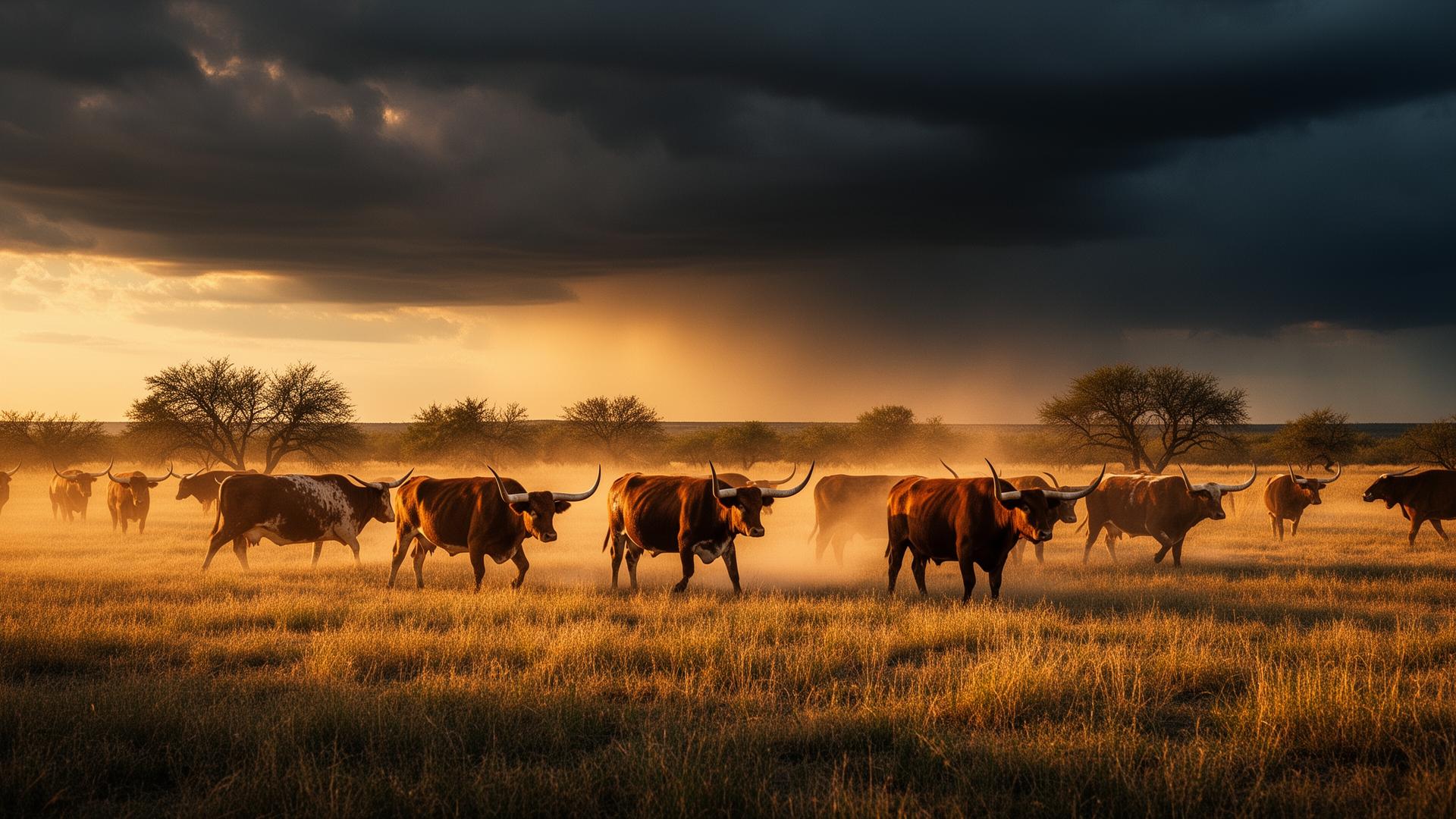
Flesh-Eating Screwworm Detected in a Texas CalfUSDA confirms the first domestic case in decades — and ranchers along the southern tier are on watch.
The U.S. Department of Agriculture says it has confirmed a case of New World screwworm (Cochliomyia hominivorax) in a Texas calf — a parasitic fly larva that eats living flesh and was officially eradicated from the United States in 1966. The detection ends a roughly six-decade gap and arrives as the pest pushes north out of Mexico. For ranchers, farmers, and rural landowners across the South, this is the moment to inspect every animal, log every wound, and call your state veterinarian at the first sign of maggots in a living wound.
What USDA actually confirmed
According to the USDA Animal and Plant Health Inspection Service (APHIS), a calf in Texas tested positive for New World screwworm larvae. The agency described the case as the first domestically detected infestation in U.S. livestock in decades and said it is working with the Texas Animal Health Commission to trace the animal's movements, quarantine the herd of origin, and survey neighboring premises.
The case follows a multi-year northward march of screwworm out of Panama, through Central America, and into Mexico's cattle country. USDA had already suspended live cattle, bison, and horse imports from Mexico earlier in the outbreak cycle, and cattle futures jumped on the news as traders priced in the risk of tighter beef supply heading into 2027.
Why a single calf is a national story
Screwworm is unlike most livestock pests. The adult fly lays 300 or more eggs at the edge of an open wound — a fresh brand, a navel on a newborn, a tick bite, even a scrape from barbed wire. Within hours, larvae hatch and burrow into living tissue, screwing themselves deeper as they feed. An untreated infestation can kill a full-grown cow in one to two weeks.
Before eradication, screwworm cost the U.S. livestock industry an estimated $50 to $100 million a year in 1960s dollars — closer to a billion in today's terms. USDA's own retrospective analyses estimate that the sterile insect technique that wiped it out has returned more than $900 million in annual benefits to U.S. producers. Letting the fly re-establish in South Texas would not just hurt cattle. It infects sheep, goats, hogs, deer, pets, and, in rare cases, people.
Where the pressure is highest
Surveillance is focused on the Texas border belt — the same ranching country where cattle, wildlife, and wind-blown flies regularly cross from Mexico. Landowners in Cameron County, Hidalgo County, Starr County, Webb County, and Val Verde County should treat the next 90 days as elevated risk.
Spread does not stop at the border. Cattle bought at sale barns move through the Brush Country and into the Hill Country and the Brazos basin every week. Producers throughout Texas, Oklahoma, Arkansas, and Tennessee should assume any new animal could be carrying eggs or early larvae and should isolate and inspect on arrival.
A practical playbook for landowners this week
- 1
Walk every pasture with new eyes
Look for animals standing apart, head down, with a foul-smelling discharge, or with flies clustered on a single spot. A wound the size of a dime can hold hundreds of larvae.
- 2
Postpone elective wounding
Delay branding, castration, dehorning, ear tagging, and tail docking where possible. Any fresh wound is a landing pad. If you must, treat the site with an approved larvicide before turn-out.
- 3
Inspect navels on every newborn
The umbilical stump is the most common entry point. Dip with iodine, watch daily for at least two weeks.
- 4
Quarantine and inspect new arrivals
Hold incoming cattle, sheep, goats, and horses in a separate trap for at least seven days. Check ears, hooves, and any scab.
- 5
Call before you treat a suspect wound
If you see live maggots in a living wound, do not just spray and walk away. Collect a few larvae in alcohol, call your local veterinarian, and report to the Texas Animal Health Commission at 1-800-550-8242 or USDA APHIS at 1-866-536-7593.
What this means for land values and ranch decisions
Cattle inventories are already at multi-decade lows. A full-blown screwworm re-incursion would not just kill individual animals — it would tie up labor on every operation, require daily inspections during calving, and add costs in fly traps, larvicides, and veterinary visits. For absentee owners of recreational acreage, that means a leased grazing operation can suddenly become more expensive than the lease check.
Some landowners will lean in: tighter biosecurity, fewer but better-managed head, and a renewed appetite for improved pasture. Others will look at the workload, the cattle cycle, and their own age, and decide it is time to move on. We are already hearing from sellers in South Texas asking whether a cash sale of vacant grazing land makes more sense than another year of fly strikes and vet bills.
Either path is defensible. The wrong move is to assume the problem will stay south of the Rio Grande. USDA's sterile fly facility in Panama is being scaled up, but rebuilding the eradication barrier is a multi-year project. Plan accordingly.
Thinking about selling your land or pasture?
PlaceAcre buys land directly across Texas and the South. No agents, no commission, and a cash offer in 24 hours. If a screwworm scare has you reconsidering, we will give you a number to weigh against staying in.
Sources & further reading
- USDA APHIS — New World Screwworm Response UpdatesU.S. Department of Agriculture
- Texas Animal Health Commission — Screwworm ResourcesTAHC
- USDA Statement on Detection in U.S. CattleUSDA Press Office
- Texas A&M AgriLife — Screwworm Background and Producer GuidanceTexas A&M AgriLife Extension
- Reuters — U.S. cattle market reaction to screwworm riskReuters
This article is a journalistic summary for landowners. It is not veterinary advice. For diagnosis and treatment of any suspected case, contact your veterinarian and the Texas Animal Health Commission immediately.