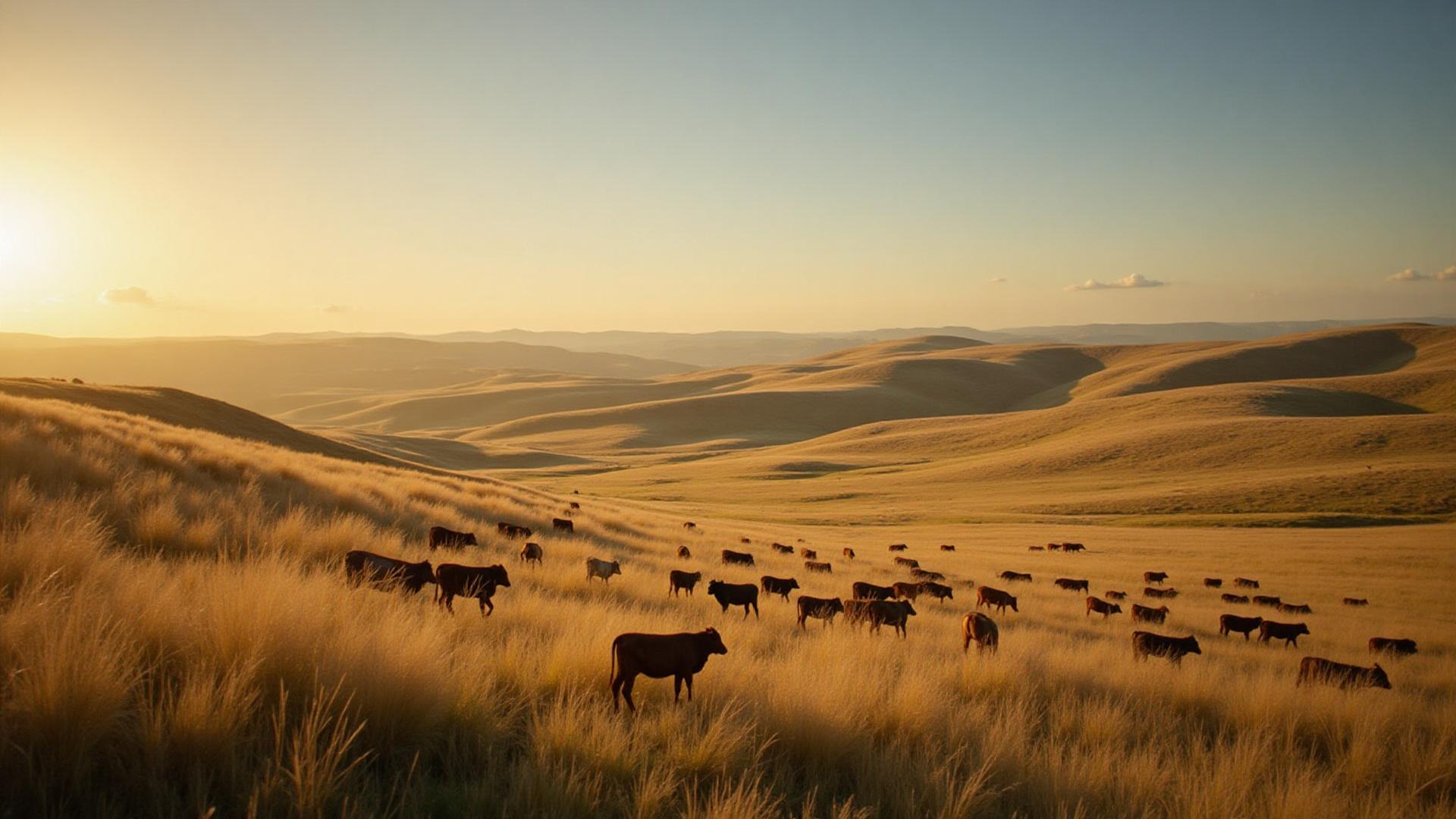
In an era when "big ranch" might mean 5,000 or even 10,000 acres, one property stands apart from all others—a sprawling testament to the age when cattle truly were kings and land stretched beyond the horizon. The King Ranch of South Texas isn't just large. At 825,000 acres, it's larger than the entire state of Rhode Island. And unlike many historic ranches that have been subdivided or sold off piece by piece, the King Ranch remains intact, operational, and legendary.
825,000
Acres of Working Ranch Land
1853
Year Founded in Texas
35,000+
Head of Cattle
The Birth of an Empire
The story of the King Ranch begins in 1853 when Captain Richard King, a steamboat operator, purchased a Spanish land grant known as the Rincón de Santa Gertrudis. This initial 15,500-acre parcel in the Wild Horse Desert of South Texas would become the nucleus of what historians now call one of the most significant agricultural operations in American history.
Captain King wasn't just buying land—he was establishing a new way of life in a harsh, unforgiving landscape where water was scarce, outlaws were common, and survival demanded innovation. By the time of his death in 1885, King had expanded his holdings to more than 600,000 acres through strategic purchases and shrewd management during Texas's tumultuous post-Civil War period.
According to the Texas State Historical Association, the ranch's growth accelerated under the leadership of Robert J. Kleberg Sr., who married King's daughter Alice and took over management in the 1880s. The Kleberg family's stewardship would last for generations, transforming the King Ranch from a cattle operation into a diversified agricultural and energy empire that pioneered breeding programs, water management techniques, and sustainable ranching practices still used today.
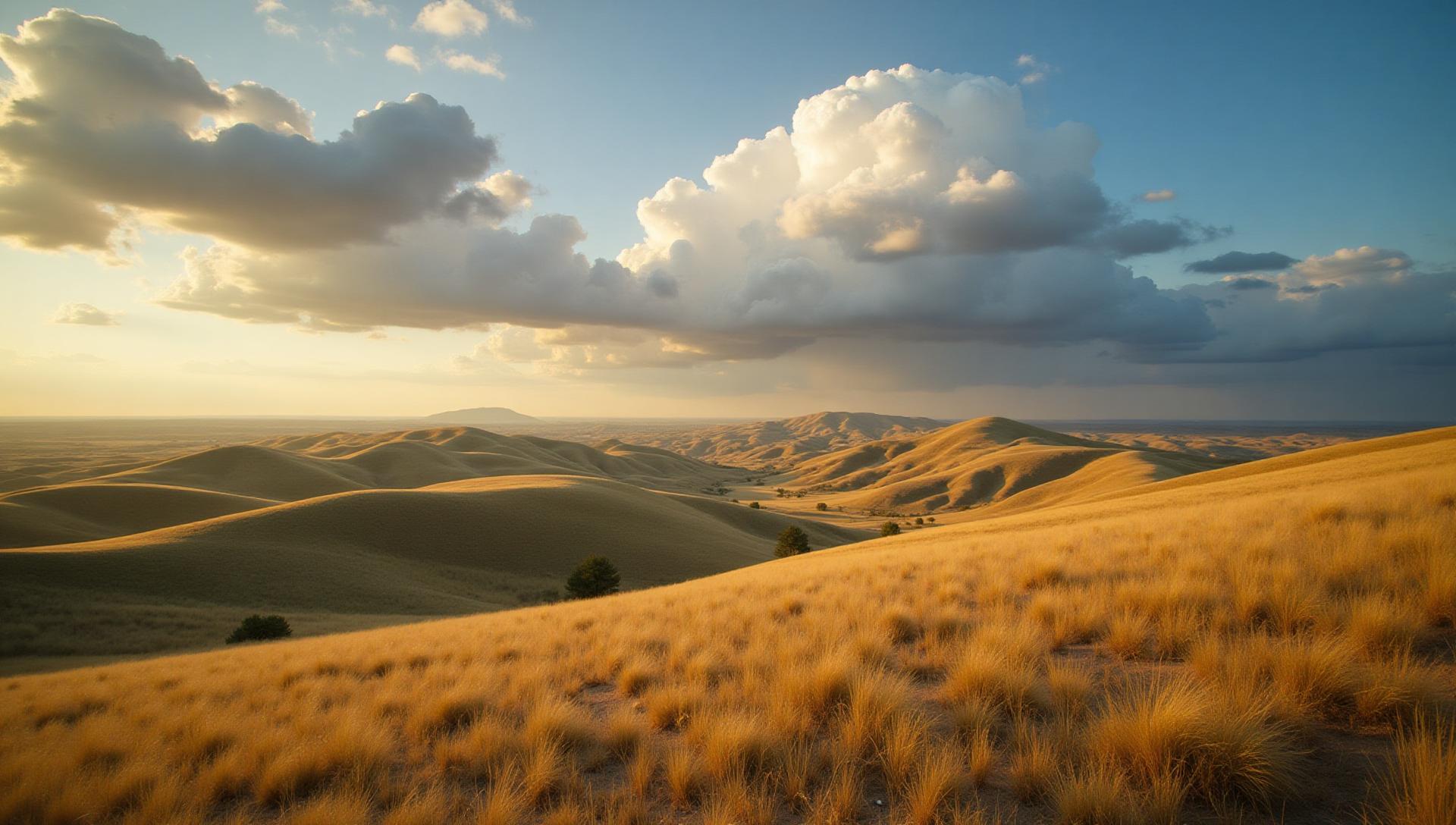
The vast rolling hills and open grasslands that define Texas ranch country
Scale That Defies Comprehension
To truly understand the King Ranch, you need to think beyond typical real estate metrics. The ranch is divided into four main divisions—Santa Gertrudis, Laureles, Encino, and Norias—each large enough to be a major ranch in its own right. The property spans portions of six Texas counties: Kleberg, Kenedy, Willacy, Brooks, Jim Wells, and Nueces.
Consider these comparisons: The King Ranch is larger than the entire state of Rhode Island (776,957 acres). It's bigger than the country of Luxembourg. You could fit more than 640,000 football fields within its boundaries. If you tried to drive the perimeter at highway speed, it would take you most of a day. The ranch maintains its own infrastructure including roads, power lines, water systems, and even its own fire department.
The ranch runs approximately 35,000 head of cattle at any given time, along with quarter horses, citrus groves, farming operations, and even oil and gas production. When many American landowners struggle to manage a few hundred acres, the King Ranch successfully operates an area that functions like a small nation.
Innovation and Legacy
The King Ranch's influence extends far beyond its property lines. In the 1940s, ranch managers developed the Santa Gertrudis breed—the first cattle breed created in the United States—by crossing Brahman and Shorthorn cattle. This heat-tolerant, disease-resistant breed revolutionized ranching in warm climates worldwide and earned official USDA recognition in 1940.
The ranch also pioneered the American Quarter Horse industry. The ranch's breeding program produced legendary horses including Wimpy, the first horse registered with the American Quarter Horse Association. Today, King Ranch quarter horses are recognized globally for their quality and performance.
Water management innovations developed at King Ranch transformed arid South Texas into productive agricultural land. The ranch's engineers created windmill-powered wells, strategic fencing systems, and rotational grazing techniques that have been adopted by ranchers across the American West and internationally.
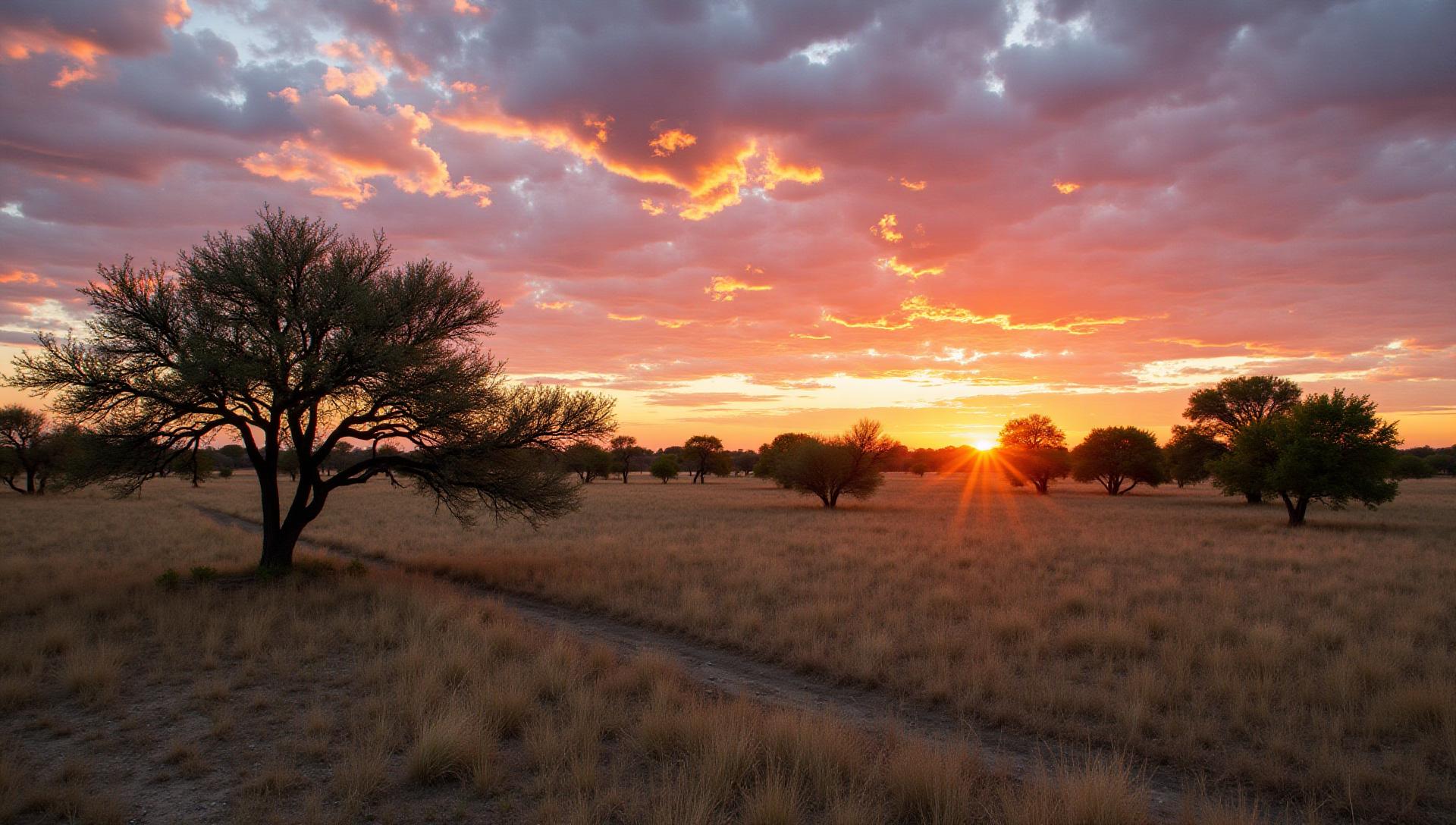
South Texas ranch land bathed in golden sunset light showcases the natural beauty of the region
The Business of Being a Kingdom
While the King Ranch company is privately held and doesn't disclose financial details, industry analysts estimate the operation generates hundreds of millions in annual revenue. The ranch's diversified business model includes cattle ranching, farming operations (cotton, grain sorghum, and vegetables), oil and gas leases, hunting leases, and even branded merchandise.
The ranch's cattle operation alone represents a massive undertaking. With approximately 35,000 head of cattle spread across divisions spanning multiple counties, the King Ranch produces millions of pounds of beef annually. The ranch sells breeding stock to operations worldwide, commanding premium prices for genetics traced back to their legendary Santa Gertrudis lines.
Energy production adds another significant revenue stream. While exact figures aren't public, the King Ranch sits atop substantial oil and gas reserves in South Texas's Eagle Ford Shale formation. Mineral rights and royalties from energy production help fund ranch operations and ensure financial stability even during downturns in cattle markets.
Real estate development has also become part of the mix. While the ranch remains committed to keeping its core acreage intact, it has strategically developed residential communities and commercial properties on smaller parcels near urban areas, particularly around Corpus Christi.
Family, Ownership, and Future
Today, the King Ranch is owned by the descendants of its founders—primarily the Kleberg family and related heirs. Unlike many historic American ranches that have been broken up or sold to investment groups, the King Ranch has remained largely in family hands across six generations. The ranch is structured as King Ranch, Inc., a privately held corporation that allows family members to maintain ownership while providing professional management.
However, maintaining an operation of this scale isn't without challenges. Property taxes on 825,000 acres run into the millions annually. Equipment costs, labor, veterinary care, infrastructure maintenance, and regulatory compliance require constant capital investment. The ranch employs hundreds of full-time workers, many of whose families have worked the land for generations.
The future of mega-ranches like King Ranch faces pressure from multiple directions. Development pressure from expanding Texas cities, increasing property taxes, succession planning across multiple generations of heirs, and changing economics of ranching all pose challenges. Yet the King Ranch has survived droughts, economic depressions, world wars, and fundamental shifts in American agriculture. Its size, diversification, and family commitment suggest it will endure.
Lessons for Today's Land Market
The King Ranch story offers valuable insights for anyone involved in land ownership, whether you own 10 acres or 10,000. First, diversification matters. The ranch has never relied solely on cattle—it's adapted by incorporating farming, energy production, real estate development, and other revenue streams that help weather downturns in any single sector.
Second, long-term thinking trumps short-term gains. The King family and their successors have consistently chosen sustainable management over quick profits. They've invested in conservation, maintained water resources, practiced rotational grazing, and preserved wildlife habitat—strategies that have kept the land productive for over 170 years.
Third, family legacy creates powerful incentives for stewardship. When land passes through generations with strong family identity attached, owners tend to take a longer view than corporate or investment entities focused on quarterly returns. This generational perspective has been crucial to the King Ranch's longevity.
Finally, even the most iconic properties adapt or die. The King Ranch of 2025 is dramatically different from the King Ranch of 1925 or 1825. It has embraced technology, professional management, modern marketing, and strategic development while maintaining its core mission. This flexibility within tradition offers a model for landowners navigating today's rapidly changing agricultural landscape.
The King Ranch stands as more than a historic curiosity or tourist attraction. It's a living, working ranch that proves large-scale agriculture can succeed in modern America when managed with vision, commitment, and adaptability. At a time when American farmland is increasingly consolidated by investment funds and foreign entities, the King Ranch represents a different model—one where family stewardship, long-term planning, and respect for the land create lasting value across generations.
For those of us in the land business, whether buying, selling, or managing property, the King Ranch reminds us that land is more than a commodity. It's heritage, responsibility, and opportunity rolled into one. And when managed wisely, even in an era of suburbs and strip malls, vast landscapes can still thrive under the care of those who understand their true worth.
Whether you own a residential lot, a small farm, or a working ranch, the principles that built the King Ranch—strategic thinking, diversification, conservation, and long-term commitment—remain as relevant today as they were when Captain King first rode across the Wild Horse Desert in 1853. If you're considering your own land decisions, whether to sell land fast or hold for the future, there's wisdom in studying how America's greatest ranch navigated 170 years of change while remaining true to its core identity.
Ready to Sell Your Land?
Get a fair cash offer within 24 hours. No fees, no commissions, no waiting.