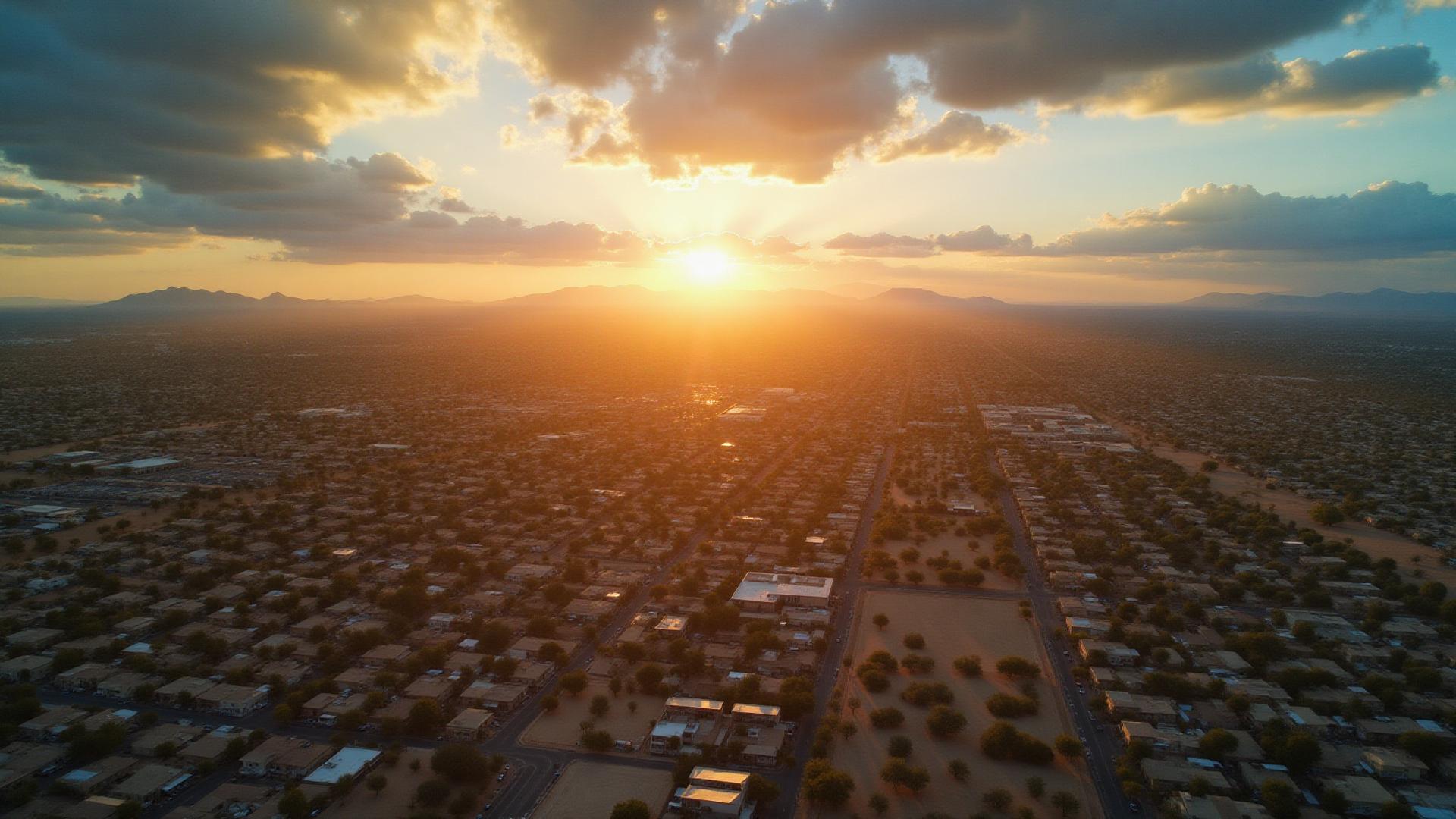
Arizona's State Trust Land "Unlock" – A $140 Billion Missed Opportunity Igniting Developer Frenzy
With 9.2 million acres held for K-12 funding but largely undeveloped, a bombshell report is reshaping how investors view Arizona's vast desert holdings amid the state's housing crunch.
The biggest buzz in Arizona land markets right now centers on the state's vast 9.2 million acres of trust land—held constitutionally for K-12 education funding but remaining largely undeveloped for over a century. A bombshell November 2025 report has labeled this massive land bank a "$140 billion missed opportunity," igniting a developer frenzy that's reshaping how investors, homebuilders, and policymakers view Arizona's future.
With Phoenix's housing market showing signs of cooling—median prices dipping slightly to approximately $450,000 but inventory remaining tight at just 4.4 months' supply—the pressure to unlock new developable land has never been more intense. Developers are scrambling for auctions of prime parcels, with recent sales shattering expectations and signaling a fundamental shift in Arizona's land economics.
The $140 Billion Question: What's Really at Stake?
Arizona's State Land Department manages approximately 9.2 million acres—roughly 13% of the state's total land area. This trust land, granted to Arizona at statehood in 1912, was intended to generate revenue for public education through leases, sales, and resource extraction. Yet according to analysis from the Arizona State Land Department, the vast majority of these acres remain undeveloped, generating modest lease revenues compared to their potential market value.
Trust Land by the Numbers
The disconnect is stark: while generating roughly $2.1 billion annually through various lease arrangements—primarily agricultural grazing at minimal rates—the land's potential development value, particularly parcels in the path of Phoenix's explosive growth, represents an order of magnitude greater opportunity. For investors seeking to sell vacant land or acquire strategic positions in Arizona's growth corridors, understanding this dynamic is essential.
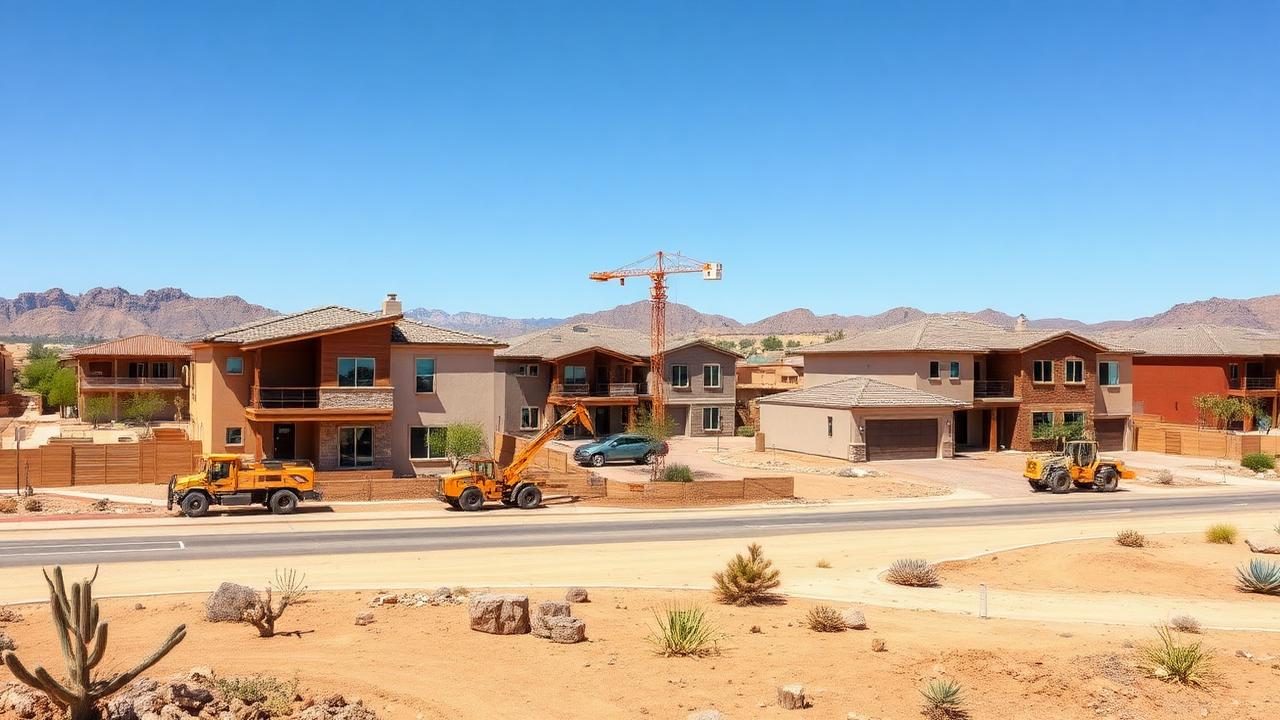
Housing construction continues at a rapid pace across the Phoenix metro area, but land availability remains a critical constraint for builders seeking to meet demand.
Auction Frenzy: Desert Ridge "Superblocks" and Buckeye Bonanza
Recent state land auctions have demonstrated just how hungry developers are for prime Arizona parcels. The most dramatic examples have come from the Desert Ridge area in north Phoenix and the rapidly growing West Valley, where Buckeye has emerged as ground zero for master-planned community development.
Recent Auction Highlights
- Buckeye 272-Acre Parcel: Starting bid of $42 million, with competitive bidding expected to push final prices significantly higher given the site's proximity to the Loop 303 corridor and existing water infrastructure.
- Desert Ridge "Superblocks": Multiple parcels fetching 2-3x initial estimates, with developers recognizing the strategic value of infill sites near established commercial centers and highway access.
- Pinal County Corridor: Sun Corridor sites between Phoenix and Tucson seeing unprecedented interest from industrial and data center developers seeking large, flat parcels with power access.
For landowners in these high-growth corridors, the auction premiums signal strong underlying demand. Those looking to sell land fast in Arizona are finding receptive markets, particularly for parcels with established water rights or proximity to infrastructure.
Phoenix Housing Market: Cooling Prices, Hot Competition for Land
The Greater Phoenix housing market presents a paradox that's driving the state land frenzy. While median home prices have softened slightly from their 2022 peaks to approximately $450,000, the market remains fundamentally supply-constrained with just 4.4 months of inventory—well below the 6-month benchmark considered balanced.
Market Strengths
- • Population growth continues at 1.5%+ annually
- • Tech and manufacturing job migration accelerating
- • Remote work enabling California exodus
- • Mortgage rate buydowns stimulating demand
- • Limited new construction keeping prices stable
Market Challenges
- • Affordability constraints for entry-level buyers
- • Water availability concerns in some areas
- • Insurance costs rising in fire-prone zones
- • Infrastructure lag in fastest-growing areas
- • State land release process remains slow
Builders have responded to market conditions with aggressive incentive packages, including mortgage rate buydowns that effectively reduce purchase prices by $30,000-$50,000 on typical new construction. This has maintained sales velocity even as headline prices stabilize, but the fundamental constraint remains land availability—particularly parcels with assured water supplies.
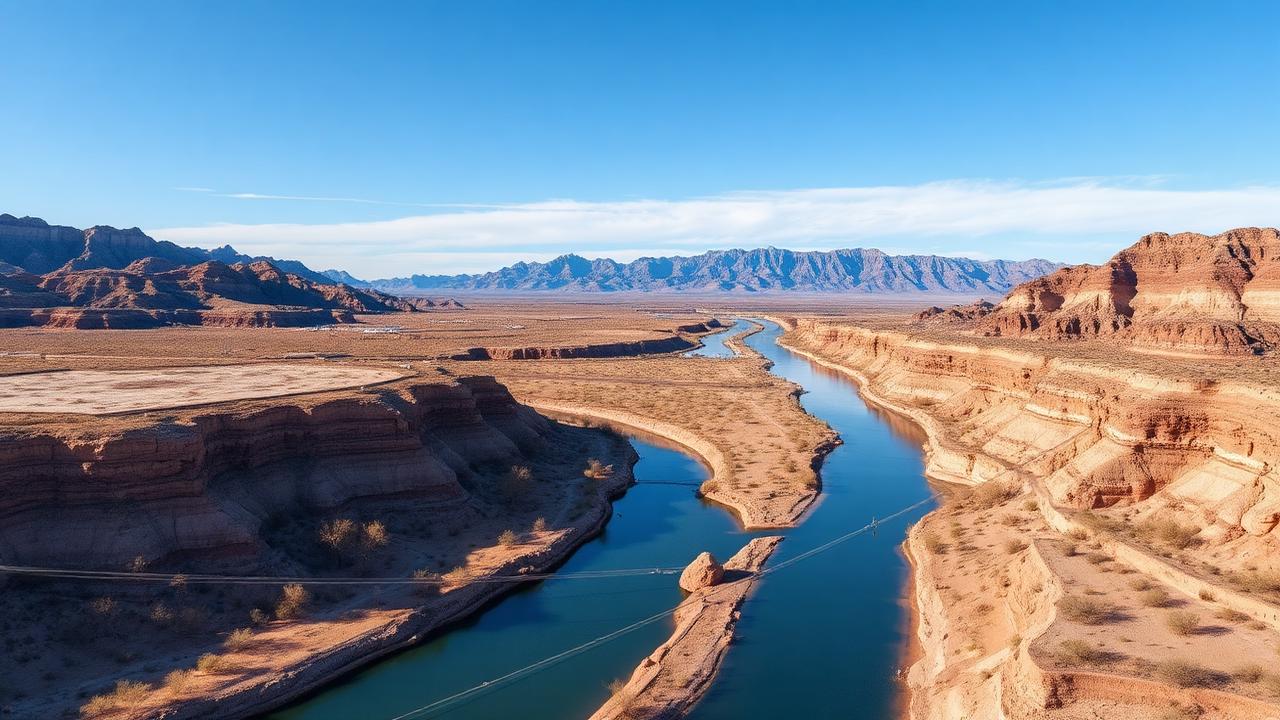
Water infrastructure, including the Central Arizona Project canal system, determines which Arizona lands can be developed at scale.
Teravalis: The 37,000-Acre Blueprint for Water-Secured Development
Perhaps no project better illustrates the future of Arizona land development than Teravalis, the massive 37,000-acre master-planned community taking shape west of Phoenix in Buckeye. Planned for an eventual population of 300,000 residents, Teravalis represents a new paradigm in desert development: building from the water up.
Teravalis by the Numbers
The key to Teravalis's viability lies in its water portfolio. Developers have assembled a combination of groundwater rights, Colorado River allocations through the Central Arizona Project, and reclaimed water infrastructure that provides the "100-year assured water supply" required by Arizona law for new residential developments in Active Management Areas.
For investors and landowners across Pinal County and the West Valley, Teravalis provides a template—and a warning. Land without water assurance faces significant development limitations, while parcels with established water rights command substantial premiums. This bifurcation is reshaping land values across the Phoenix metro area.
The Federal Lands Wild Card: 1.2 Million Acres in Play?
Adding another layer of complexity to Arizona's land equation are federal proposals to open approximately 1.2 million acres of currently protected public land for potential development. While details remain fluid, policy discussions under the incoming administration have targeted BLM holdings in the West for possible transfer to state control or direct sale.
Policy Watch: Federal Land Transfer Proposals
The incoming Trump administration has signaled interest in accelerating federal land transfers to states and expanding development on public lands. For Arizona, this could mean significant new acreage entering the development pipeline—potentially disrupting state land auction dynamics while creating new opportunities in areas currently off-limits to private development.
Conservation groups have raised concerns about ecological impacts and loss of public access, while developers and housing advocates see potential relief for the state's constrained land supply. The ultimate outcome will depend on federal policy implementation, state acceptance mechanisms, and—critically—water availability for any newly developable parcels.
Builder Incentives: The Hidden Price Cuts Shaping Land Demand
While headline home prices in Phoenix have stabilized, the effective cost of new construction has declined significantly through aggressive builder incentives. Major national builders including Lennar, D.R. Horton, Toll Brothers, and Taylor Morrison have deployed substantial incentive packages that fundamentally alter the market's economics.
Common Builder Incentives
- Rate Buydowns: Permanent interest rate reductions of 1-2 percentage points
- Closing Cost Coverage: $10,000-$25,000 in closing assistance
- Design Center Credits: $15,000-$50,000 for upgrades
- Price Reductions: Direct discounts on spec inventory
Impact on Land Values
These incentives, while maintaining sales velocity, compress builder margins and intensify the focus on land acquisition costs. Builders are increasingly sophisticated about which parcels justify premium pricing—those with water, infrastructure, and minimal entitlement risk—versus lower-tier sites requiring significant investment.
This bifurcation benefits strategic landowners in prime corridors while pressuring values on more challenging parcels.
Investment Implications: Where the Smart Money Is Flowing
For investors eyeing Arizona land opportunities, the state trust land dynamics create a complex but navigable landscape. The key factors driving institutional and sophisticated individual capital include:
High-Priority Investment Criteria
Water-Secured Parcels
Properties with demonstrated 100-year assured water supply certificates or strong groundwater rights command premium valuations and attract institutional capital.
Infrastructure Proximity
Sites within 2 miles of Loop 202, Loop 303, or I-10 with existing utility access see accelerated development timelines and reduced infrastructure burden.
Entitlement Progress
Parcels with completed zoning, platting, or development agreements eliminate major risk factors and justify significant premiums over raw land.
Adjacent to Growth
Land positioned next to active master-planned communities benefits from infrastructure spillover and established market comparables.
For current landowners in Arizona's growth corridors, the market conditions create favorable selling opportunities. Demand from builders and developers remains robust, and the state trust land report has heightened awareness of Arizona's long-term land supply constraints. Those considering whether to sell land in Maricopa County or surrounding areas are finding receptive buyers willing to pay fair market values for strategic parcels.
What This Means for Arizona Landowners
The confluence of factors—state trust land scrutiny, housing supply constraints, water-focused development, and policy uncertainty—creates both opportunities and urgency for Arizona landowners. Key considerations include:
The Bottom Line: A Powder Keg for Land Investors
Arizona's state trust land situation represents more than a policy debate—it's a fundamental reshaping of the state's development economics. The $140 billion "missed opportunity" framing has captured attention from developers, investors, and policymakers alike, accelerating interest in both public auctions and private land transactions.
For PlaceAcre's audience of landowners and investors, the implications are clear: Arizona remains one of America's most dynamic land markets, but the rules of engagement are evolving. Water-secured parcels in growth corridors represent the gold standard, while more speculative positions face increasing uncertainty.
Whether you're holding family land in Pima County, evaluating an inheritance in the West Valley, or considering strategic acquisitions, understanding the state trust land dynamics is essential. The next several years will likely see unprecedented activity as Arizona works to unlock its vast land potential while managing growth sustainably.
Considering Selling Your Arizona Land?
If you own land in Arizona's growth corridors and are considering your options, PlaceAcre provides free, no-obligation cash offers for properties of all sizes. Our team understands Arizona's unique market dynamics and can provide fair valuations based on current conditions.
Sources & Further Reading
- • Arizona State Land Department – Official trust land information and auction schedules
- • Arizona Republic – Phoenix housing market coverage
- • U.S. Census Bureau – Arizona demographic data