
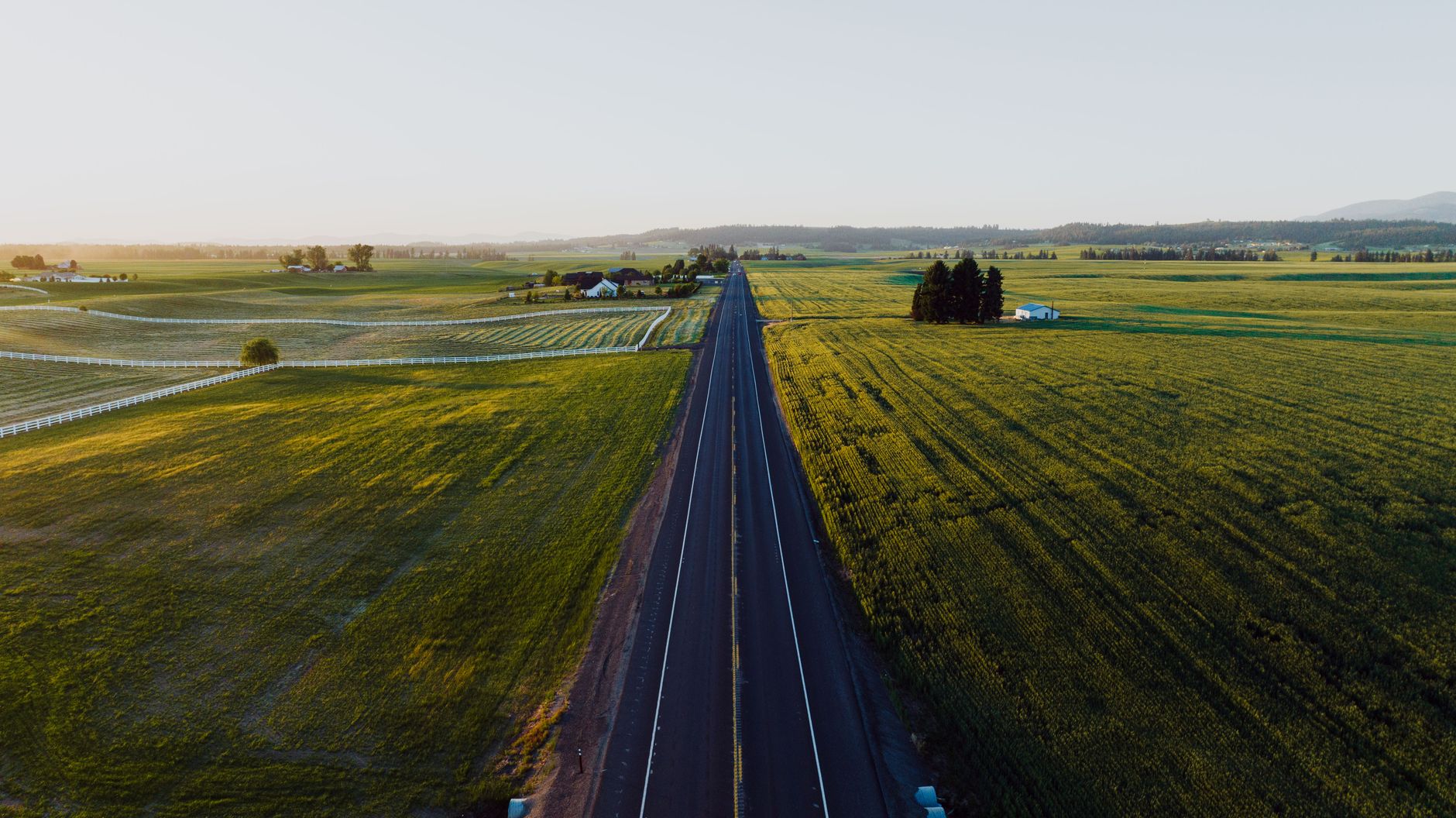
There is no single Washington land market, and that is the first thing to understand if you plan to sell land by owner in Washington. East of the Cascades you have the irrigated Columbia Basin and the dryland wheat country of the Palouse — big parcels, working agriculture, buyers who evaluate ground by water rights and yield history. West of the crest you have the Puget Sound corridor, where five acres near a growing town can be worth more than a section of dryland wheat, and where the buyer is more likely to be building a house than planting a crop.
Those two worlds require different FSBO strategies. Pricing sources differ, buyer pools differ, marketing channels differ, and the realistic time-on-market differs by months. What does not change is the legal machinery: every Washington sale runs through the same Real Estate Excise Tax rules, the same Form 17C disclosure framework for unimproved land, and the same escrow-based closing process. Get those three right and the rest of the sale is a matter of finding the buyer.
This guide walks the whole sequence — pricing, documents, marketing, and closing — with the Washington-specific rules called out where they matter. Every dollar figure here is a directional, illustrative reference drawn from public sources, not an appraisal of your parcel.
Washington Ranks #5 in the Nation for Cropland Cash Rent
USDA's 2026 farm cash rent data, released July 31, 2026, put Washington fifth nationally for cropland cash rent at $234 per acre and third for irrigated cropland at $430 per acre — trailing only California and Hawaii on the irrigated figure.
That matters to a seller because rent is the cleanest available proxy for what ground actually earns. National rental rates softened in several major farm states this cycle; Washington's held near the top of the table. Strong rents signal durable underlying demand for the state's productive ag ground, and a buyer paying attention to income yield has a defensible reason to pay up for irrigated acreage here.
Read the full national breakdown: USDA's 2026 Cash Rent Map: Rents Are Falling in the Priciest Farm States →
For a deeper read on when to bring a Washington parcel to market, see Timing Your Washington Land Sale: A 2026 Market Outlook →
Realtor vs. FSBO vs. Cash Buyer (PlaceAcre)
Illustrated on a sample 20-acre Eastern Washington parcel valued at $150,000. Washington irrigated cropland averages roughly $7,600 per acre statewide; a 20-acre mixed tract leaning toward dryland would blend well below that, so $7,500 per acre is used here as a representative blended figure. This framing is explicitly illustrative — not a quoted offer, not an appraisal, and not a claim about your parcel.
| Realtor (MLS) | FSBO | Cash Buyer (PlaceAcre) | |
|---|---|---|---|
| List / offer price | $150,000 list | $150,000 list | Cash offer below full market value, in exchange for speed and certainty |
| Estimated commission / fees | ~6% commission (~$9,000) | $0 commission; you absorb marketing, listing fees, and carrying costs | $0 commission, no fees |
| Estimated closing time | 60–180+ days | 60–150+ days, and genuinely uncertain | Offer in 24–48 hours; close in as little as 7–14 days |
| Estimated net proceeds | ~$141,000 before REET, escrow, and recording costs | ~$150,000 less your own marketing spend, REET, and carrying costs | Offer amount, less REET — no commission, no listing costs |
| What you handle | Listing agreement, showings, broker coordination | All marketing, buyer screening, Form 17C, REET affidavit, escrow coordination | No showings, no financing contingency, escrow handled for you |
All figures above are illustrative examples. REET is owed on every path, including a cash sale. An actual offer depends on the specific parcel — water rights, access, zoning, title, and location.
The 4-Step FSBO Roadmap for Washington Land
Step 1 — Price
Start with your county assessor. Washington's 39 county assessor offices operate under Department of Revenue oversight and publish parcel records, assessed values, and — in most counties — searchable recent sales. That is your comparable-sales foundation, and it is free. Pull every sale within a few miles over the last 24 months, and note for each whether it was irrigated, dryland, pasture, timber, or a small residential-adjacent tract. Price per acre only means something once you know what kind of acre changed hands.
Then account for the east/west split, which is sharper in Washington than in almost any other state. Small parcels near the Puget Sound corridor — parts of King, Pierce, and Snohomish counties — can trade into the hundreds of thousands of dollars per acre where development potential exists. Remote Eastern Washington dryland acreage can trade for a small fraction of that per acre. Both are Washington land. A statewide average is nearly meaningless applied to either. These are illustrative, directional figures, not appraisals.
Finally, adjust for the things Washington buyers actually price: water rights above all — a certificated water right attached to the parcel can be the single largest value component on irrigated ground east of the Cascades. Then zoning and comprehensive plan designation, Growth Management Act constraints, legal access, and whether the parcel is enrolled in current-use programs like Open Space or Designated Forest Land, which can trigger back taxes on removal.
Step 2 — Documents
Washington's seller disclosure requirement for vacant land runs through Form 17C, authorized by RCW 64.06.015 and added to the statute in 2007. It is a shorter document than the standard residential Form 17 — no questions about roofs, furnaces, or appliances — and it concentrates on title and encumbrances, water and water rights, sewer or septic feasibility, legal access, and known environmental conditions. Fill it out from your actual knowledge, in writing, and deliver it to the buyer within the statutory window.
RCW 64.06.010 lists the limited exemptions — among them transfers by a personal representative of an estate and certain foreclosure-related transfers. Those exemptions are narrower than sellers usually assume. If you think one applies to your sale, have your escrow officer confirm it before you skip the form.
Order a current title report or preliminary title commitment before you list, not after you have an offer. On rural Washington ground the report is where you discover the unreleased deed of trust from 1994, the utility easement nobody remembered, the access that runs across a neighbor by permission rather than by recorded easement, or a mineral or timber reservation. Every one of those is cheaper to clear on your own schedule than under a 30-day contingency clock. Gather alongside it: the current deed and full legal description, a recent tax statement, any survey, water right certificates or claims, zoning and comp plan designation, and documentation of any current-use tax classification.
Step 3 — Market
The most efficient FSBO move in Washington is a flat-fee MLS listing through a broker who will place the parcel on the Northwest MLS for a fixed price while you keep the sale in your own hands. You retain control and avoid the listing-side commission, but your property still appears in the database every agent and most serious buyers search first.
Pair that with national land-specific platforms — Land.com and its sister sites, LandWatch, and the ag-focused marketplaces. This matters more in Washington than in a dense-market state, because outside the Seattle–Tacoma corridor the pool of active land buyers in any given county is genuinely small. For a 300-acre Palouse wheat tract or a Columbia Basin irrigated circle, your buyer may well be an operator two counties away or an investor out of state. Local classifieds will not reach them; a national land platform will.
Do not skip the local channels either. In Eastern Washington the neighboring operator who can fold your acres into an existing rotation is frequently the highest bidder and the easiest closing you will ever have. Grange bulletins, county extension postings, irrigation district contacts, and a roadside sign on a county road all reach that person cheaply.
Step 4 — Close
Washington is an escrow state. Closings are typically handled by a title and escrow company rather than an attorney, and a Limited Practice Officer — a non-attorney licensed by the Washington Supreme Court to prepare and complete standard closing documents — conducts the closing on the escrow company's behalf. Attorney-conducted closings happen, but they are the exception rather than the norm.
Earnest money is held by a neutral third party — the escrow company, a brokerage trust account, or an attorney's trust account. It is never paid directly to the seller. If a buyer offers to hand you a check personally, that is a signal to slow down and route the transaction through escrow properly.
Escrow will run the title search, prepare the deed, calculate REET, collect the signed REET affidavit, remit the tax to the county treasurer, record the deed, and disburse funds. The deed cannot be recorded until the affidavit is filed and the tax is paid — that is the sequencing that catches first-time FSBO sellers. A clean cash closing on Washington land commonly runs 7 to 21 days; a financed purchase on rural acreage usually stretches to 45 days or more while the lender orders an appraisal.
FSBO in Washington: Advantages vs. Challenges
Advantages
- Keep the full sale price. No listing commission comes off the top. On a $150,000 parcel that is $9,000 that stays with you at the closing table.
- Control the timeline and the showings. You decide when to list, when to show, whether to wait out a neighboring operator's offer, and whether to close before or after the crop year or a tax deadline.
- Direct buyer relationships. You answer questions about water rights, access, and history yourself, without a broker relaying messages. On rural Washington ground, where the details are the deal, that usually produces a cleaner and faster negotiation.
Challenges
- REET compliance and affidavit paperwork. The graduated state rate, the local add-on, and the affidavit filing all fall to you and your escrow officer to get right — and the deed does not record until they are.
- A smaller buyer pool for rural and dryland acreage. Outside the metro corridor, a county may have only a handful of active land buyers in a given year. Reaching them takes deliberate national marketing.
- Longer average time on market outside the I-5 corridor. Plan in months, not weeks, and budget for carrying costs — property taxes, insurance, and any weed-control or fencing obligations — over that span.
- The technical Form 17C disclosure. Shorter than Form 17, but the questions about water rights, access, and environmental conditions are exactly the ones that create liability if answered carelessly.
What the Commission Actually Costs You
Run the arithmetic on the sample tract. A $150,000 land sale at a typical 6% total commission works out to $150,000 × 0.06 = $9,000, usually split between the listing and buyer's brokerages. That is $141,000 to you instead of $150,000, before REET, escrow fees, and recording costs — which you owe on every path.
Selling FSBO or directly to a cash buyer avoids that $9,000 entirely. Against it you should set your own out-of-pocket marketing spend: figure $150 to $600 for a flat-fee MLS placement, $200 to $500 for drone photography, and another $100 to $300 for parcel maps and printing. Call it $500 to $1,400 all in. Net savings on this example land somewhere around $7,600 to $8,500.
That does not make an agent the wrong choice in every case. A broker with a standing buyer list for irrigated Columbia Basin circles or Palouse wheat ground can sometimes produce a gross price that beats what you would reach on your own by more than the fee — that is the honest test to apply. On a clean parcel with obvious access and an interested neighbor, the premium usually does not materialize. On a complex tract with contested water rights in a thin market, it often does.
The Tactical Version: 5 More Steps
5. Get an appraisal or a broker price opinion
Vacant land appraisals in Washington typically run $400 to $1,200 depending on parcel size, complexity, water rights, and travel distance for the appraiser — cite that as an illustrative range, not a quote. A broker price opinion is cheaper and faster, and often enough for a straightforward tract. The value is not really the number; it is having something independent and defensible to point to when a buyer challenges your price. Estates with multiple heirs, parcels with water rights in question, and any sale that may be scrutinized for tax purposes justify the full appraisal.
6. Assemble the marketing packet before you list
Aerial photographs and a drone video pass. A parcel map with boundaries drawn, ideally over a county GIS aerial. Water rights documentation — certificate numbers, point of diversion, place of use, annual quantity — for any parcel where irrigation is part of the value. Zoning and comprehensive plan designation, with any Growth Management Act overlay noted. Soil data from the USDA Web Soil Survey. Access documentation, including recorded easements. Current-use classification status. A packet that answers the obvious questions up front produces fewer calls and much better ones.
7. List on FSBO-friendly land platforms
Place the parcel on the Northwest MLS through a flat-fee broker, then syndicate to the national land marketplaces. Write the listing for a land buyer, not a home buyer: lead with acreage, access, water, zoning, and topography rather than adjectives. Include the parcel number so buyers can pull county records themselves — transparency shortens the diligence conversation and filters out tire-kickers before they call.
8. Screen buyers and offers seriously
Ask for proof of funds on cash offers and a lender pre-approval on financed ones before you grant property access or take the parcel off the market. On the purchase and sale agreement, pay attention to the feasibility and financing contingency periods, who pays REET and escrow fees, how property taxes prorate, whether current-use classification is being continued or removed, and what happens to any lease or grazing agreement. Washington's standard forms handle most of this, but the blanks are where the negotiation actually lives.
9. Coordinate with title and escrow through closing
Open escrow as soon as the agreement is signed and give the escrow officer everything at once: deed, legal description, payoff information for any lien, water right documentation, and your completed Form 17C. Escrow will prepare the REET affidavit for your signature, calculate the state and local tax, remit it to the county treasurer, and record the deed. Ask early for a preliminary settlement statement so there are no surprises about what comes off your proceeds.
Washington Legal Requirements: REET and Form 17C
Two requirements do most of the work in a Washington land sale, and both are worth understanding before you list rather than at the closing table.
Real Estate Excise Tax (REET)
REET applies to virtually all sales of real property in Washington, vacant land included, and is customarily paid by the seller. The state rate is graduated by selling price:
| Portion of selling price | State REET rate |
|---|---|
| Up to $525,000 | 1.10% |
| $525,001 – $1,525,000 | 1.28% |
| $1,525,001 – $3,025,000 | 2.75% |
| Above $3,025,000 | 3.00% |
A signed REET affidavit must be submitted to the county treasurer or auditor and the tax paid before the deed can be recorded. Most counties and many cities levy an additional local REET on top of the state rate, so confirm the combined figure with your county. On our $150,000 example, the state portion alone comes to roughly $1,650 at 1.10%. Rates cited are current 2026 rates per the Washington State Department of Revenue.
Form 17C Seller Disclosure — RCW 64.06.015
For most vacant and unimproved land sales, Washington requires the shorter Form 17C rather than the full residential Form 17. The provision was added to the statute in 2007 and covers title and encumbrances, water and water rights, sewer and septic, access, and environmental conditions. Limited statutory exemptions appear in RCW 64.06.010, including transfers by a personal representative of an estate and certain foreclosure-related transfers. Confirm any claimed exemption with your escrow officer in writing rather than assuming it applies.
This section is general information, not legal or tax advice. Confirm current requirements and rates with the Washington State Department of Revenue, your county treasurer, or a Washington attorney.
Washington Land Values by Region
A statewide average tells you almost nothing about a specific Washington parcel. These four sub-regions behave like four different markets, with different buyers, different price drivers, and different realistic timelines.
Puget Sound / Western Lowlands
King, Pierce, Snohomish, Whatcom countiesThe highest per-acre values in the state, driven by development pressure and proximity to Seattle and Tacoma rather than by agricultural income. Small parcels here are priced against what can be built on them, subject to Growth Management Act boundaries and county zoning. Whatcom County remains a notable working-agriculture exception within the region — it is one of Washington's leading dairy counties, and ground there is still bought and priced as farmland.
Columbia Basin / Central Washington
Grant, Adams, Franklin, Benton countiesIrrigated row crops, apples, and potatoes — among the highest-value working farmland in the state, and the reason Washington ranks third nationally for irrigated cropland cash rent. Irrigated cropland averages roughly $7,600 per acre statewide. Water is the value here: a parcel's certificated water right, its irrigation district standing, and its delivery infrastructure often matter more to price than the dirt itself.
The Palouse
Whitman, Spokane, Lincoln countiesDryland wheat country, with large contiguous parcels and deep loess soils. Per-acre pricing sits well below irrigated ground, but typical acreage per sale is far larger, so total transaction values are substantial. Buyers are predominantly established operators expanding a rotation, which means your marketing target is narrow and identifiable — and often already farming nearby.
Yakima Valley / South Central Washington
Yakima, Chelan, Douglas countiesOrchards, vineyards, and hops — the highest-intensity permanent-crop ground in the state, where established plantings and water can carry most of the value. Yakima County alone accounts for close to 1.8 million acres of land in farms, the most of any Washington county. Pricing here depends heavily on crop, plant age, trellis and irrigation infrastructure, and whether a block is at the start or the end of its productive life.
All regional per-acre figures are directional and illustrative, sourced to USDA NASS and AgWest Farm Credit reporting. They are not appraisals and should not be applied to a specific parcel without local comparable sales.
Photography and Listing Presentation
Fly it. Aerial and drone photography is worth more in Washington than in most states, because Washington land usually has something in the background worth showing — the Cascades, the Olympics, Mount Rainier, a river, an orchard block running to a ridgeline. A ground-level photo of a fence line sells nothing. A drone pass at 200 to 300 feet that puts the parcel in its landscape sells the reason a buyer wants to be there.
Show water and view corridors deliberately. If the parcel has river or creek frontage, pond access, or a defined view corridor, shoot it from the angle a future owner would experience it. If there is irrigation infrastructure — pivots, wheel lines, headgates, pump stations, mainline — photograph it and say what condition it is in. Buyers of irrigated Washington ground price that equipment, and vague listings invite low offers.
Document the water rights in writing, next to the photos. Certificate or claim number, annual quantity, point of diversion, place of use, and current standing. Water rights are the single most-asked-about attribute on Eastern Washington land, and a listing that answers before the buyer asks moves to the top of their list. Shoot in the hour after sunrise or before sunset, include at least one north-oriented frame so buyers can match it to a plat map, and avoid mid-summer haze days east of the Cascades.
Skip the Hassle — Get a Cash Offer in 24 Hours
If speed and certainty matter more to you than squeezing out the last dollar, a direct cash sale closes in as little as 7 to 14 days, with no commissions and no fees. It is one option among several — worth comparing honestly against a flat-fee MLS listing or a full-service broker before you commit either way.
Get My Cash OfferFrequently Asked Questions
Do I need a real estate agent to sell land in Washington?
No. Washington does not require a licensed agent for a private land sale. You are free to market the property, negotiate directly with a buyer, and take the transaction to a title and escrow company yourself. Many Washington FSBO sellers use a flat-fee listing service to get MLS exposure while keeping control of the sale, which costs a few hundred dollars instead of a percentage of the price. What you cannot skip is the paperwork: the Form 17C disclosure where it applies, a signed REET affidavit, and a properly drafted deed. Those are requirements of the transaction, not of the agent.
What is Washington's Real Estate Excise Tax (REET) and who pays it?
REET is a state tax on the sale of real property, and it applies to virtually every real estate transfer in Washington, including vacant land. It is customarily paid by the seller. The state rate is graduated based on the selling price: 1.10% on the portion up to $525,000; 1.28% on the portion from $525,001 to $1,525,000; 2.75% from $1,525,001 to $3,025,000; and 3.00% on anything above $3,025,000. Most counties and many cities add a local REET on top of the state rate. A signed REET affidavit has to be filed with the county treasurer and the tax paid before the county will record your deed — no affidavit, no recording. These are the current 2026 rates published by the Washington State Department of Revenue; confirm the local component with your county before you close.
Do I have to complete a disclosure form to sell vacant land in Washington?
Yes, for most vacant or unimproved land sales. Washington uses Form 17C, the seller disclosure statement for unimproved residential property, authorized under RCW 64.06.015 and added to the statute in 2007. It is a shorter document than the standard residential Form 17 — it drops the questions about structures, systems, and appliances and focuses on title, water, sewer/septic, access, environmental conditions, and known encumbrances. Limited statutory exemptions exist under RCW 64.06.010, including transfers by a personal representative of an estate and certain foreclosure-related transfers. Do not assume an exemption applies to your sale; have your escrow officer confirm it in writing.
How fast can I sell my Washington land for cash?
Faster than a traditional listing, in most cases. PlaceAcre typically returns a written cash offer within 24 hours of receiving parcel details, and because there is no lender, no appraisal contingency, and no financing fall-through risk, closings commonly land in 7 to 14 days once title comes back clean. Escrow still has to run the title search, collect the REET affidavit, and record the deed, so the county timeline sets the floor. A cash sale is one option among several — it trades some price for speed and certainty, and it is worth comparing honestly against an FSBO listing or a flat-fee MLS approach before you decide.
Related Resources
Related Locations in Washington
Washington county-level pages are still in progress. In the meantime, the state hub covers all 39 counties.